Global Enterprise Procurement Dynamics for Hydraulic Presses
In the contemporary heavy manufacturing sector, global procurement of hydraulic press lines is transitioning away from single-press unit transactions. Modern buyers look for integrated, zero-downtime, fully automated production systems that harmonize with IoT telemetry, industry 4.0 communications, and energy conservation norms. This procurement strategy focuses on three core needs:
- Total Lifecycle Reliability: With downtime on structural stamping lines costing upwards of $10,000 per hour, international aerospace and automotive giants prioritize machines featuring real-time diagnostic systems, high-durability valves, and structural finite element analysis (FEA) optimized frames.
- High Energy Efficiency (Green Hydraulics): Traditional hydraulic systems consume massive amounts of energy during idle cycles. Modern procurement teams actively demand closed-loop servo-driven pumps, which reduce energy consumption by up to 50% compared to conventional proportional valve control systems.
- Lightweighting Capabilities: As vehicle electrification pressures increase, manufacturers need to stamp thinner, stronger aluminum alloys (6000 and 7000 series) and ultra-high-strength steel (UHSS). This requires presses with high-precision force distribution and dynamic temperature-controlled tooling.
Macro-Industry Structural Engineering Solutions
Jiangdong Machinery tailors complete system architectures across four core industrial applications, serving as a technology provider rather than a mere hardware manufacturer:
1. Automotive Stamping & Hydroforming
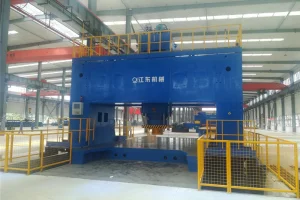
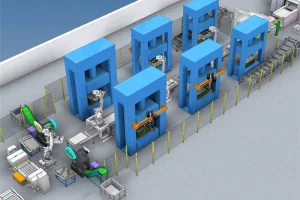
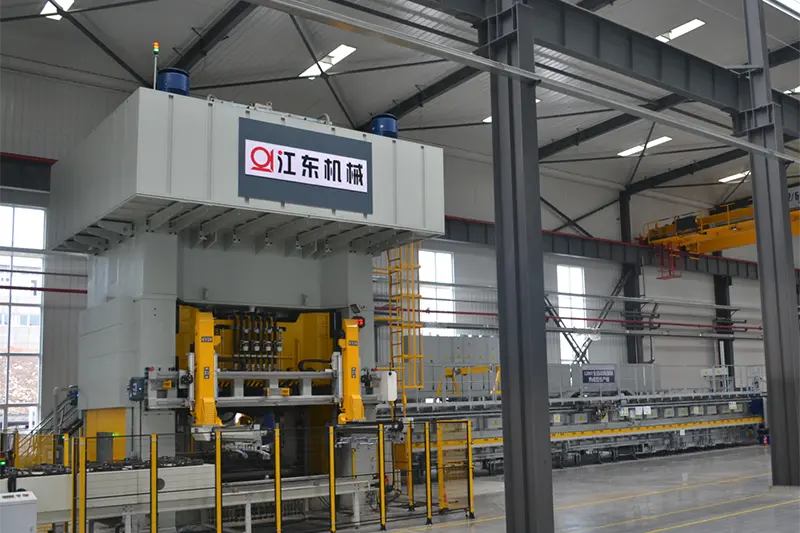
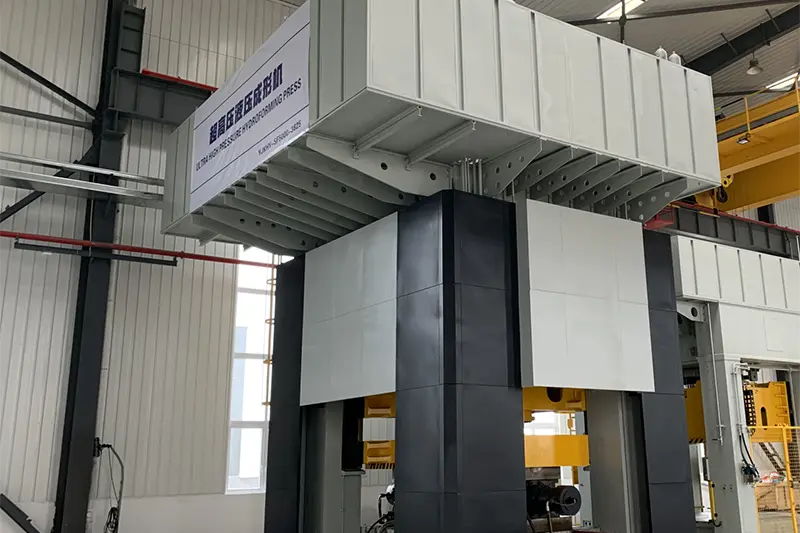
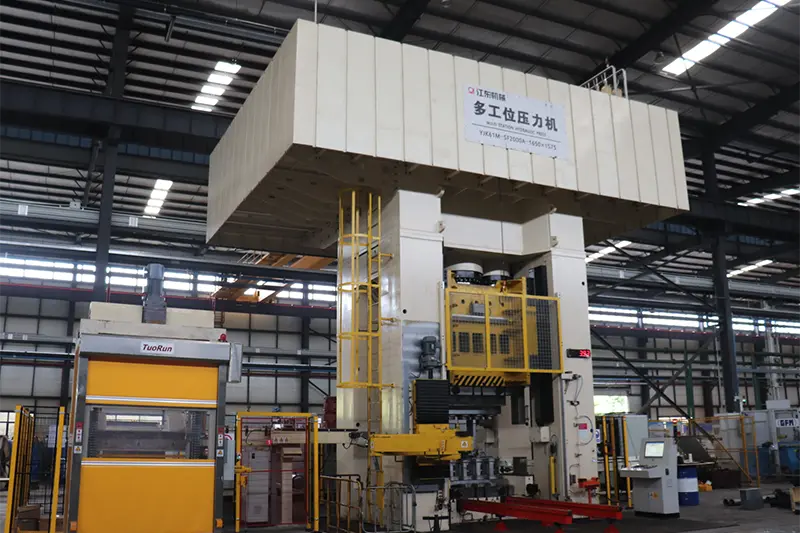
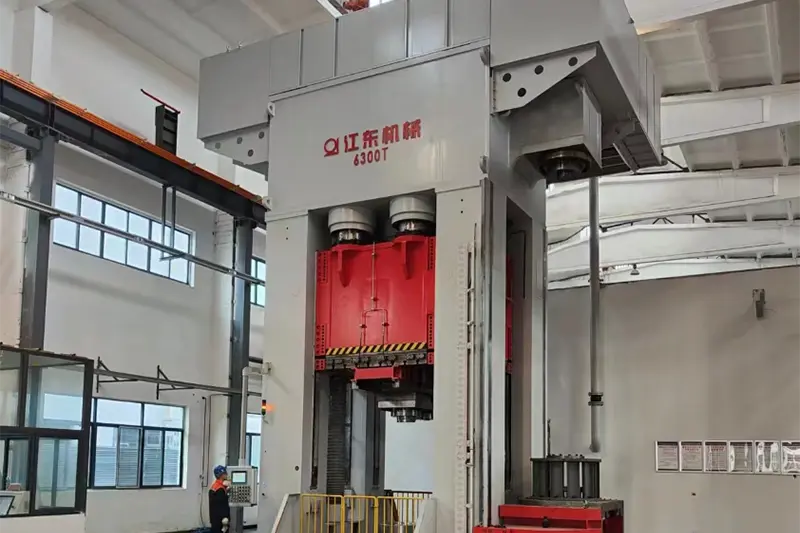
Our turnkey automotive solutions address the manufacturing needs of structural BIW (Body-In-White) components. By supplying advanced automated tandem lines, double-action drawing systems, and high-pressure internal hydroforming lines, we allow automotive manufacturers to form complex, lightweight engine cradles, radiator supports, and chassis rails. These systems utilize advanced robotic feeds and integrated quick die-change (QDC) tables to reduce tool changeover cycles to under five minutes.
2. Aerospace Titanium Alloy Superplastic Forming
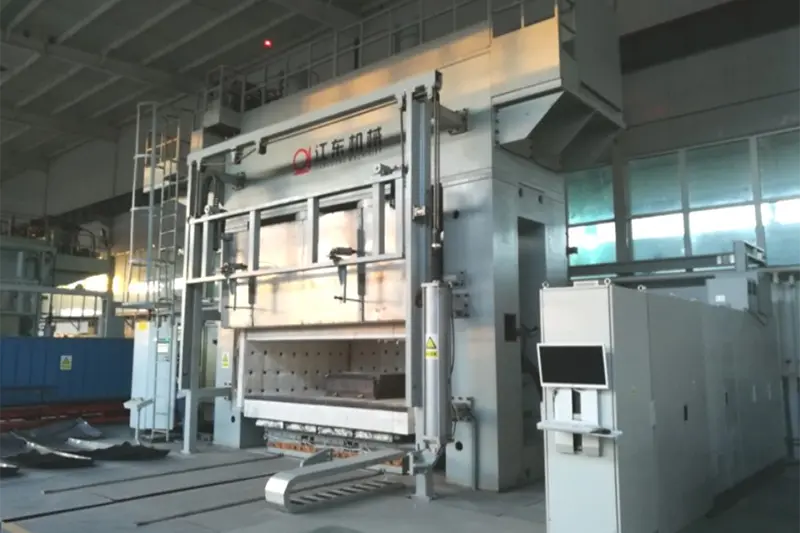
Aerospace manufacturing involves forming challenging materials like titanium (Ti-6Al-4V) and aluminum-lithium alloys. Jiangdong Machinery's Superplastic Forming (SPF) and Isothermal Forging (IF) systems feature precision gas-pressure profiling, high-temperature ceramic heater integrations (up to 950°C), and micro-precision ram speed controls. This prevents strain-induced fractures and maintains microstructural consistency throughout the workpiece.
| Technology Type | Core Application Components | Material Specialization | Key Advantages & Efficiency Metric |
|---|---|---|---|
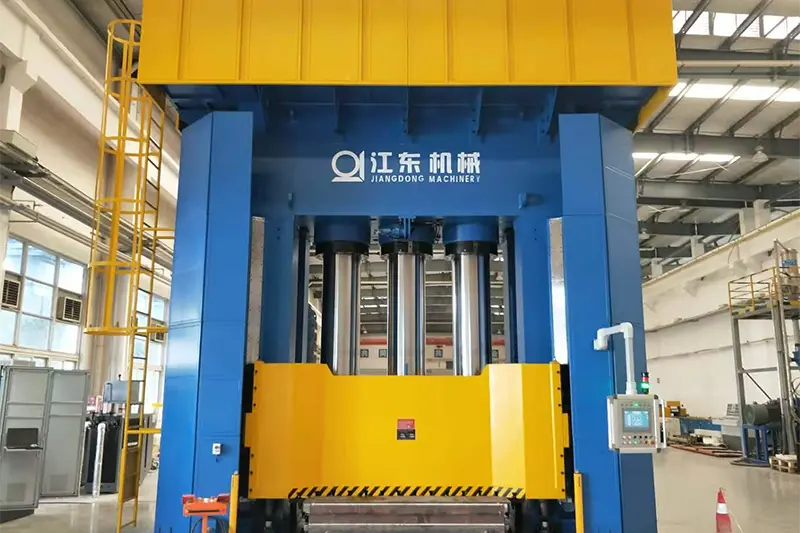
| Hydroforming | Engine cradles, suspension subframes, side rails | Aluminum, Advanced High-Strength Steels (AHSS) | Reduces total assembly weight by 20-30%; eliminates welding interfaces. |
| Hot Stamping (UHSS) | A-pillars, B-pillars, roof rails, bumper beams | Boron steel (22MnB5) | Tensile strengths up to 1500-2000 MPa; zero springback effects. |
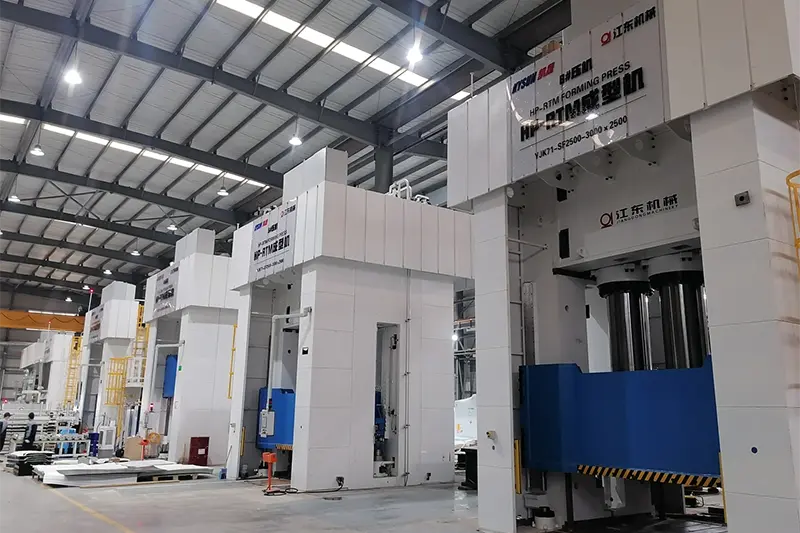
| Composite Compression | Battery enclosures, underbody shields, decklids | SMC, Carbon Fiber (CFRP), LFT-D | Excellent strength-to-weight ratio; integrated tooling sensors. |
| Superplastic Forming | Jet engine hollow blades, structural aircraft panels | Titanium alloys, Nickel superalloys | Forms highly complex contours without residual structural stress. |
3. Green Energy & Industrial Storage Vessels
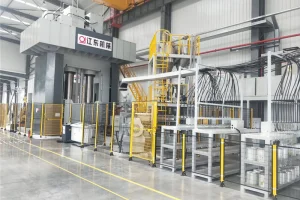
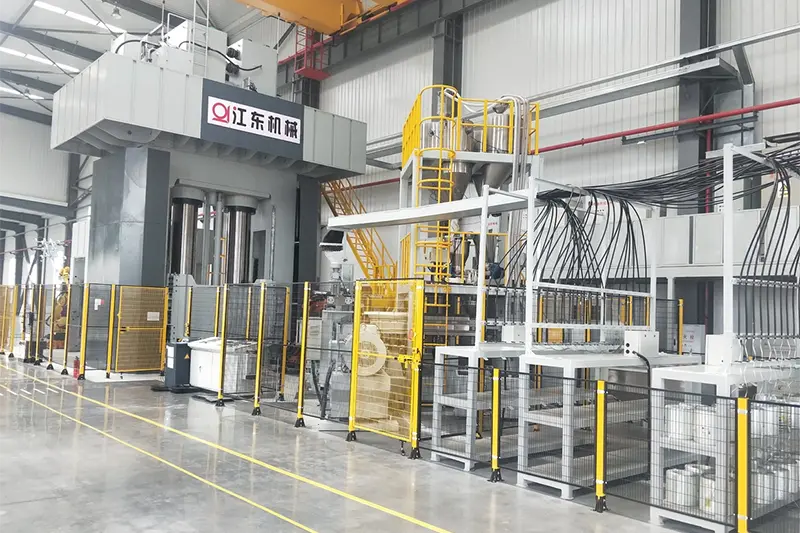
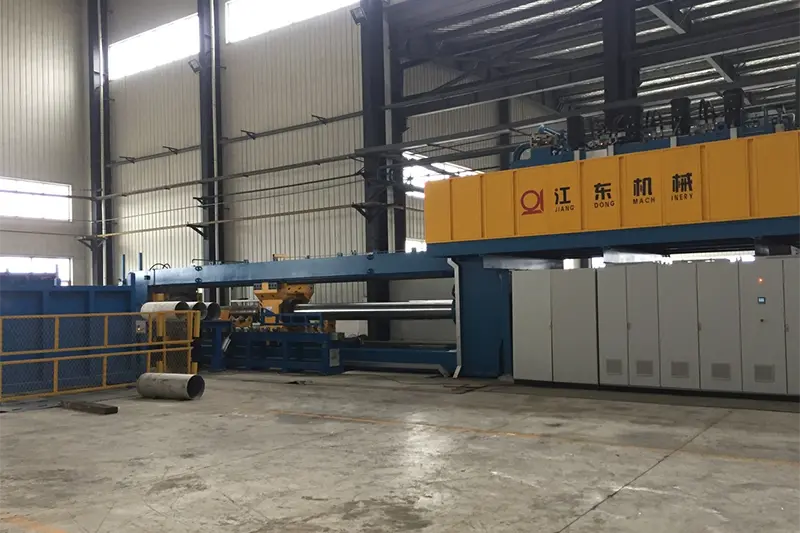
The transition to hydrogen fuel cells and high-pressure natural gas requires structural steel and aluminum storage vessels. Our deep-drawing vertical production lines are designed specifically to manufacture gas cylinders, bullet housings, and accumulators. These production setups combine multi-stage drawing, ironing, and necking processes with high concentricity accuracy, ensuring uniform wall thicknesses and structural reliability under high working pressures.
Technology Roadmap: The Future of Smart Forging
Jiangdong Machinery actively works on the next frontier of metal and non-metal forming technology. The future of hydraulic pressing relies on digital transformation, self-correcting mechanisms, and green energy management:
- Digital Twin & Predictive Maintenance: By modeling the physical behaviors of hydraulic valves, oil temperatures, and structural components in real-time, our Digital Twin dashboard predicts hydraulic seal failures before they cause unplanned downtime.
- AI-Driven Adaptive Control: Standard presses operate on fixed motion profiles. Our upcoming systems feature real-time pressure adjusters that measure variation in sheet thickness and material hardness, dynamically adjusting target pressures to eliminate scrap and micro-fractures.
- Integrated Multi-Station Hybrid Lines: Future manufacturing requires multi-material parts. We are designing hybrid lines that combine composite molding (such as carbon-fiber reinforced plastics) with metal stamping in a single processing cell.