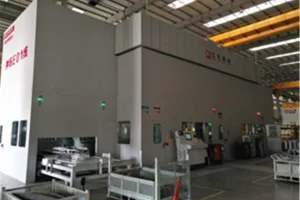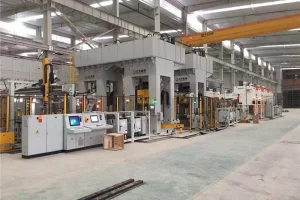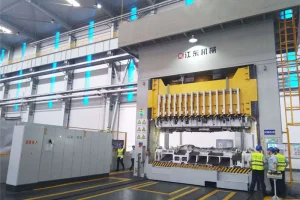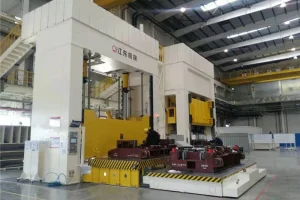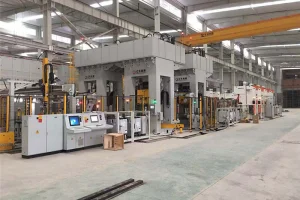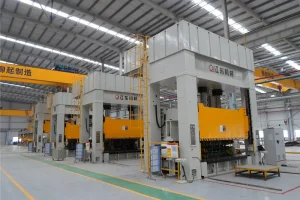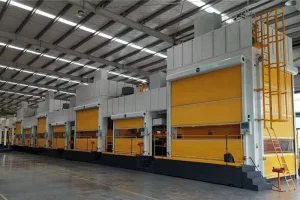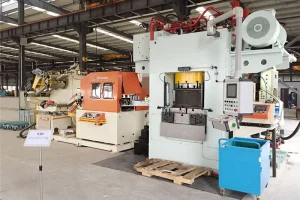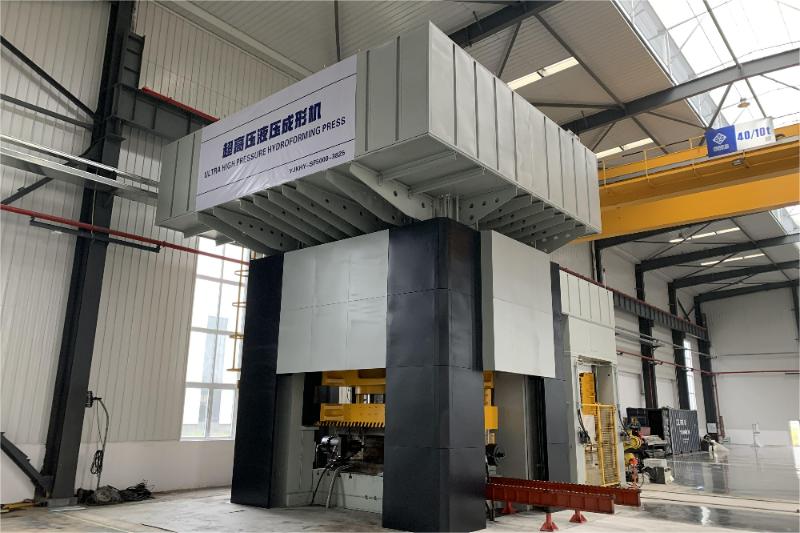

Buy internal high pressure hydroforming production line Quotes, Exporters
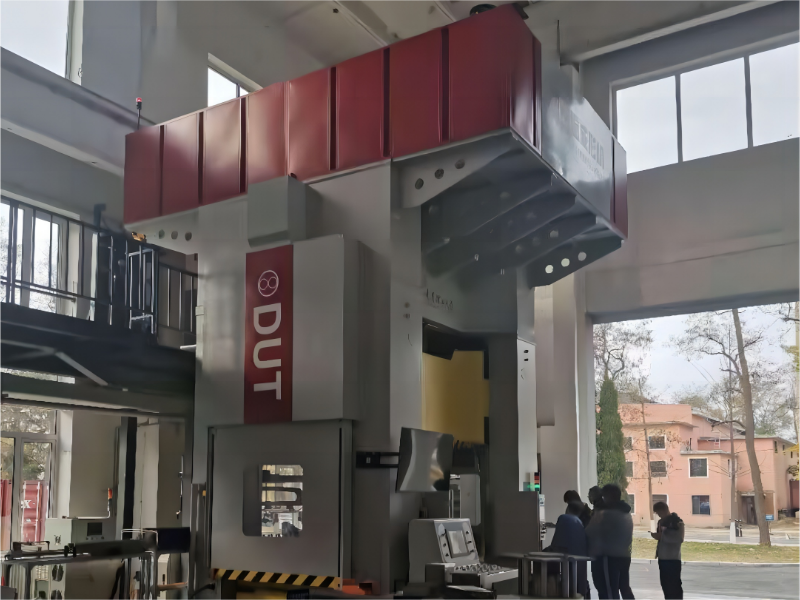
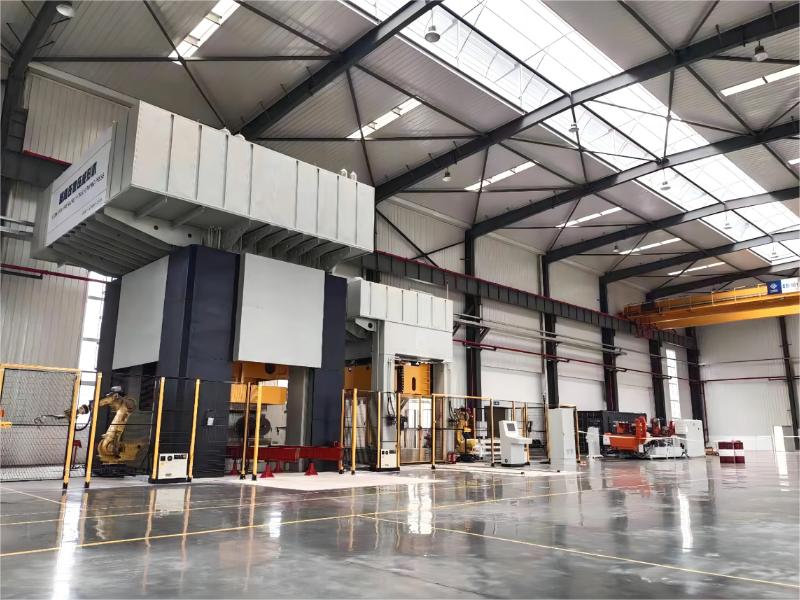
Internal high pressure forming, also called hydroforming or hydraulic forming, is a material forming process that uses liquid as forming medium and achieves the purpose of forming hollow parts by controlling internal pressure and material flow. Hydro Forming is a kind of hydraulic forming technology. It is a process in which the tube is used as billet, and the tube billet is pressed into the mold cavity to form the required workpiece by applying ultra-high pressure liquid and axial feed. For parts with curved axes, the tube billet needs to be pre-bent into the shape of the part and then pressurized. According to the type of forming parts, the internal high pressure forming is divided into three categories:
(1) reducing tube hydroforming;
(2) tube inside bending axis hydroforming ;
(3) multi-pass tube high-pressure hydroforming.
The hydroforming component features lightweight design, exceptional product quality, flexible product design, and a simplified process. Characterized by near-net forming and green manufacturing, it has been widely adopted within the automotive lightweight sector. Through effective section design and wall thickness optimization, numerous auto parts can be shaped into a single, complex integral component via the hydroforming of standard tubes.
This approach is significantly superior to traditional stamping and welding methods, offering enhanced product quality and production efficiency. Most hydroforming processes require only a punch (or hydroforming punch) matching the shape of the part, while the rubber diaphragm on the hydroforming machine serves the function of the traditional die. Consequently, die costs are reduced by approximately 50% compared to traditional dies. Unlike traditional stamping, which involves multiple stages, hydroforming forms the same part in just a single step.
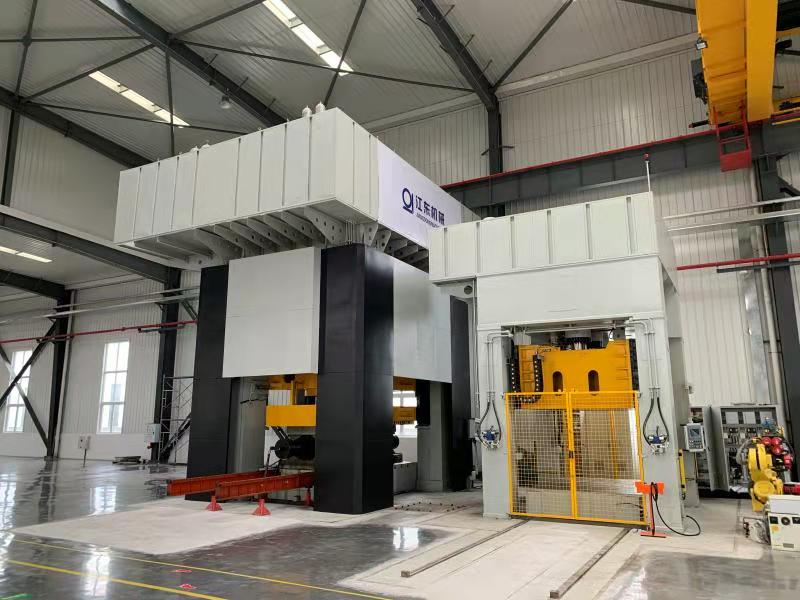
Advantages of Pipe Hydroforming
Compared with stamping welding parts, the distinct advantages of pipe hydroforming include:
Material Savings & Weight Reduction: General structural parts can be reduced by 20% to 30%, and shaft parts can be reduced by 30% to 50%. For instance, a typical stamping car subframe weighs 12kg, whereas an internal high-pressure formed subframe weighs only 7 to 9kg, achieving a 34% weight reduction. Similarly, a radiator support is reduced from 16.5kg (stamping) to 11.5kg (hydroforming), representing a 24% weight reduction.
Reduced Processing: Significantly decreases subsequent machining operations and welding workloads.
Enhanced Structural Strength: Boosts the strength and stiffness of components, and increases fatigue strength due to the reduction of solder joints.
High Material Utilization: Achieves a material utilization rate of 95% to 98% compared to traditional welded components.
Cost Efficiency: Decreases total production and mold costs by approximately 30%.
Applications & Industry Suitability
Hydroforming equipment is suitable for manufacturing complex-shaped, section hollow components across a variety of industries, including aerospace, nuclear power, petrochemical, drinking water systems, piping systems, automotive, and bicycle manufacturing.
Within the automotive field, the primary components produced include automobile body support frames, auxiliary frames (subframes), chassis parts, engine supports, intake and exhaust system pipe fittings, camshafts, and other structural parts.
Technical Specifications Table
Nominal force [KN]
16000 > NF > 50000
16000
20000
25000
30000
35000
40000
50000
Daylight opening [mm]
Upon request
Slide stroke [mm]
1000
1000
1000
1200
1200
1200
1200
Slide speed
Quick descend [mm/s]
Pressing [mm/s]
Return [mm/s]
Bed size
LR [mm]
2000
2000
2000
3500
3500
3500
3500
FB [mm]
1600
1600
1600
2500
2500
2500
2500
Height from bed to the ground [mm]
Motor total power [KW]
Frequently Asked Questions (FAQ)
What are the main benefits of hydroforming compared to traditional stamping?
Hydroforming allows complex hollow components to be formed in a single step rather than requiring multiple stamping and welding processes. This yields lighter parts, simplifies production, and reduces mold tooling costs by roughly 50%.
How much weight can be reduced by using pipe hydroforming?
Generally, structural components can see a weight reduction of 20% to 30%, and shaft components can be lightened by 30% to 50%. For instance, radiator supports can achieve a 24% weight reduction, and car subframes can be reduced in weight by 34%.
Does hydroforming help lower manufacturing costs?
Yes, hydroforming reduces production costs and mold expenditures by approximately 30%. It also optimizes material utilization to between 95% and 98%, leading to minimal raw material waste.
Which automotive parts are commonly manufactured using hydroforming equipment?
Common automotive parts include car body support frames, auxiliary subframes, chassis components, engine supports, intake/exhaust pipe fittings, and camshafts.
What other industries benefit from hydroforming technology?
Beyond the automotive sector, hydroforming is highly suitable for aerospace, nuclear power, petrochemicals, drinking water systems, industrial piping, and bicycle manufacturing to produce complex section hollow parts.