1 / 1

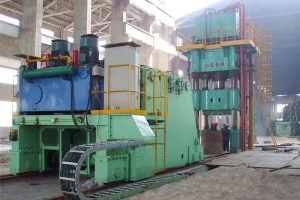
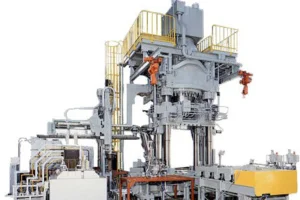
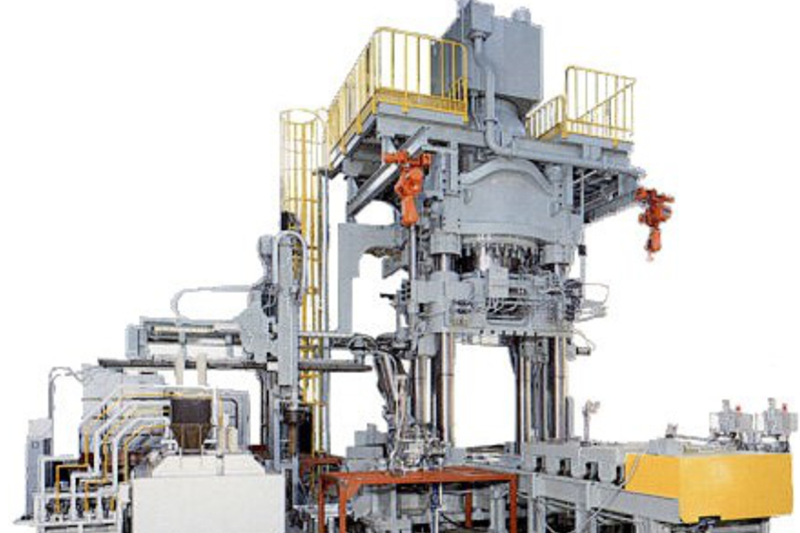
The Light Alloy Liquid Die Forging Production Line utilizes advanced technology to achieve near-net shape forming. This process eliminates or significantly reduces the need for additional machining, resulting in cost savings, improved production efficiency, and shorter lead times.
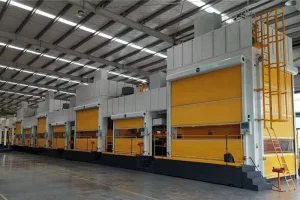
Compared to traditional manufacturing methods, such as casting and machining, this production line offers a significantly shorter process flow. The integration of multiple processes into a single line reduces handling, intermediate operations, and overall production time, enhancing productivity and cost-effectiveness.
By merging casting and forging processes, the production line promotes environmental sustainability. It minimizes material waste, reduces energy consumption, and lowers carbon emissions compared to conventional manufacturing methods. This makes it a more environmentally friendly choice for today's industries.
The Light Alloy Liquid Die Forging Production Line incorporates innovative technologies to ensure low energy consumption during the manufacturing process. Through efficient heat management and optimized production parameters, it maximizes energy efficiency and reduces operating costs for businesses.
With its precise control and consistent production parameters, the production line achieves a uniform part structure. This ensures that each component produced has consistent mechanical properties and dimensional accuracy, meeting the highest quality standards.
The near-net shape forming technique used in the production line enhances the mechanical performance of the final products. The uniform part structure, combined with the inherent characteristics of light alloy materials like aluminum and magnesium, results in components with superior strength, rigidity, and durability.
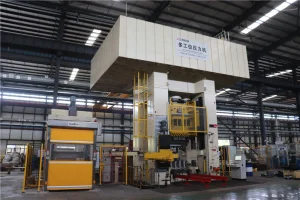
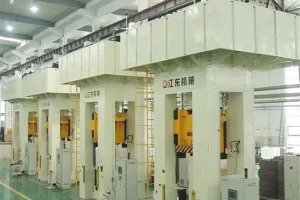
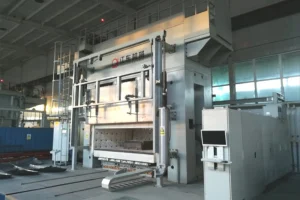
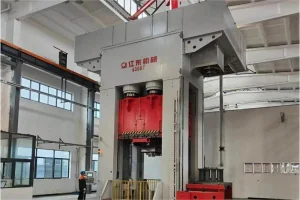
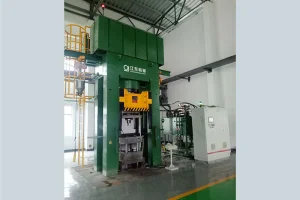
The production line is equipped with a multifunctional CNC liquid die forging hydraulic press, which enables precise control over the manufacturing process. This CNC control allows for accurate and repeatable forming of complex shapes, ensuring consistent quality throughout production. The integration of intelligent features enhances the overall efficiency, productivity, and reliability of the production line.
The Light Alloy Liquid Die Forging Production Line is suitable for a wide range of applications in industries that require high-performance components made from light alloys such as aluminum and magnesium. Some of the key application areas include:
The production line can be utilized to manufacture lightweight, energy-efficient components for vehicles. These components include engine parts, transmission components, chassis parts, and suspension components, among others.
Light alloy components produced by the production line find applications in the aerospace and aviation industry. These components can be used in the manufacturing of aircraft structures, landing gear, engine components, and interior fittings.
The production line can be employed to produce high-performance components for electronics and electrical equipment. This includes heat sinks, connectors, casings, and other specialized parts that require lightweight and exceptional mechanical performance.
The renewable energy industry can benefit from the production line by manufacturing lightweight components for wind turbines, solar power systems, and energy storage systems. These components require high strength, durability, and corrosion resistance.
The production line is applicable for producing components used in various industrial machinery, such as pumps, valves, compressors, and hydraulics. These components require high precision, strength, and reliability.
By offering near-net shape forming, environmentally friendly manufacturing, and high-quality components, the Light Alloy Liquid Die Forging Production Line caters to the growing demand for efficient and sustainable manufacturing processes in industries across the globe.
Near-net shape forming minimizes or eliminates the need for subsequent machining. This leads to significant material savings, reduced overall processing times, and lowered final production costs.
The system utilizes advanced technology that optimizes thermal management and production parameters, maximizing overall energy efficiency and reducing operation costs.
It is designed for light alloys, specifically aluminum and magnesium, which are ideal for producing strong, lightweight, and durable industrial components.
Thanks to precise CNC control and highly consistent operating parameters, the process guarantees consistent mechanical properties and precise dimensional tolerances across all parts.
Yes. By combining casting and forging into a single process flow, it reduces material waste, lowers energy usage, and decreases carbon emissions compared to traditional methods.