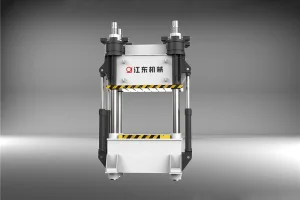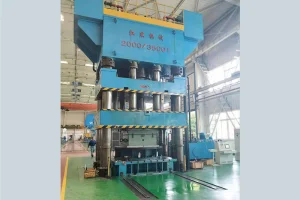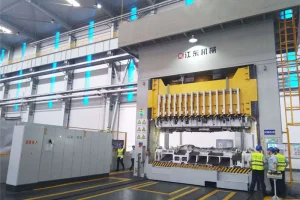
High-precision molding equipment customized for Polish aerospace and automotive tier-1 suppliers, optimizing cycle times and material integrity.
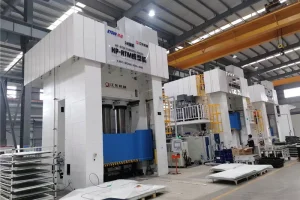
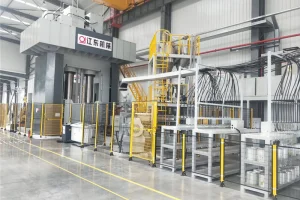
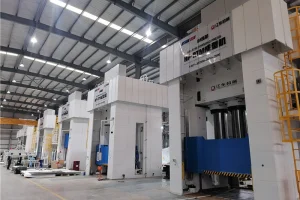
Poland has established itself as one of Europe’s premier manufacturing powerhouses. With key automotive clusters in Upper Silesia and Lower Silesia, alongside the dynamic Aviation Valley (Dolina Lotnicza) in southeastern Poland, local industries are experiencing a profound structural pivot towards advanced, lightweight materials. The demanding requirements of automotive emission standards (including the Euro 7 framework) and the transition to electric vehicles (EVs) require the utilization of composites compression molding to reduce weight without sacrificing structural integrity.
Globally, the composite materials market is scaling at a CAGR of over 7.5%, driven by structural optimization demands. In Poland, regional OEMs and Tier-1 structural component suppliers (serving giants like Volkswagen Poznań, Stellantis Gliwice, and various electric bus manufacturers like Solaris) are actively replacing heavy metal components with advanced SMC, GMT, and carbon fiber reinforced polymers (CFRP). Achieving class-A surface finishes and tight dimensional tolerances requires intelligent hydraulic press systems designed for heat control, uniform pressure distribution, and rapid molding cycles.
Many Polish manufacturers face challenges related to process repeatability, energy costs, and material waste. Our engineering approach implements active leveling control (ALC) and variable-frequency drive (VFD) technology in our hydraulic systems, allowing for precision optimization of pressure profiles during cure cycles. This approach ensures maximum structural integrity, minimized scrap, and optimal energy profiles aligned with the strict environmental directives of the EU.
Engineered for absolute accuracy, our production configurations span sheet metal stamping, lightweight composite compression molding, and special high-pressure forming technologies.
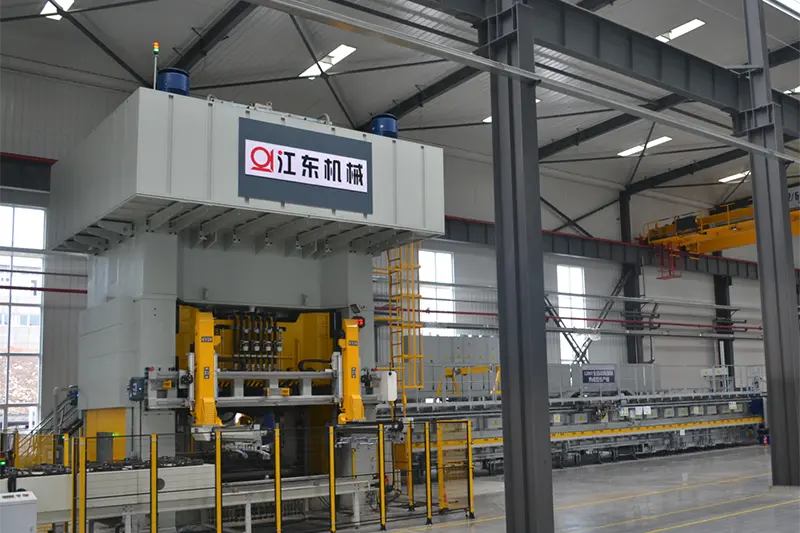
Engineered for ultra-high strength steel (UHSS) forming, delivering optimal tensile properties for crash safety parts.
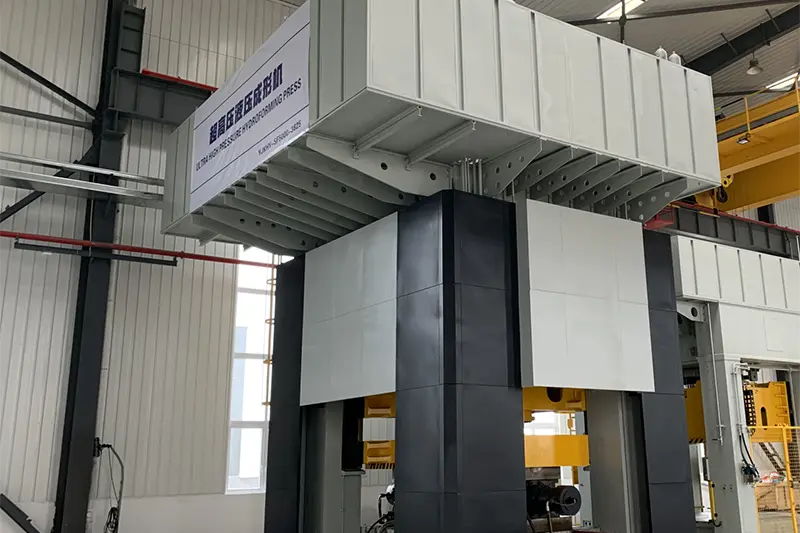
Complex tubular components with high dimensional precision and reduced assembly operations.
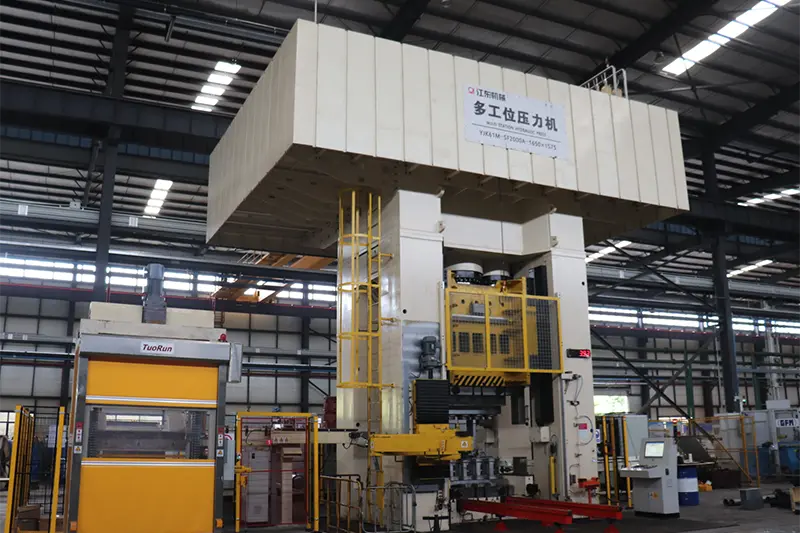
High-efficiency mass production of critical drivetrain and chassis elements.
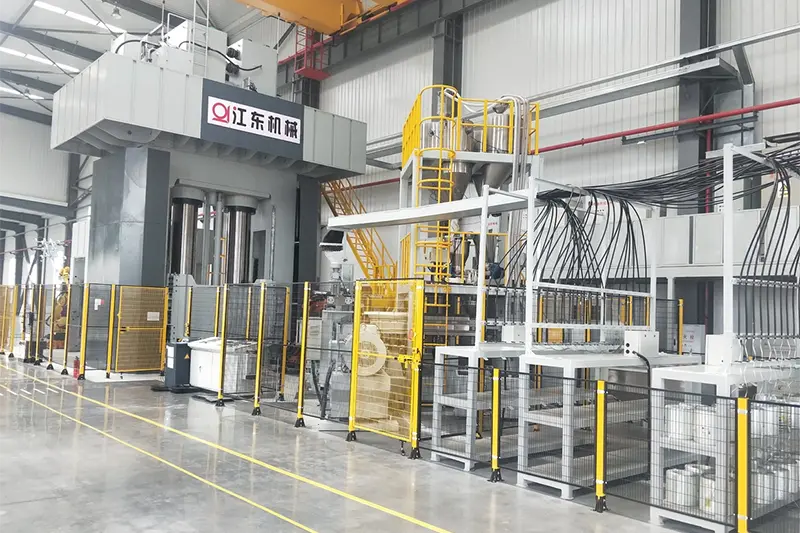
Long-Fiber Thermoplastic direct compounding and molding lines for automotive structural optimization.
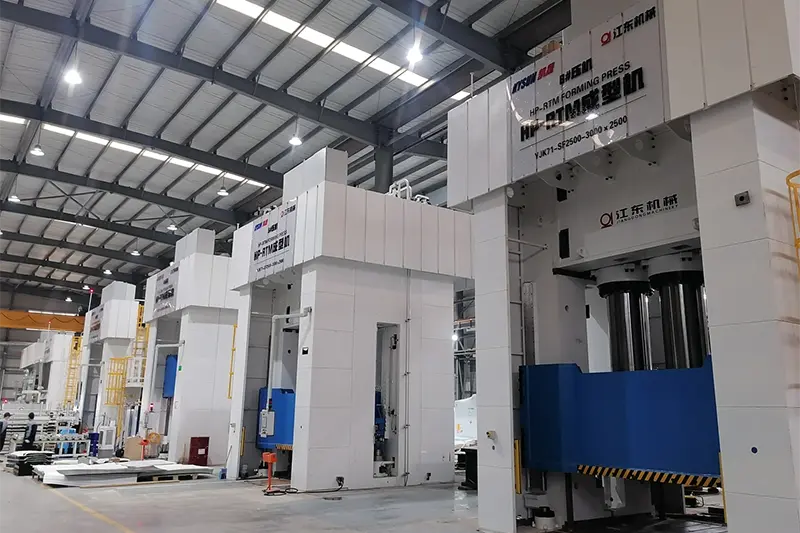
High-Pressure Resin Transfer Molding setups optimized for aerospace carbon fiber parts.
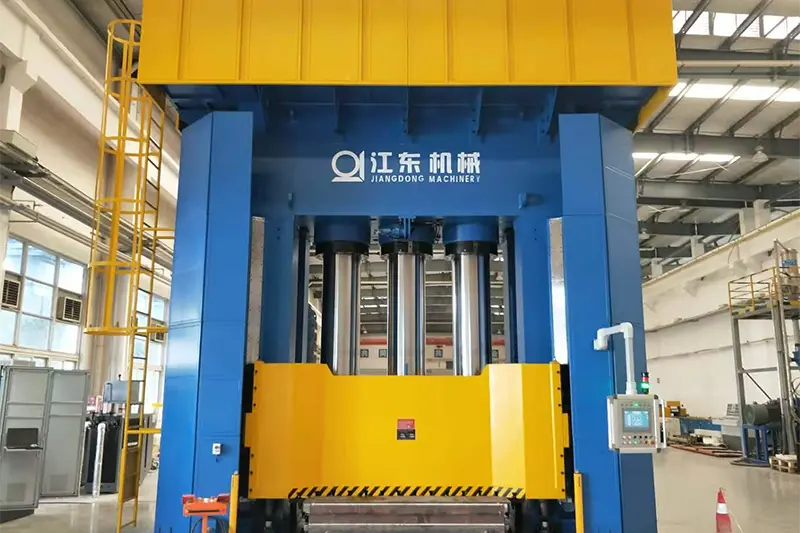
Versatile compression molding equipment engineered for high-volume Class-A structural components.
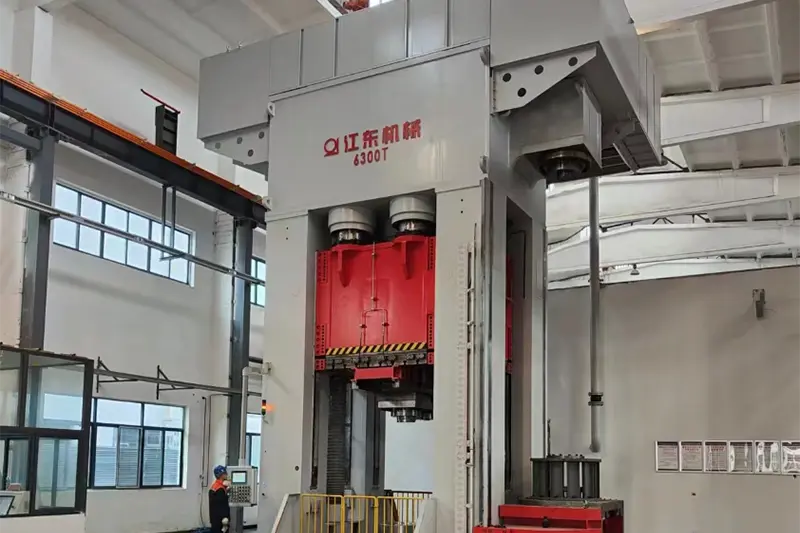
Constant-temperature deformation process ideal for superalloys and aerospace components.
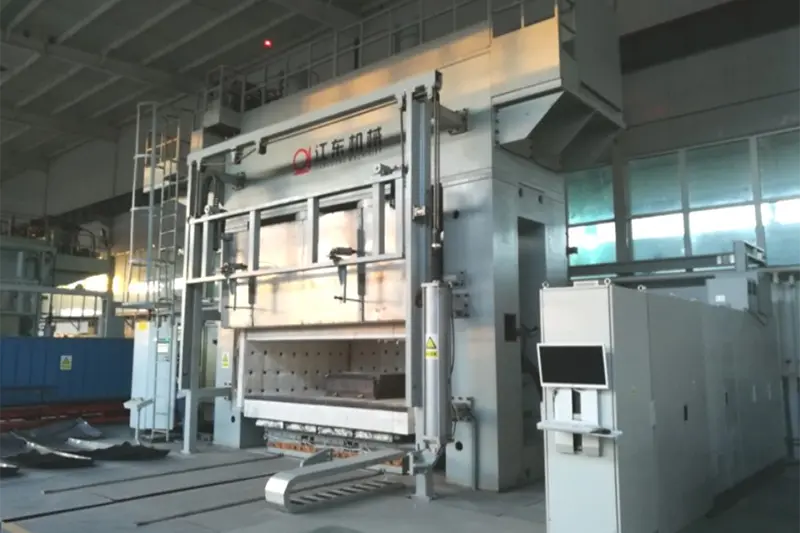
Extends complex geometry manufacturing limits for high-strength aluminum and titanium alloys.
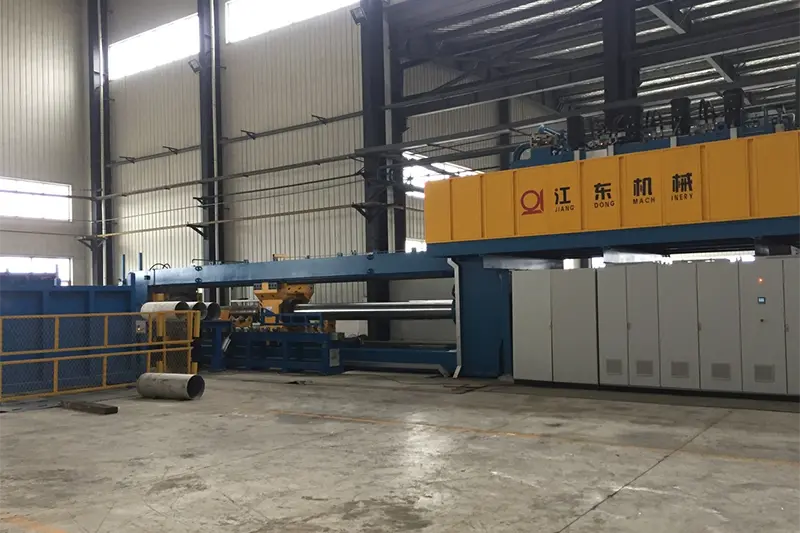
Deep drawing and necking equipment engineered for seamless gas vessels and heavy-duty containers.
We deliver comprehensive engineering, from machinery configuration to mold optimization and process support, for Polish and European industrial sectors.
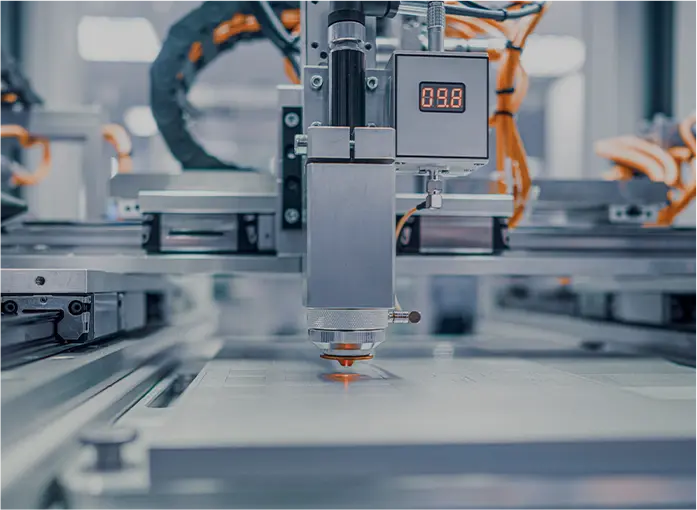
Chongqing Jiangdong Machinery Co., Ltd. (Jiangdong Machinery) is a comprehensive manufacturing enterprise integrating R&D, production, sales, and service of advanced hydraulic presses, lightweight forming technologies, lightweight components, hot & cold stamping dies, and structural metal castings.
Our hydraulic presses and automated production lines feature advanced levels of intelligence, automation, and flexible control. We deliver high-tonnage metal and non-metal hydraulic forming equipment and integrated process engineering, with a focus on automotive weight reduction, battery housings, and aerospace structures.
From design to production support, we ensure your lines operate at peak performance across Poland and Europe.

Customized Solutions

Remote Support

Preventative Care

Technical Consulting

OEM Spare Parts
Broad range forming configurations, deep-drawing machinery, and automated production cells serving global Tier-1 manufacturing facilities.
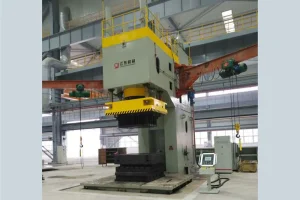
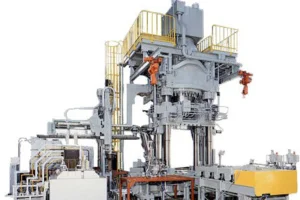
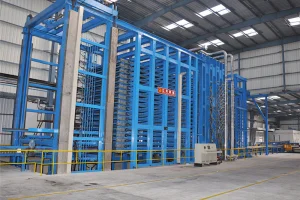
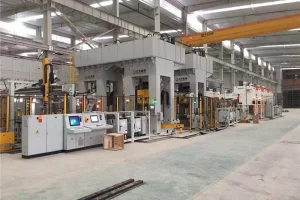
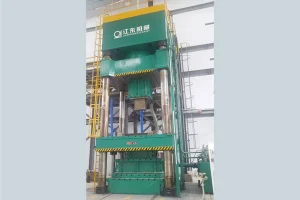
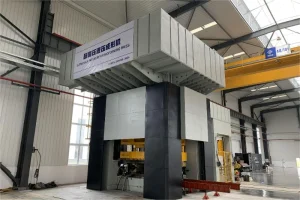
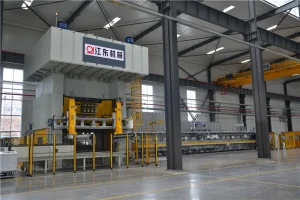
Deep technical insights, process maps, and answers to design challenges in composite compression molding.
The transformation of composite part fabrication is governed by three primary pillars: cycle-time reduction, automation integration, and closed-loop process monitoring. Traditional autoclave methods are increasingly replaced by compression molding systems (SMC, HP-RTM, and LFT-D) to support automotive cycle times (typically sub-2 minutes per part).
By integrating direct-compounding systems like LFT-D, manufacturers reduce raw material costs by blending glass/carbon fibers directly into the polymer melt prior to molding. This bypasses the expensive pre-preg stage, enhancing the competitiveness of Polish suppliers in the regional supply chain.
Complex, asymmetrical composite parts can induce eccentric loads on hydraulic presses, potentially leading to uneven part thickness and accelerated tool wear. Our systems integrate real-time close-loop micro-leveling control.
Equipped with high-frequency response servo valves and coordinate-positioned sensor networks, the slide maintaining parallelism within 0.05 mm under uneven loads. This ensures consistent mechanical properties across complex parts, such as automotive floorpans and aircraft structures.
Stay informed on our international partnerships, technology visits, and exhibition roadmaps.
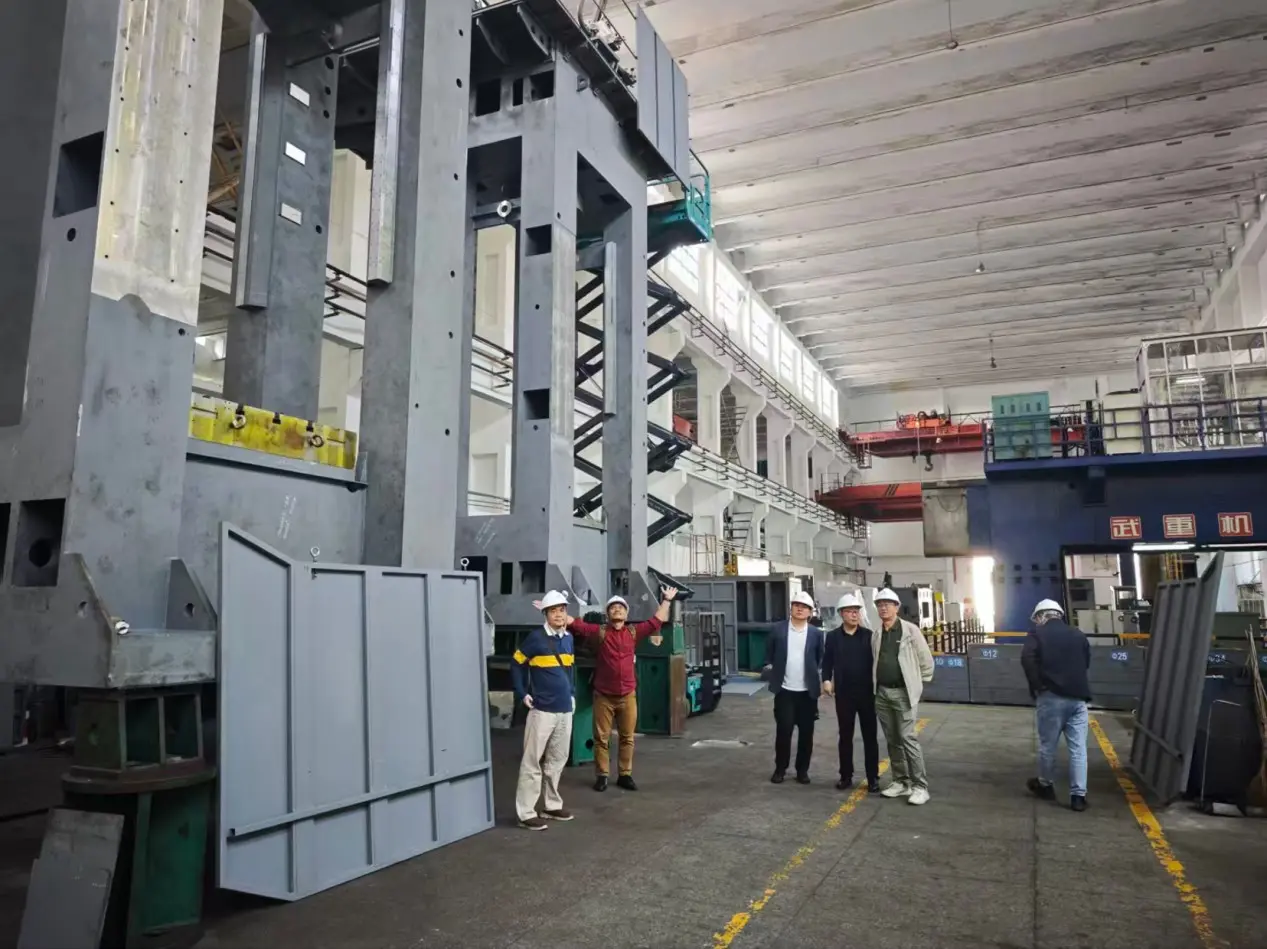
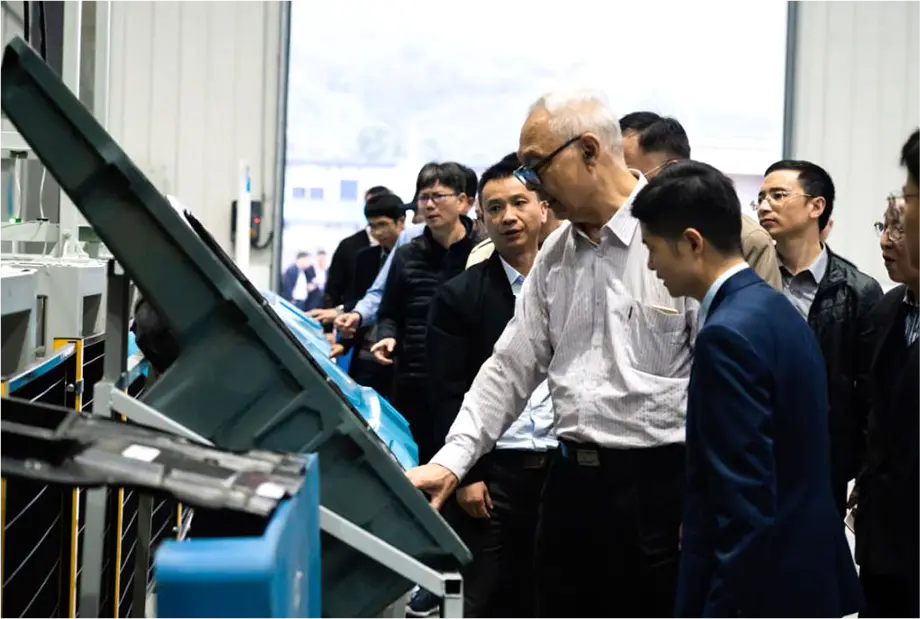
Recently, a delegation of Indonesian customers visited Jiangdong Machinery to inspect its manufacturing capabilities, product quality standards, and technical strengths, laying a solid foundation for lightweight structural parts manufacturing collaborations.
Read MoreMultiple partners from Southeast Asian countries including Thailand, Indonesia, and Malaysia have successfully visited our state-of-the-art hydraulic assembly complexes to finalize supply agreements for heavy forming cells.
Jiangdong Machinery showcased its lightweight composite forming technologies, high-pressure RTM options, and automated stamping systems designed for global automotive parts suppliers.