Custom Isothermal Forming Exporter & Service

Global High-End Precision Forging Solutions, Advanced Lightweight Manufacturing Technology, and Next-Generation Hydraulic Presses

Global Business & Industrial Status of Isothermal Forming

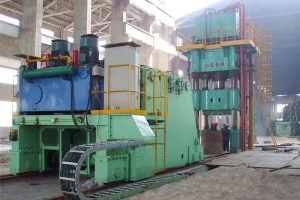
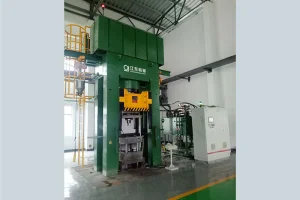
Isothermal forming, particularly Isothermal Forging (ITF), has transitioned from an niche laboratory methodology to a foundational manufacturing process for critical high-performance assemblies. In contemporary aerospace, defense, and high-stakes energy industries, the demand for components showing near-zero metallurgical defects and absolute structural stability is non-negotiable. Traditional forging methods, characterized by high thermal gradients between the workpiece and cooler dies, introduce localized stresses and microstructural variability that can result in structural failures under extreme stress.

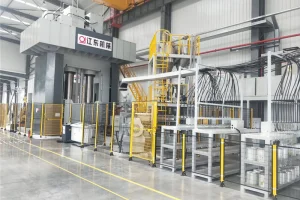
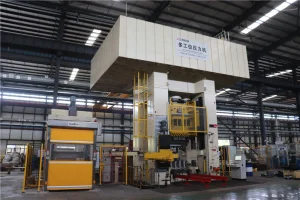
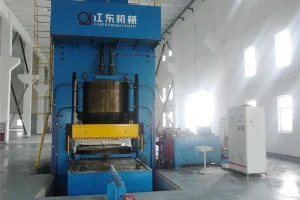
Today, the global market for isothermal forging services is surging. This growth is driven by the expansion of aerospace commercial fleets, military fleet modernization, and the manufacturing of industrial gas turbines (IGT). The process ensures that the die and the workpiece are maintained at identical temperatures throughout the deformation cycle, drastically reducing flow stress and eliminating surface chilling. As an exporter of custom isothermal systems, we support manufacturers globally in achieving net-shape and near-net-shape components. This efficiency significantly lowers raw material buy-to-fly ratios, which is critical when processing costly alloys.

Global Industry Trends: Sustainability, Intelligence & Lightweighting

The mechanical engineering and metal-forming sector is currently experiencing a technological transition driven by three key pillars: Decarbonization, AI-Driven Process Optimization, and Superalloy Lightweighting. The push toward net-zero emissions has made material utilization a core performance metric. Isothermal processes offer high material yields, aligning directly with sustainable manufacturing objectives by reducing energy consumption and material waste.

Simultaneously, the integration of smart sensors and real-time data analysis is redefining factory operations. Modern isothermal presses are equipped with closed-loop thermal control loops and optical monitoring systems. These technologies continuously adjust press speed and heating elements based on real-time feedback. This level of automated process correction ensures absolute consistency across manufacturing batches, securing the reliability required for critical component manufacturing.

1937
Established Year
30+
Patents Per Year
30+
Scientific Innovations / Yr
100%
Customized Engineering Solutions

Localized Application Scenarios of Advanced Isothermal Forging

The industrial utilization of isothermal forming is highly region-specific, matching the core strengths of different regional markets:

  • North America (Aerospace Focus): Primarily focused on producing titanium alloy turbine discs and structural components for next-generation defense aircraft and commercial passenger jets.
  • Western Europe (High-End Automotive & Space): Focused on space launch vehicle fuel tanks and high-strength suspension parts for performance vehicles using superplastic aluminum-lithium alloys.
  • Asia Pacific (High-Growth Infrastructure & Commercial Tech): Focused on bulk production of power generation equipment parts, commercial vehicle components, and high-volume consumer electronics chassis.

By acting as a comprehensive exporter, Chongqing Jiangdong Machinery tailors hydraulic forming systems and parameters to meet regional manufacturing standards (such as CE, ASME, and local environmental codes). This approach guarantees seamless integration into existing production workflows.

Technology Roadmap & Future Outlook (2025-2035)

The evolution of isothermal systems is guided by a clear technological roadmap. Over the next decade, we anticipate three major shifts:

  • Hybrid Heating Systems: Transitioning from traditional induction or resistive heating to hybrid systems that combine laser-assisted localized heating with closed-die heating. This reduces overall energy consumption while improving thermal precision.
  • Integrated Gas Cylinder & Superplastic Systems: Integrating gas expansion and isothermal forging into a single tooling configuration, allowing for the manufacturing of complex, hollow geometries in a single step.
  • AI-Driven Metallurgy: Deploying real-time neural networks that analyze stress-strain curves on the fly, adjusting hydraulic press velocity to match the material's dynamic recrystallization profile. This prevents micro-cracking at the grain level.

Industrial Solutions & Technologies

Comprehensive metal and composite forming technologies engineered by Chongqing Jiangdong Machinery Co., Ltd.

Sheet Metal Stamping & Metal Forging

Advanced high-tonnage hydraulic solutions for structural components.

Composite Forming

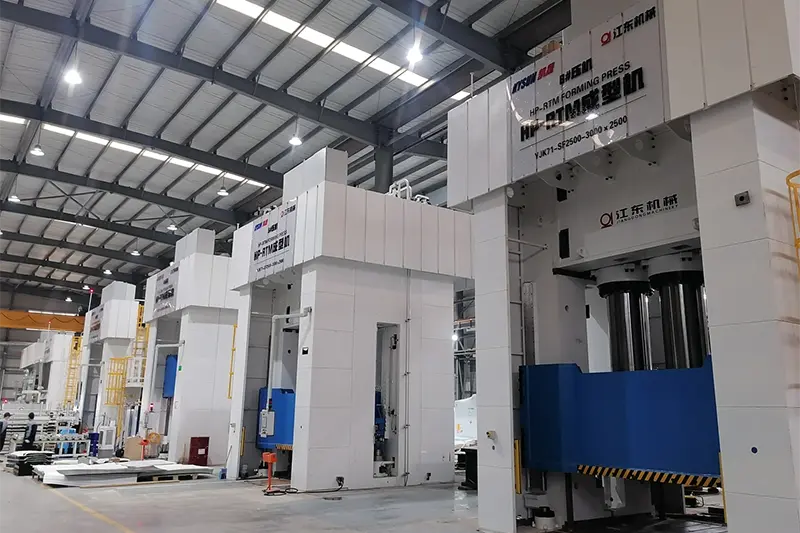
Precision systems for LFT-D, SMC, and carbon fiber HP-RTM processing.

Special Industrial Forming

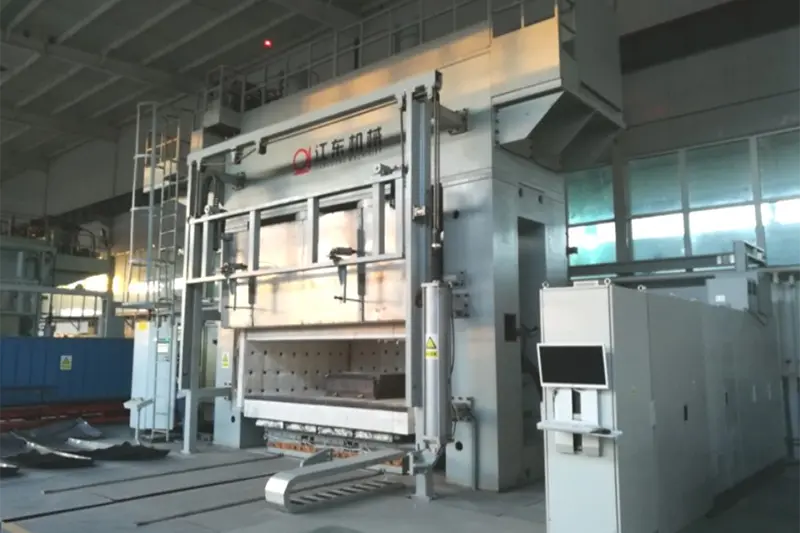
High-temperature superplastic and isothermal systems.

Hydroforming Technology

Enables the production of complex, hollow, and lightweight automotive and aerospace parts using internal fluid pressure.

Hot Stamping Technology

Optimized for high-strength steel (aluminum) parts, vital for modern vehicle collision safety structures.

Multi-station Forming Technology

High-efficiency, automated multi-station systems designed for high-volume parts manufacturing.

Superplastic & Isothermal Technology

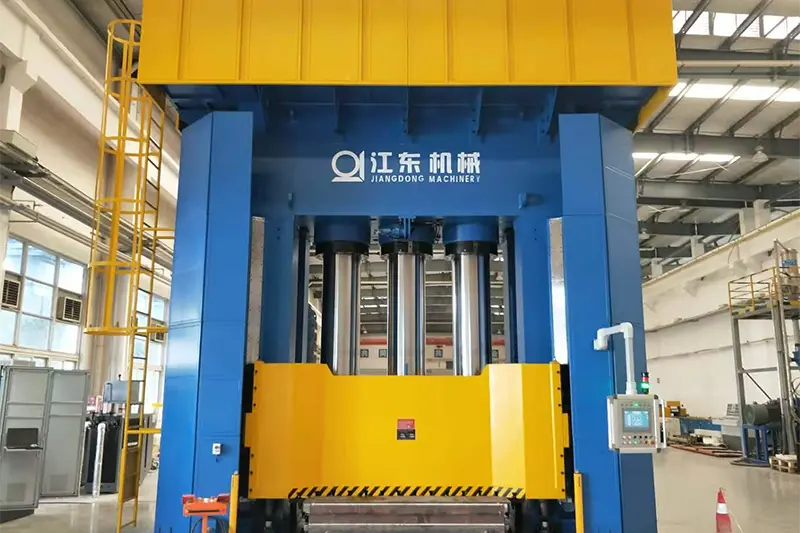
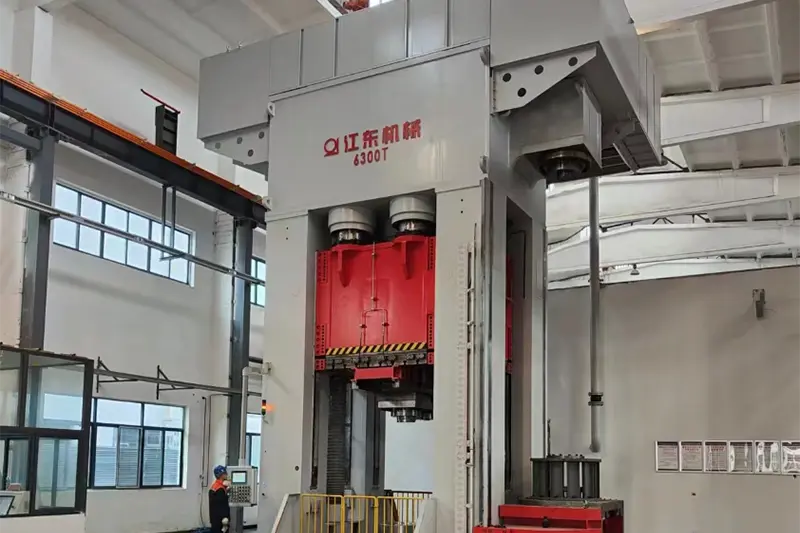
Specialized manufacturing systems for aerospace components, utilizing controlled thermal environments for superalloy forming.

Composites Compression Molding

High-throughput production lines designed for structural composite components.

Technology & Equipment Visualizations

Original high-definition references mapping out our structural, composite, and isothermal forming machinery lines.
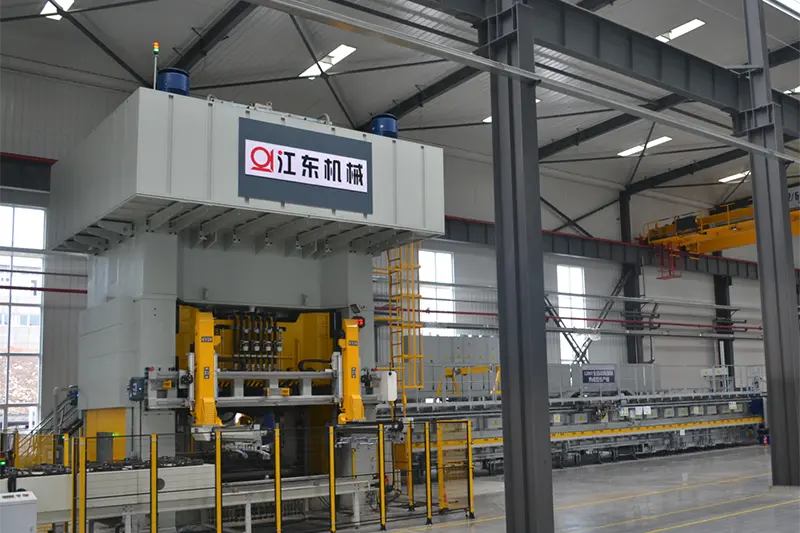
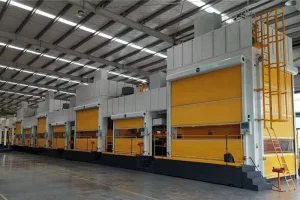
Hot Stamping Hydraulic Press Production Line
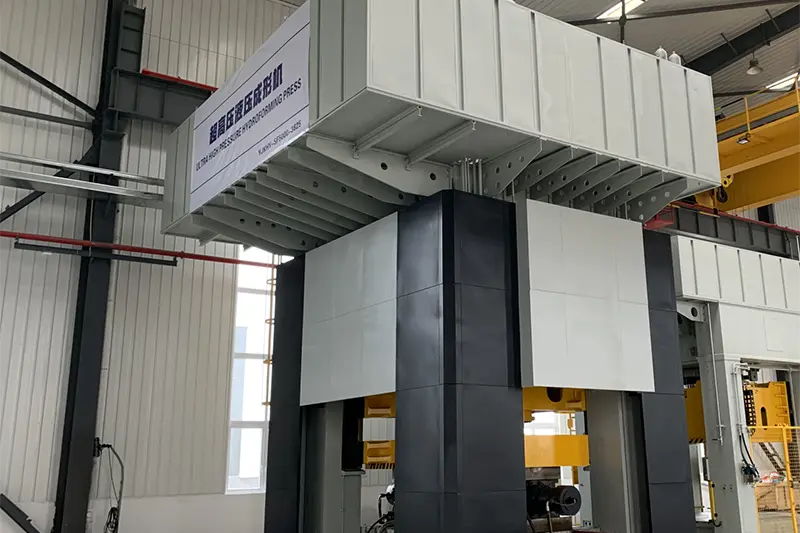
Hot Stamping Hydraulic Press Production Line

Hydroforming-Internal High Pressure Forming
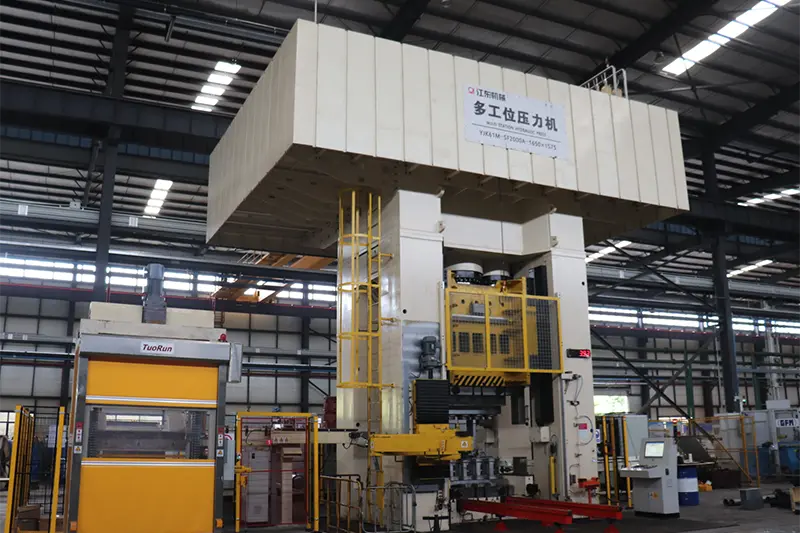
Hydroforming-Internal High Pressure Forming

Multistation Extrusion Forging Production Line
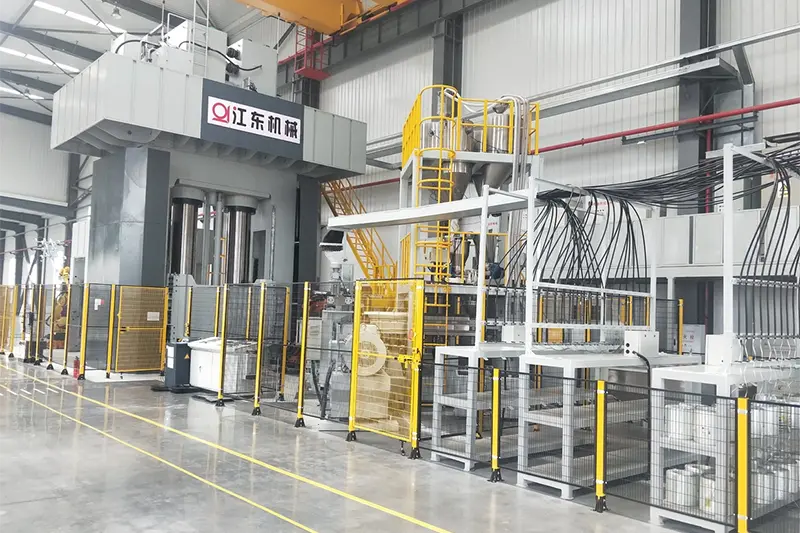
Multistation Extrusion Forging Production Line

LFT-D

LFT-D Forming Technology

HP-RTM

HP-RTM Forming Systems

SMC/BMC/GMT/PCM

SMC / BMC / GMT / PCM

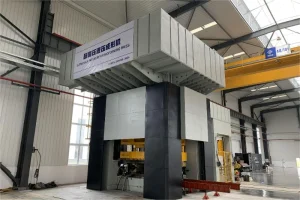
Iso Thermal Forging

Iso Thermal Forging Systems

Superplastic Forming

Superplastic Forming Equipment

Gas Cylinder Bullet Housing Stretching

Gas Cylinder & Bullet Housing Stretching
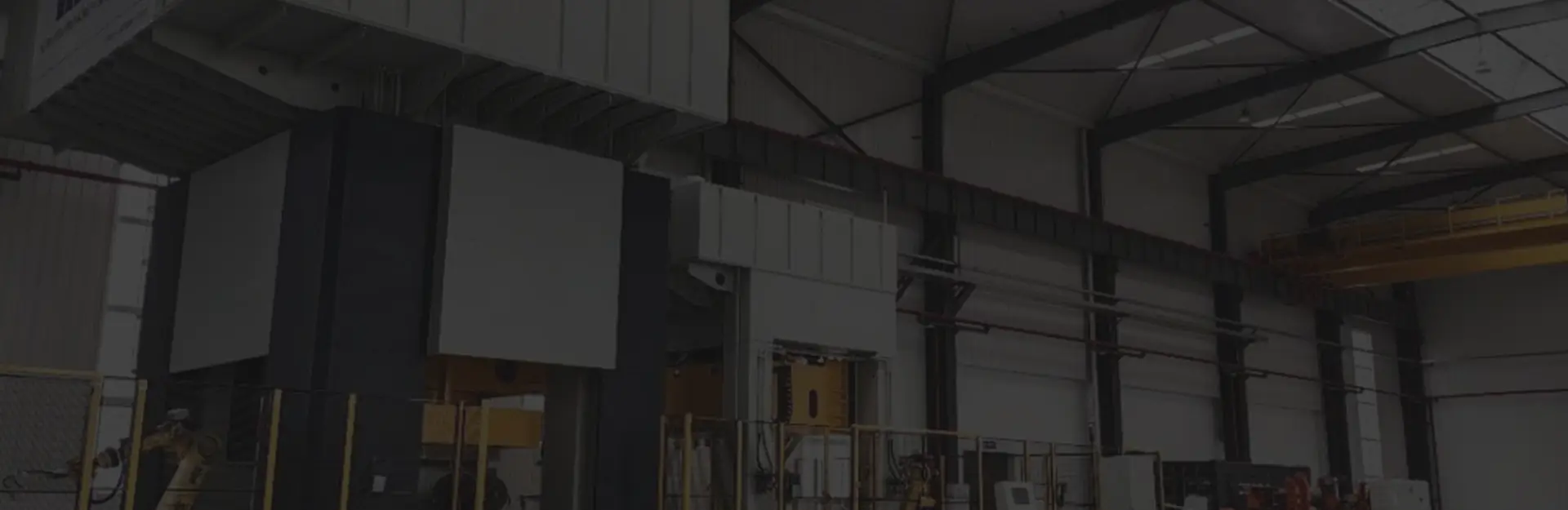
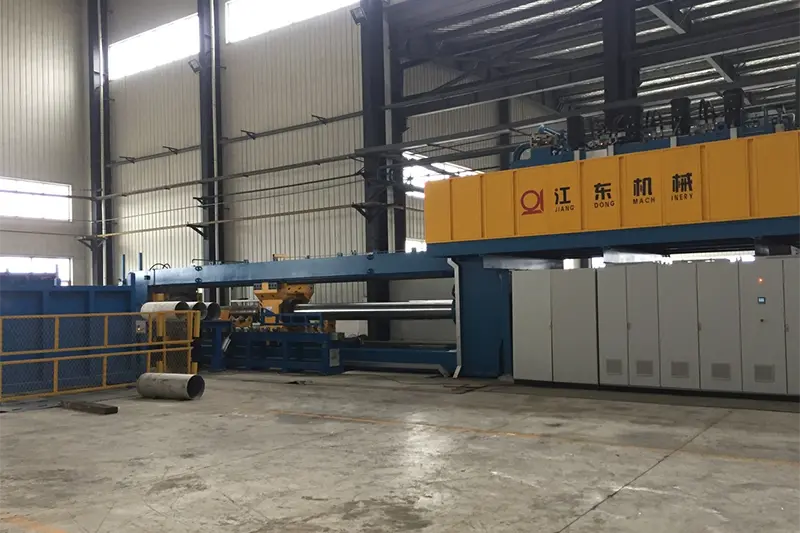
Jiangdong Machinery Plant View
Facility Interior Facility Certification

Chongqing Jiangdong Machinery Co., Ltd.

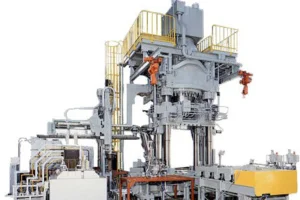
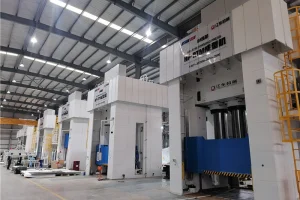
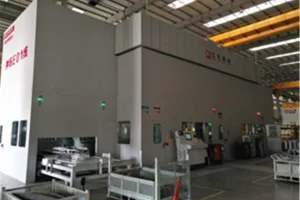
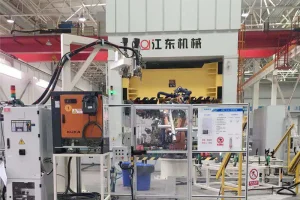
Chongqing Jiangdong Machinery Co., Ltd. (Jiangdong Machinery) is an integrated engineering enterprise. We specialize in the R&D, manufacturing, sales, and service of advanced hydraulic presses, lightweight forming systems, customized hot and cold stamping dies, and high-performance metal castings.

Our technology incorporates real-time industrial automation, plant intelligence, and process flexibility. We supply global manufacturers with customizable metal and non-metal hydraulic forming machinery. Our specialized forming solutions support weight reduction initiatives, particularly for advanced automotive and aerospace structures.

View Corporate Overview

Global Service & Support

Comprehensive service solutions designed to maximize uptime and maintain peak equipment performance.

Customized Solutions

Customized Solutions

Remote Service

Remote Support

Maintenance

Scheduled Maintenance

Technical Support

Technical Support

Spare Parts

Genuine Spare Parts

Frequently Asked Questions

Technical insights into the design, operation, and metallurgical characteristics of isothermal and superplastic forming.

Q1: What are the primary advantages of Isothermal Forging over conventional forging?
Isothermal forging maintains the dies and the workpiece at identical temperatures. This eliminates thermal gradients and die-chilling effects. The material flows uniformly, which allows for lower flow stress and reduces the hydraulic force required. This makes the process ideal for producing net-shape or near-net-shape components from advanced superalloys (such as Inconel or Titanium).
Q2: How does Chongqing Jiangdong Machinery ensure temperature uniformity in its isothermal presses?
Our systems utilize induction and resistive heating elements combined with multi-zone closed-loop thermal control. High-precision thermocouple arrays and infrared pyrometers feed thermal data back to our PLC systems. This enables real-time adjustments to keep temperature variation across the die surface within ±3°C.
Q3: Which alloys are most suitable for superplastic forming and isothermal forging?
Superplastic forming (SPF) and isothermal forging (ITF) are typically applied to fine-grained alloys. Common materials include Titanium alloys (such as Ti-6Al-4V), Nickel-based superalloys (such as Inconel 718 and Waspaloy), and specialized Aluminum-Lithium alloys. These materials exhibit high strain-rate sensitivity, enabling high deformation without localized necking or micro-cracking.
Q4: Can these systems be integrated into automated Industry 4.0 factories?
Yes. All Jiangdong Machinery hydraulic presses and production lines feature OPC-UA interface compatibility, remote monitoring systems, and digital twin support. Process variables—including temperature profiles, displacement rates, and hydraulic pressure—are logged in real-time to support manufacturing traceability.
Q5: How does the LFT-D compression molding system optimize lightweight part production?
The LFT-D (Long-Fiber Reinforced Thermoplastic Direct) line integrates compounding and molding in a single step. Long glass or carbon fibers are mixed with thermoplastic resin and directly extruded into a charge. This is then compressed immediately, preserving fiber length to ensure high structural strength and impact resistance.
Q6: What measures are taken to ensure the durability of die tooling in high-temperature environments?
High-temperature isothermal forging requires die systems made from molybdenum alloys (such as TZM) or advanced nickel-based castings. Our design services assist customers with die cooling channel layouts, protective surface coatings, and thermal insulation solutions to extend tooling life and maintain component dimensional tolerances.
Q7: How does hydroforming differ from hot gas expansion?
Hydroforming uses high-pressure liquid at ambient temperatures to expand tube and sheet metal into die cavities. In contrast, hot gas expansion utilizes heated pressurized gas (such as argon or nitrogen) at elevated temperatures. This makes hot gas expansion suitable for alloys with limited room-temperature ductility.
Q8: What after-sales and commissioning services do you provide for international projects?
We provide full-lifecycle global support, including foundation design consultation, on-site installation, system commissioning, operator training, and remote diagnostic services. Our international logistics network ensures the prompt delivery of genuine spare parts and technical assistance.

Latest Industrial Blog & Insights

Updates on technology partnerships, client visits, and technical developments at Jiangdong Machinery.
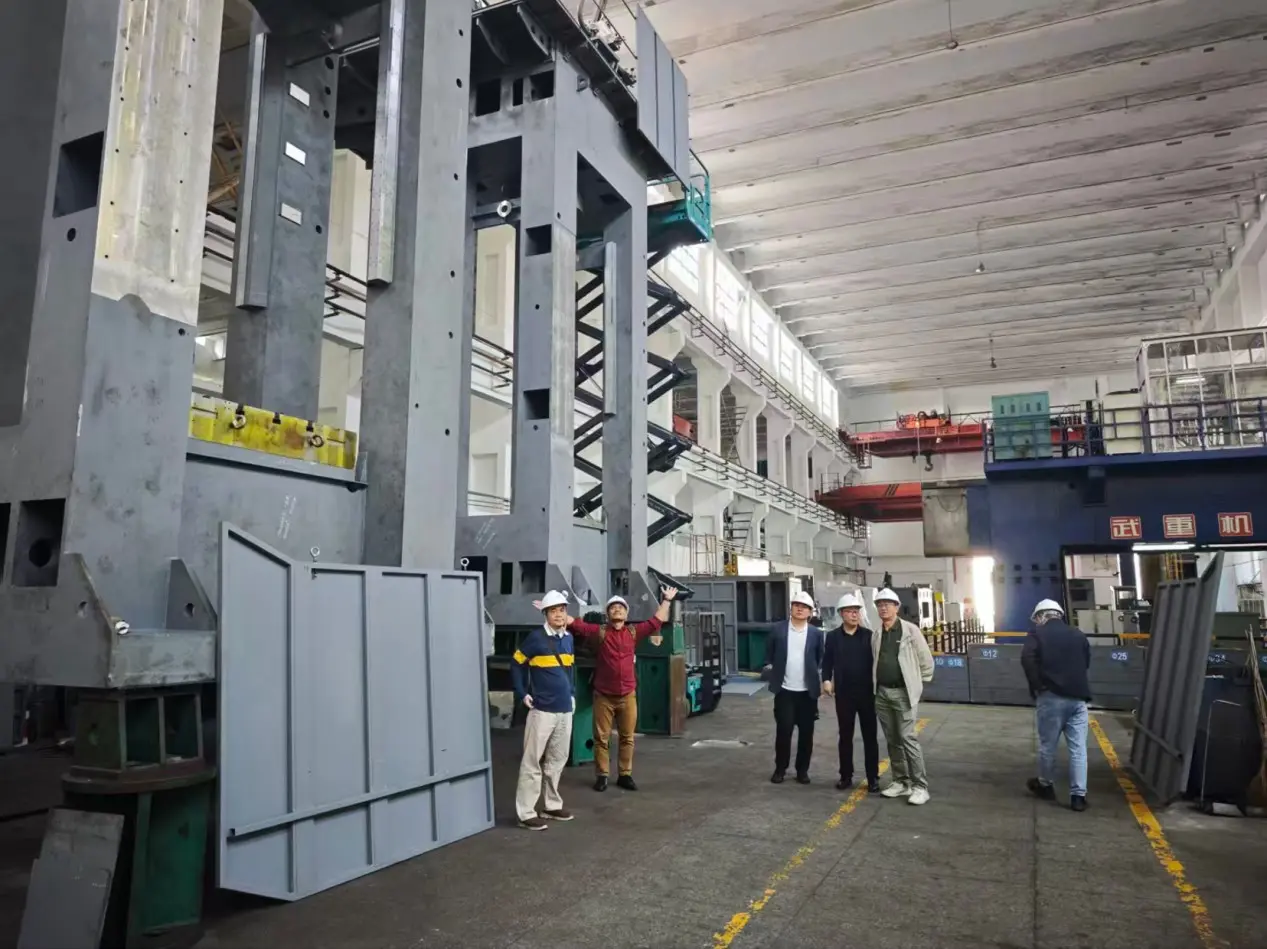
Indonesian Customers Visit

Indonesian Customers Visit Jiangdong Machinery, Launch New Cooperation in Sheet Metal Forming

Date: May 06 2026

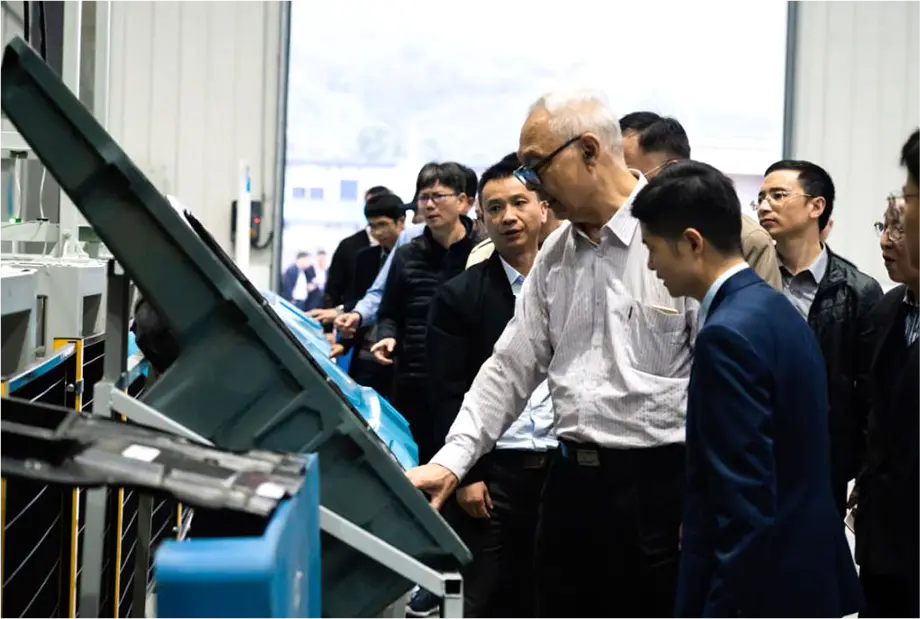
A delegation of Indonesian customers visited Jiangdong Machinery to inspect our production facilities, quality management processes, and research capabilities, establishing a framework for future cooperation.

Overseas Customers and Partners Visit in Success...

Date: Mar 16 2026

Partners from Thailand, Indonesia, and Malaysia visited our facilities to discuss localized service integration and evaluate new hydraulic press technologies.


Chongqing Jiangdong Machinery Co., Ltd. to Make...

Date: Nov 14 2025

Jiangdong Machinery presented its latest lightweight forming equipment and composite production systems at a major industry trade show, highlighting our focus on energy efficiency and smart manufacturing.

Collaborate with Us

Schedule a Technical Consultation