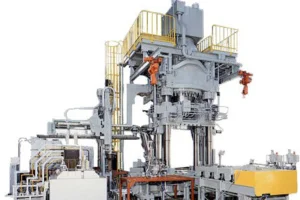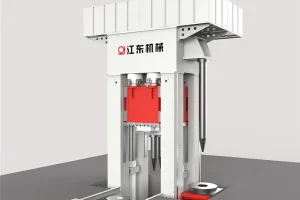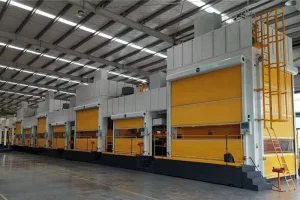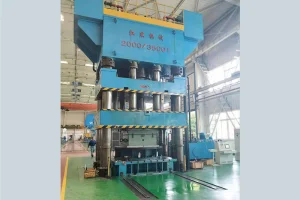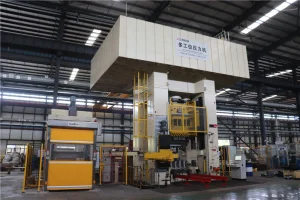
Explore our top-tier precision hydraulic tooling and structural forming press solutions engineered to provide premium reliability and industrial output compliance.
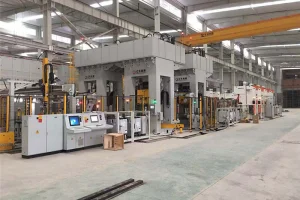
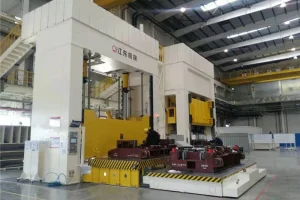
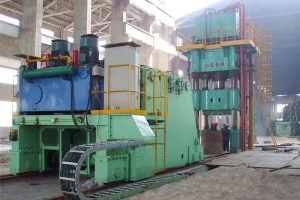
The global demand for high-strength, lightweight aluminum alloys is experiencing unprecedented growth. Driven by structural shifts in aerospace engineering, modern automotive architecture, high-speed rail, and renewable energy frameworks, large-scale industrial players are continually seeking heavier extrusion capacities. An aluminum extrusion press is the backbone of this transformation. When discussing the "largest" extrusion presses globally—typically systems yielding forces of 50MN, 75MN, 100MN, and exceeding 150MN (MegaNewtons)—we are referencing complex thermodynamic and mechanical ecosystems.
In aerospace structures, massive extruded profiles compose critical wing spars, fuselage ribs, and structural beams. In the automotive sector, structural lightweighting mandates require single, continuous aluminum members to minimize weak zones previously joined by fasteners or welds. This trend has established a high-tonnage race. For procurement departments globally, securing an OEM capable of delivering these massive presses involves navigating complex mechanical specifications, customized hydraulic circuit designs, and significant capital expenditures.
Modern Electric Vehicle (EV) platforms rely heavily on multi-chamber hollow profiles to serve as crash boxes and battery tray enclosures. Producing these complex cross-sections with optimal microstructural properties requires exceptionally high extrusion speeds, strict temperature control, and heavy ram tonnage that only the largest tier-1 hydraulic systems can achieve.
Discover the core structural competencies engineered by Jiangdong Machinery. Our technology covers sheet metal forming, lightweight composite pressings, and high-precision specialized industrial lines.
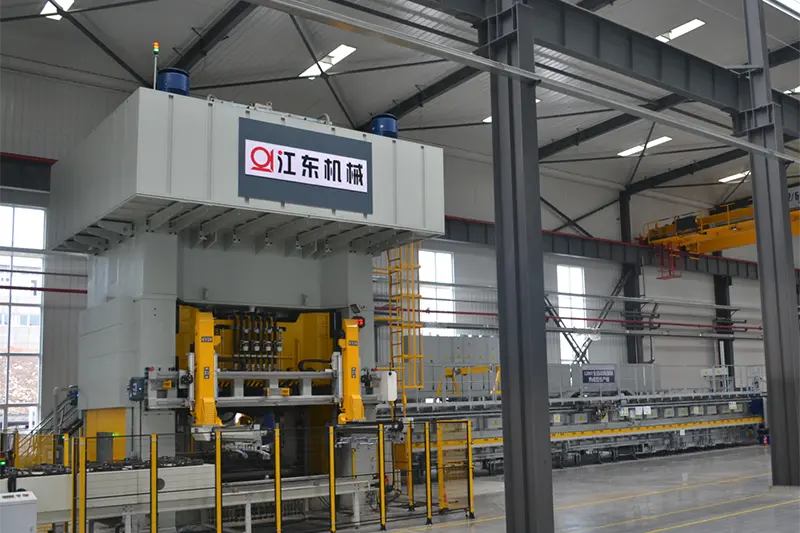
High-efficiency thermoforming systems optimized for high-strength steel and aluminum structural elements, featuring fast cycle speeds and thermal management controls.
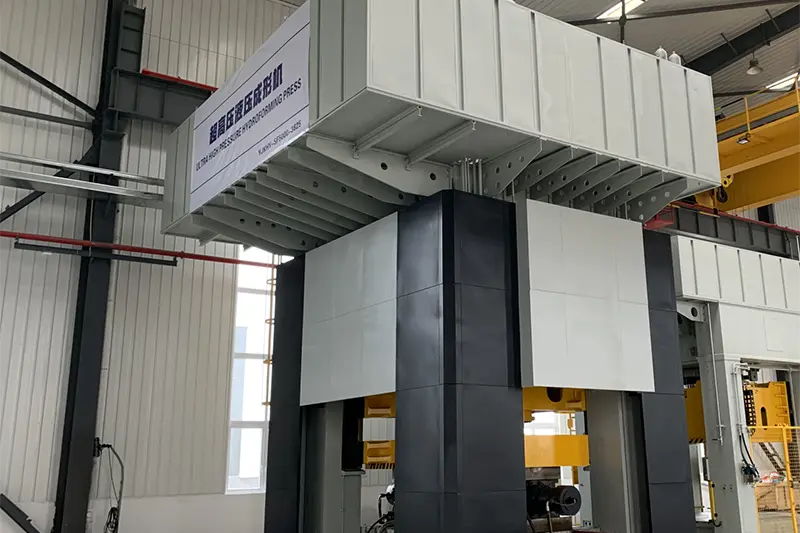
Utilizes ultra-high pressure fluid to expand and shape tubular components into complex geometries, ideal for weight reduction and high mechanical rigidity.
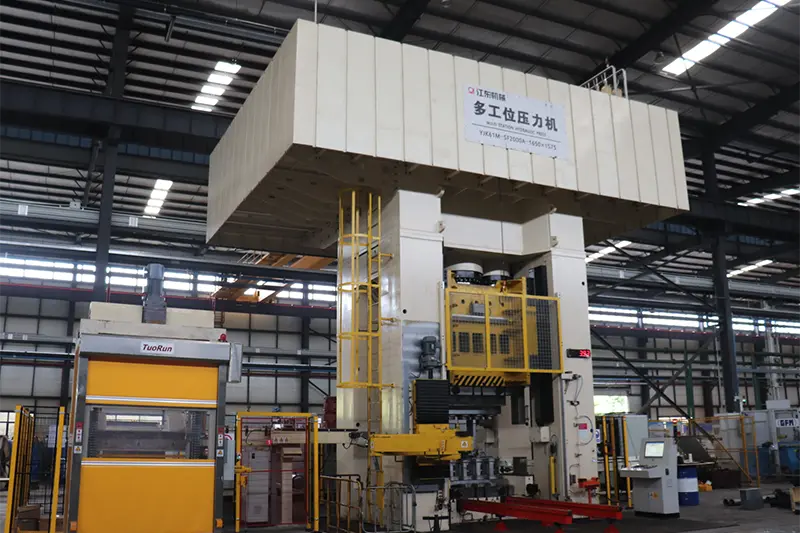
Automated transfer mechanisms integrated with continuous extrusion logic to process structural components sequentially, maximizing yield and parts uniformity.
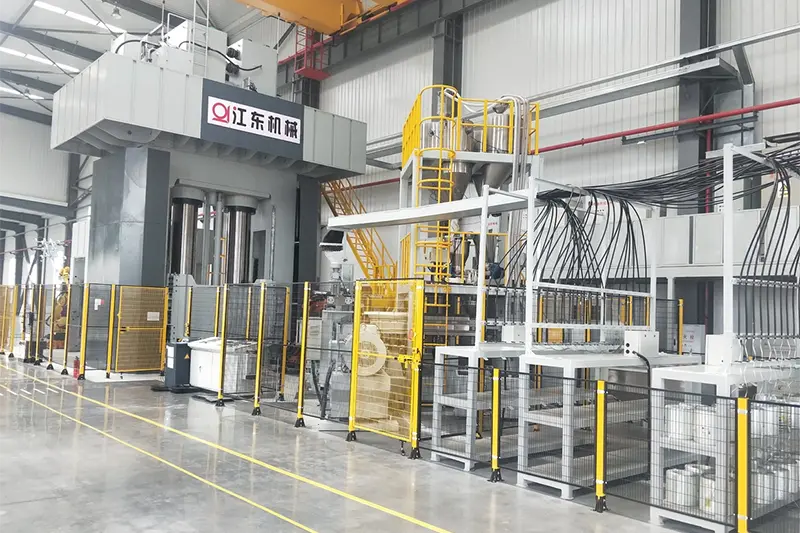
Direct in-line compounding and compression molding line minimizing structural fiber degradation for high-impact automotive safety components.
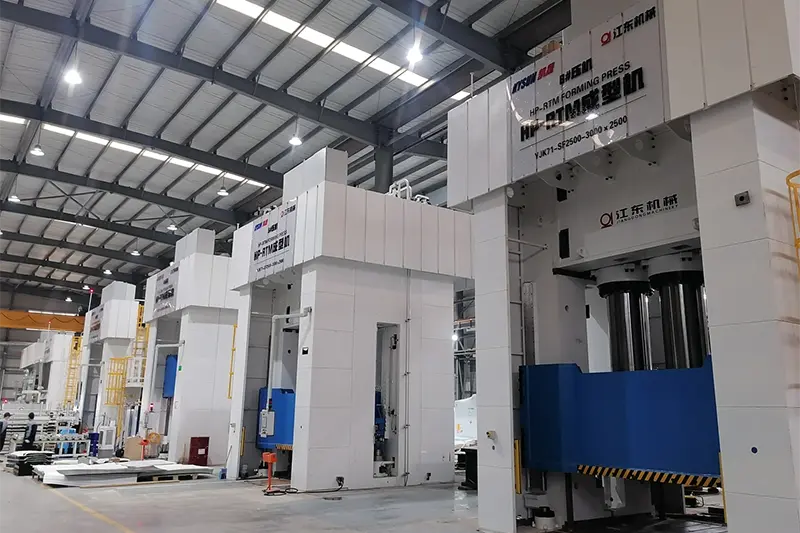
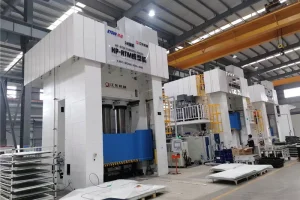
Engineered for structural carbon fiber composite components requiring high resin infiltration rates and swift curing times under exact temperature bounds.
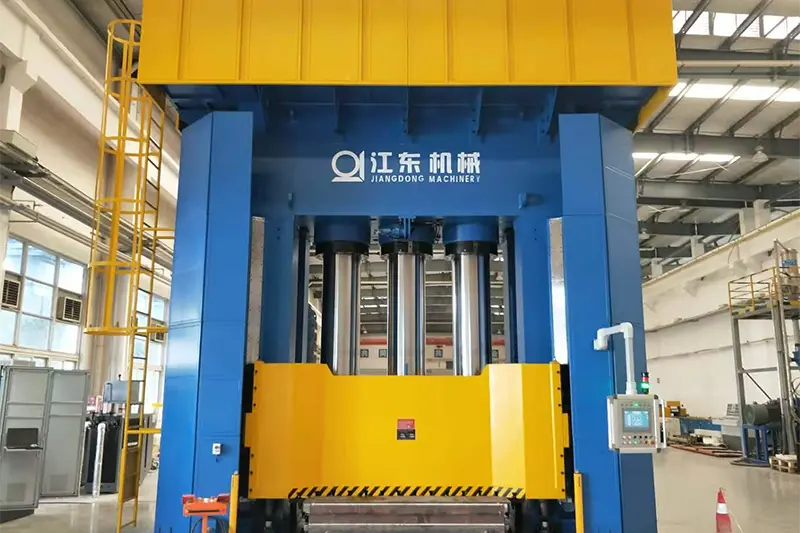
Multi-functional hydraulic tooling platform capable of managing thermosetting and thermoplastic sheets with precise force controls throughout the stroke.
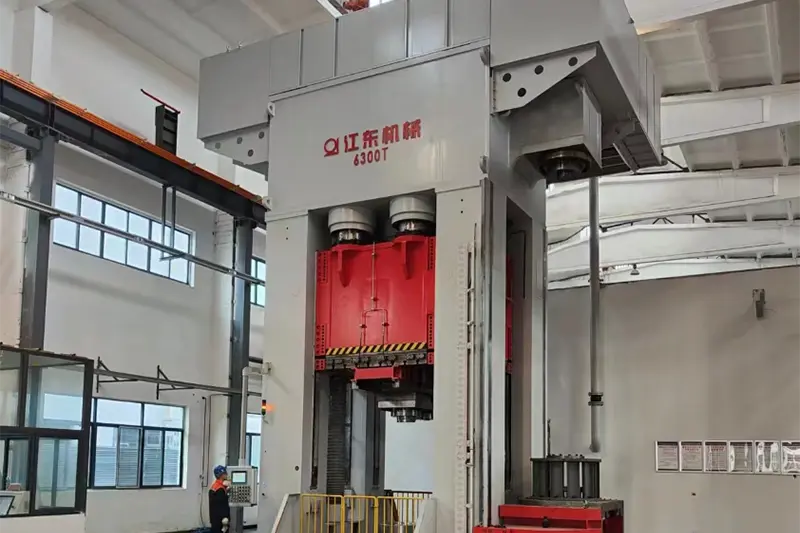
Ensures consistent die and billet temperatures to prevent thermal fracturing in superalloys and specialized aerospace titanium or aluminum components.
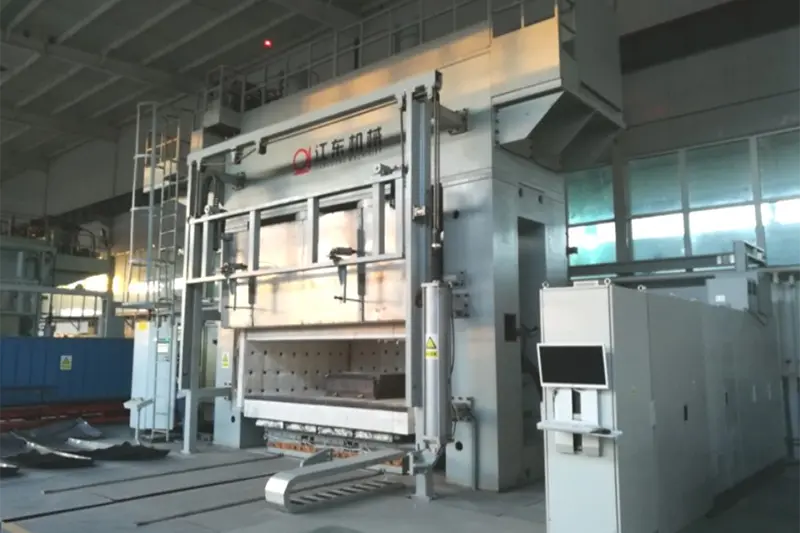
Deforms sheet materials at elevated temperatures and low strain rates to yield complex, single-piece structures for specialized defense and aviation parts.
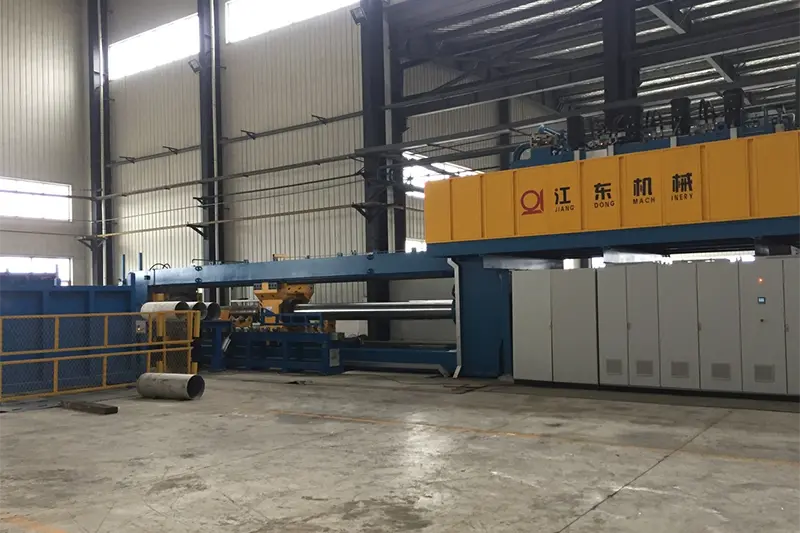
Continuous deep drawing press configuration designed for manufacturing high-pressure gas storage cylinders and industrial cylindrical shells.
Historically, the heavy hydraulic press market was dominated by a few European and North American legacy manufacturers. However, over the past three decades, Chinese heavy engineering firms, such as Chongqing Jiangdong Machinery Co., Ltd. (Jiangdong Machinery), have revolutionized the market. By integrating advanced European design paradigms with robust local supply chains, Chinese manufacturers deliver high-performance systems with significant capital efficiency.
The efficiency advantages of modern Chinese heavy-press manufacturing can be broken down into three core areas:
Heavy extrusion and hydraulic forming machinery are not general-purpose tools; they are highly customized assets engineered for specific regional manufacturing requirements:
In the United States and Canada, the primary drivers for heavy extrusion and hot stamping technology are automotive lightweighting (complying with CAFE fuel economy requirements) and the domestic aerospace industry. Manufacturers utilize hot stamping production lines and massive die spotting hydraulic presses to develop ultra-high-strength steel passenger cages and aluminum structural components that reduce vehicle mass without sacrificing crash safety.
The European Union’s emphasis on rail transit infrastructure requires exceptionally long, thin-walled, high-rigidity structural aluminum panels. These profiles are extruded on high-tonnage presses and subsequently formed on specialized multi-station lines. Additionally, heavy hydraulic forming plays a key role in the production of offshore wind turbine components and heat exchangers for commercial HVAC projects.
In China, Japan, and Southeast Asia, the emphasis is on scale, speed, and automation. Companies integrate composite compression molding (such as LFT-D and HP-RTM) to rapidly manufacture structural components for the consumer electronics and automotive sectors. Furthermore, the localized integration of internal high-pressure hydroforming allows regional OEMs to supply complex frame components directly to nearby assembly plants on a just-in-time basis.
Understanding the budget allocation for a heavy aluminum extrusion press or large-scale stamping production line is complex. Because each system is customized to specific industrial requirements, there is no generic off-the-shelf pricelist. However, procurement teams can estimate capital expenditure by analyzing the main cost components:
1. Tonnage Capacity and Structural Envelope: The manufacturing cost scales non-linearly with tonnage. A 50MN press is considerably lighter and requires less structural reinforcement than a 100MN or 150MN press. The larger the frame, the more raw casting, heavy forging, and specialized machining are required, which affects the base quote.
2. Hydraulic Servo Architecture and Drive Controls: A high-performance press relies on advanced hydraulic control systems. Utilizing energy-efficient servo-driven hydraulic pump configurations (such as Rexroth or Parker manifolds) ensures precise control but carries a premium cost. This investment is offset by energy savings and reduced cycle times.
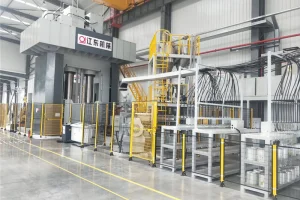
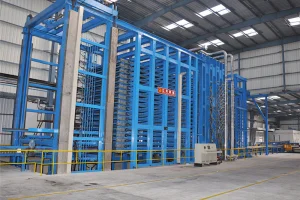
3. Automation and Handling Lines: A standalone press requires manual material handling, whereas a fully integrated system includes automatic billet heating furnaces, run-out tables, pullers, cooling beds, and stretchers. Adding robotic handling, multi-axis manipulators, and active PLC monitoring systems increases the initial cost but lowers operating expenses.
4. Tooling and Die Sets: Custom die components, hot stamping dies, and spotting tooling require high-grade tool steel (such as H13 or equivalent) and precision CNC machining, which are priced separately from the main press unit.
| System Component Type | Approx. Cost % Allocation | Key Cost Drivers | Optimization Opportunities |
|---|---|---|---|
| Main Frame & Mechanics | 40% - 50% | Forging quality, frame geometry, pre-stressing steel volume | Optimized structural design using finite element analysis (FEA) |
| Hydraulic & Servo Systems | 20% - 25% | Proportional valves, variable-delivery pumps, cooling circuits | Configuring regional, certified components |
| Electrical & PLC Integration | 10% - 15% | Industrial HMIs, sensors, remote diagnostics integration | Standardizing on Siemens, Rockwell or Mitsubishi PLCs |
| Logistics & Commissioning | 10% - 15% | Heavy shipping, foundation preparation, site testing | Pre-assembly testing at the OEM factory |
Established in 1937, Chongqing Jiangdong Machinery Co., Ltd. (Jiangdong Machinery) is a comprehensive manufacturing enterprise specializing in the R&D, production, sales, and servicing of hydraulic presses, lightweight forming technology, lightweight parts, hot and cold stamping dies, and precision metal castings.
Jiangdong Machinery’s advanced hydraulic presses and automated production lines feature advanced automation, intelligence, and high flexibility. We provide clients with metal and non-metal hydraulic forming equipment and integrated manufacturing solutions, with specialized expertise in automotive lightweighting and aerospace structures.
We provide comprehensive lifecycle support for high-tonnage machinery, from initial engineering design to remote diagnostics and replacement parts supply.

Customized Solutions

Remote Service

Preventative Maintenance

Technical Support

Genuine Spare Parts
Common questions answered by our engineering and sales departments regarding system capabilities, design customization, and lead times.
Due to the custom nature of high-tonnage presses (e.g., 50MN and above), the complete engineering cycle—including mechanical design, structural casting, hydraulic manifold machining, assembly, and testing—ranges from 8 to 14 months.
Yes. All hydraulic presses and automated systems designed for export can be manufactured to comply with CE, OSHA, and regional industrial standards. This includes dual-channel hydraulic safety valves, safety light curtains, and integrated mechanical lock-out systems.
We use high-quality castings and forgings for all structural elements. For hydraulic components, we integrate international brands such as Bosch Rexroth, Parker, and Eaton, or equivalent high-reliability systems based on client specifications.
We offer comprehensive support for global installations. This includes pre-delivery inspection at our factory, dispatching field service engineers for on-site commissioning, and providing remote diagnostic assistance and training for local operators.
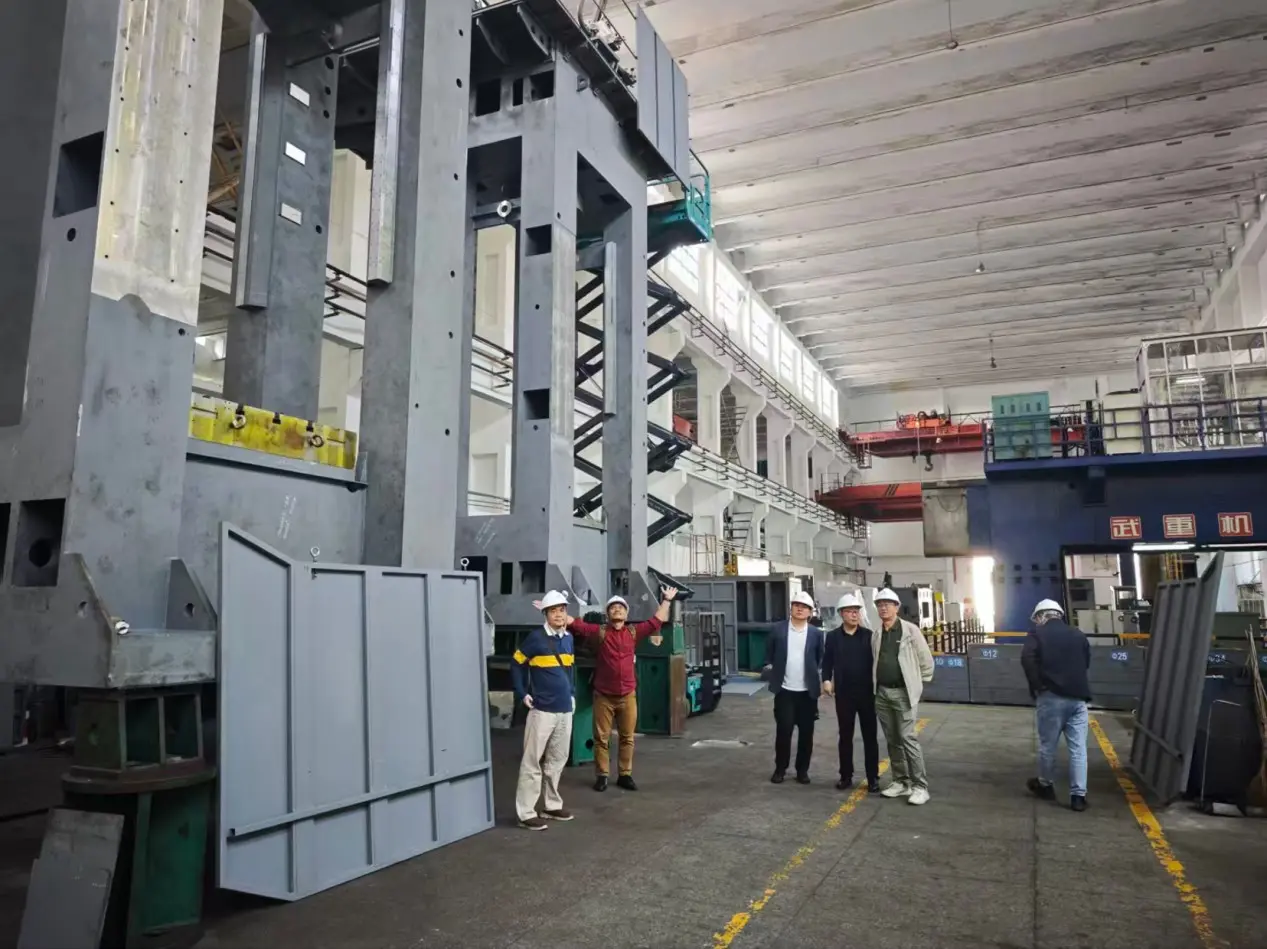
Recently, a delegation of Indonesian customers visited Jiangdong Machinery to inspect its capabilities, product quality, and technical strengths, laying a solid foundation for future projects.
Partners from countries including Thailand, Indonesia, and Malaysia visited our facilities to discuss collaborative engineering opportunities and lightweight material innovations.
Jiangdong Machinery presented its latest developments in hydroforming and automated hot stamping lines for automotive manufacturers at the expo.
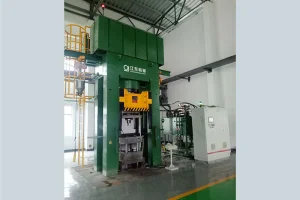
We offer a wide range of specialized hydraulic machinery, including die tryouts, hot stamping lines, and custom extrusion presses.