Pioneering automation and flexibility through advanced hydraulic press architectures for global manufacturing environments.
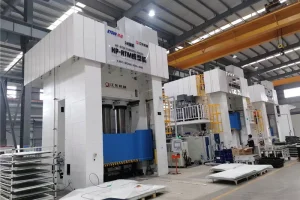
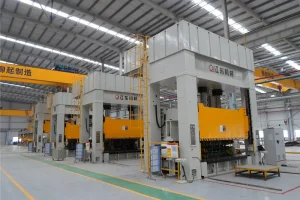
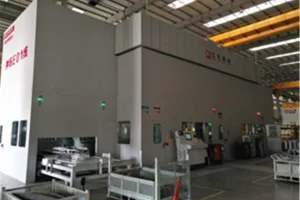
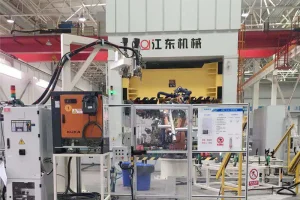
An authoritative analysis of China's rise to prominence in advanced metalforming, lightweight component fabrication, and smart hydraulic system deployment.
Over the last decade, the global manufacturing sector has undergone a profound evolution. Faced with intense regulatory pressures to reduce carbon emissions and build more circular resource economies, modern heavy industries have turned to lightweight materials and advanced alloy forming processes. In this transition, China’s hydraulic press manufacturers have emerged as critical technological and capital equipment enablers.
Historically characterized as providers of basic mechanical hardware, leading Chinese OEM factories—anchored by pioneers such as Chongqing Jiangdong Machinery Co., Ltd. (Jiangdong Machinery)—have systematically elevated their research and development frameworks. The result is a paradigm shift. Today, Chinese manufacturers are delivering highly customized, dynamic, and fully integrated production lines that match or surpass European and North American alternatives in efficiency, control precision, and raw longevity.
Modern hydraulic presses are no longer standalone processing blocks; they function as intelligent cyber-physical nodes within broader smart factories. In North America and Europe, the primary demand driver for these systems lies in automotive lightweighting—specifically, the high-volume production of composite structural elements (via SMC, HP-RTM, and LFT-D technologies) and the forming of ultra-high-strength steels (UHSS) used in vehicle crumple zones and battery envelopes. Meanwhile, localized application scenarios in emerging Asian economies focus on infrastructure components, gas storage containment units, and high-efficiency electronics enclosures.
Chongqing Jiangdong Machinery leads the industry across three primary forming disciplines, providing turnkey performance for global factories.
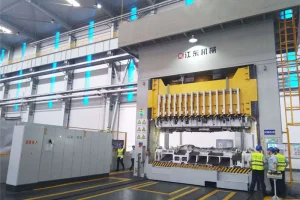
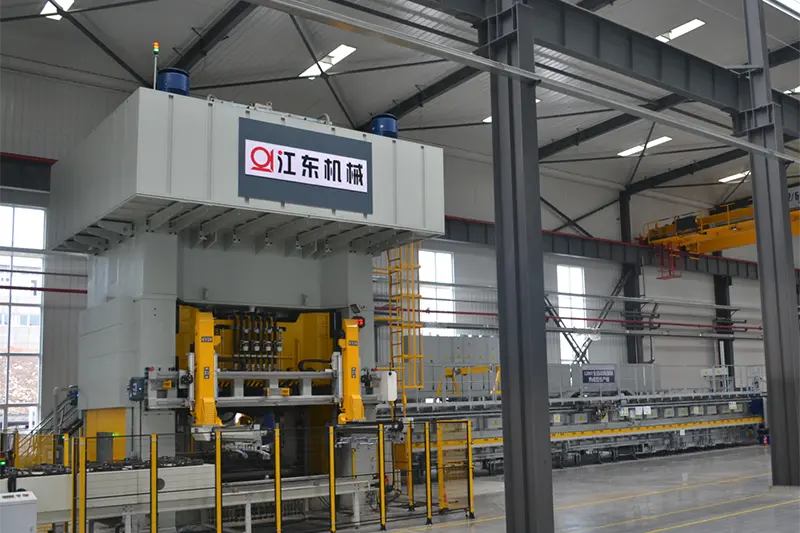
Advanced hot/cold structural metalforming systems, delivering high cycle rates, minimal energy loss, and precise tonnage control.
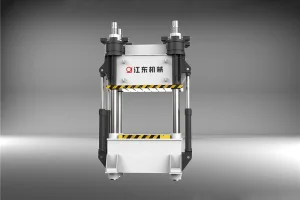
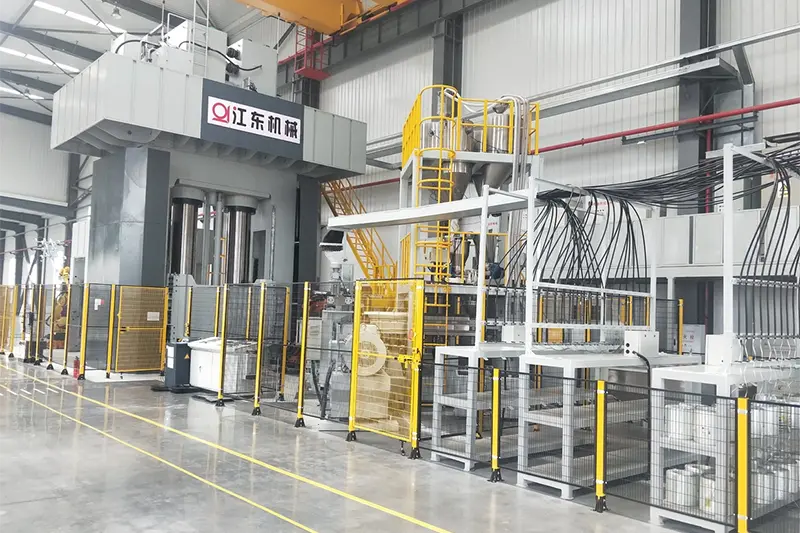
Automated molding equipment designed specifically for processing fiber-reinforced thermosets and thermoplastics at tight tolerances.
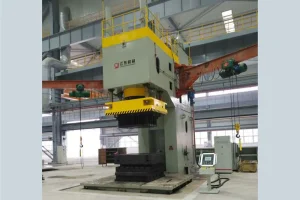
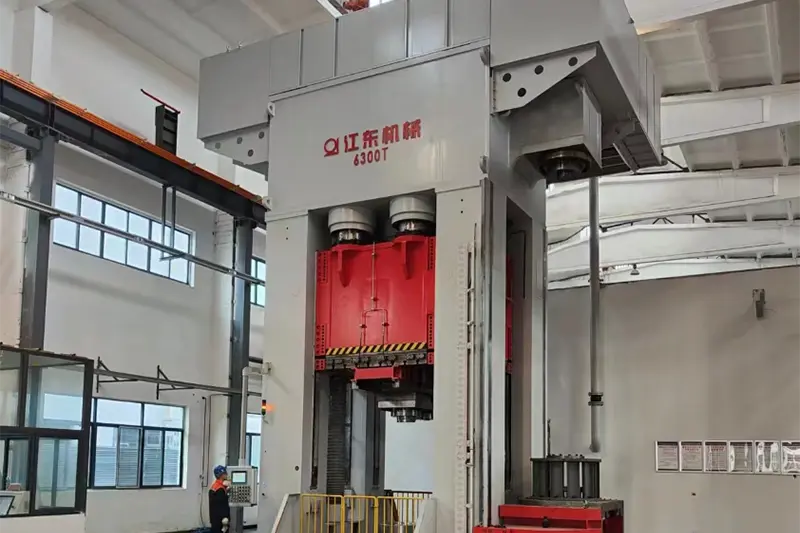
Niche high-value aerospace, defense, and power solutions utilizing extreme heat, specialized pressure dynamics, and advanced materials.
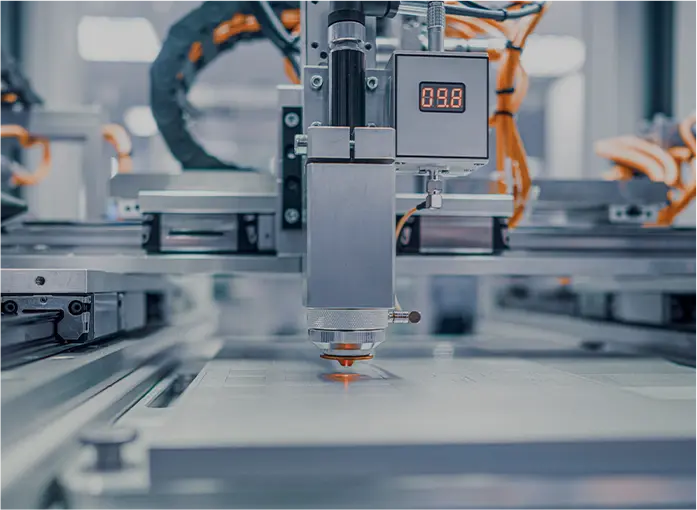
Chongqing Jiangdong Machinery Co., Ltd. (Jiangdong Machinery) is a global forging powerhouse integrating design engineering, R&D, commercial production, domestic/international sales, and lifetime support services. Our comprehensive portfolio encompasses heavy-duty hydraulic presses, advanced lightweight forming systems, lightweight composite structural elements, cold/hot stamping dies, and high-precision metal castings.
With an emphasis on manufacturing digitalization and intelligence, Jiangdong Machinery is at the forefront of the automotive weight reduction movement, delivering automated metal and non-metal forming equipment engineered to the highest standards of energy efficiency, structural rigidity, and cycle-time optimization.
Learn More About Chongqing JiangdongSupplying integrated, production-ready systems tailored to specific industrial sectors.
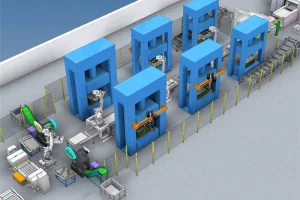
Rather than providing modular hardware components that require onsite integration, Jiangdong Machinery focuses on delivery-ready, fully turnkey solutions. This encompasses raw material handling, preheating ovens, robotic load/unload structures, thermal conditioning stations, physical hydraulic press units, post-mold processing, and predictive maintenance software integrations. Our engineering divisions deliver core competencies across five key technology pathways:
Including high-pressure internal expansion and hot gas expansion forming, allowing the creation of complex tubular profiles with minimal wall thinning.
Enabling structural component blanking and forming of high-strength boron steels, achieving yield strengths exceeding 1500 MPa for vehicle frame integrity.
Integrating cold extrusion, multi-station transfer, and fine blanking mechanisms to maximize raw production rates while minimizing post-process machining requirements.
Optimized for titanium alloys, aluminum-lithium structures, and nickel-based superalloys. Necessary for components in aerospace engines and high-altitude vehicles.
Advanced LFT-D, HP-RTM, and SMC processing methods for processing next-generation lightweight polymers for aerospace, green energy, and defense.
Ensuring operational reliability through comprehensive lifecycle support.

Customized Solutions

Remote Service

Maintenance

Technical Support

Spare Parts
How Jiangdong Machinery is integrating artificial intelligence, servo control, and green energy management into the next generation of heavy industrial equipment.
As manufacturing moves toward Industry 4.0, hydraulic press technology is shifting from basic mechanical control to adaptive closed-loop systems. Jiangdong Machinery is targeting three core engineering milestones over the next five years:
Traditional hydraulic architectures are prone to throttle loss, generating high thermal loads and wasting energy. Our technical roadmap prioritizes direct-drive servo hydraulic systems. By combining high-frequency variable speed servo motors with internal gear pumps, hydraulic fluid delivery is matched dynamically to the required pressing profile. This reduces idle power draw by up to 60% and significantly decreases required oil reservoir volumes, supporting environmental goals.
Every industrial line shipped by Jiangdong Machinery is modeled inside a virtual testing environment. High-frequency physical sensors monitor displacement, absolute tonnage, component vibration, oil temperature, and valve response times. The digital twin runs parallel to physical operation, identifying slide misalignment or pump wear before components fail. This helps prevent unplanned downtime in high-volume production lines.
Processing next-generation structural alloys (like magnesium, aluminum, and titanium) requires highly precise temperature management. Our ongoing engineering designs focus on multi-zone, induction-based tool heating integrated directly into the press control loop. This system maintains uniform die temperatures to prevent cracking and micro-structural failure during deep drawing, helping manufacturers achieve higher yields with complex parts.
Stay informed on trade events, technical visits, and international machine deployments.
May/2026
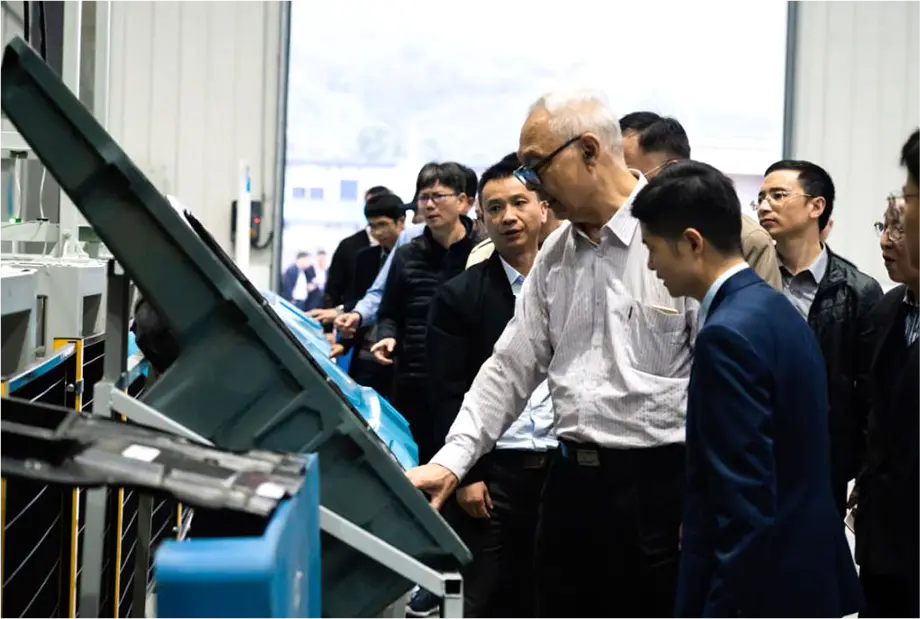
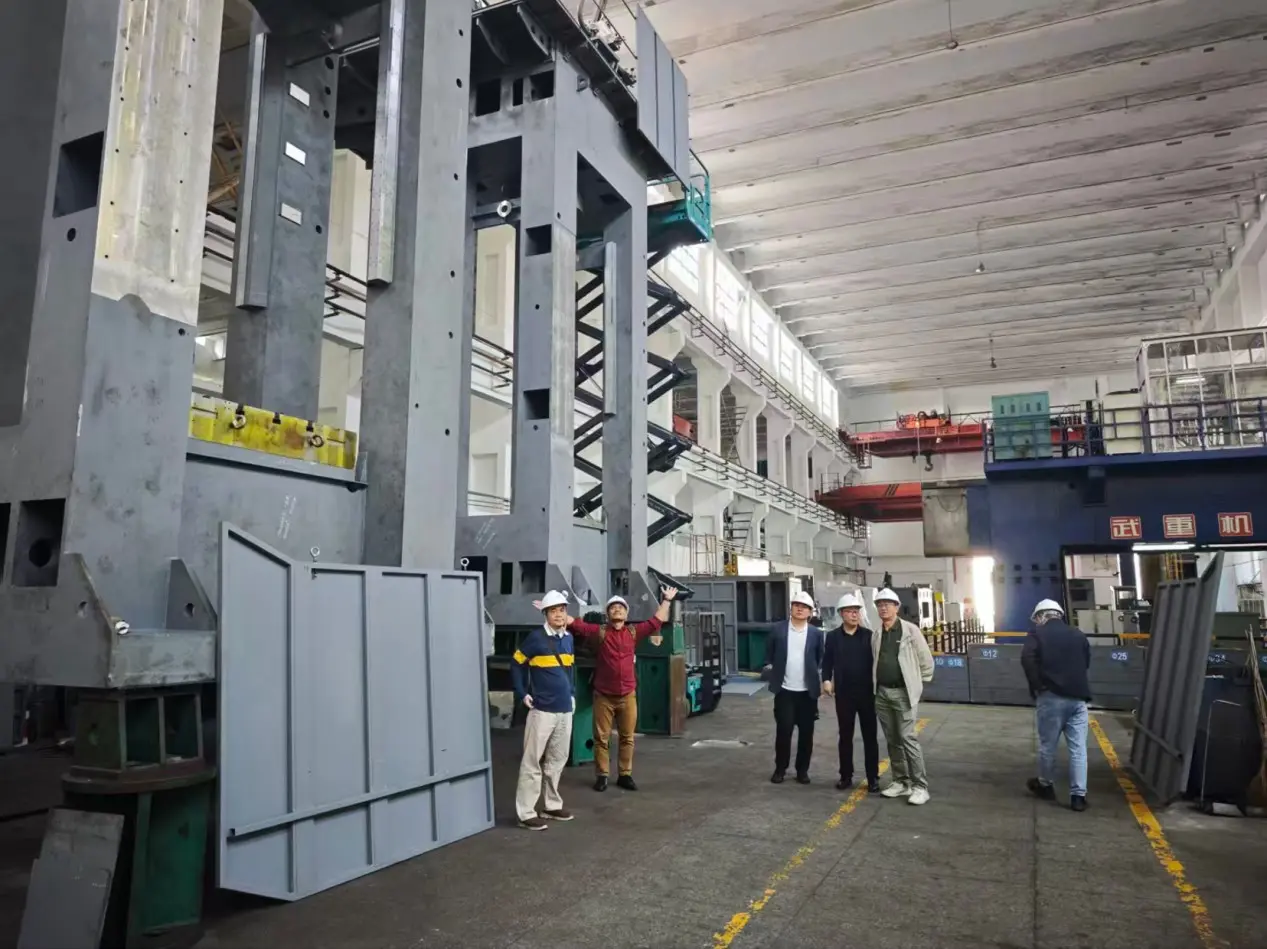
A delegation of Indonesian industrial customers recently visited our facility to inspect our heavy-duty assembly floors and testing systems, establishing terms for upcoming high-speed sheet metal stamping line deliveries.
View More UpdatesDelegations visited Jiangdong Machinery to evaluate manufacturing scale, quality controls, and custom design engineering, establishing steps for future project partnerships.
Partners from Thailand, Indonesia, and Malaysia completed plant visits to inspect our precision manufacturing floors and sign off on scheduled sheet metal forming system runs.
Jiangdong Machinery will present its latest automotive lightweight composite forming and smart hot stamping systems at upcoming international metalworking events.
Addressing key engineering, operation, and import questions for global procurement teams.
We utilize finite element analysis (FEA) to minimize frame deflection under full loads. Our slides use high-precision multi-surface guide systems with integrated proportional valve control to maintain parallel alignment during off-center loading. This is critical for progressive dies and hot stamping operations.
SMC (Sheet Molding Compound) and GMT (Glass Mat Thermoplastics) rely on compression molding with precise pressure profiles and integrated mold heating. HP-RTM (High-Pressure Resin Transfer Molding) requires precise vacuum control and high-pressure injection systems, combined with fast-closing press cycles, to inject resin into fiber preforms before curing begins.
Yes. All of our international export lines are engineered with open architecture control units (typically Siemens PLC platforms) and conform to local electrical and safety requirements, including CE, UL, and CSA standards. This enables integration with global fieldbus systems and remote diagnostic protocols.
In isothermal forging, the dies are heated to the same temperature as the workpiece (often exceeding 900°C). This eliminates heat loss from the workpiece to the tooling during contact, allowing high-precision, slow-deformation forging of temperature-sensitive alloys without cracking or internal defects.
Browse our advanced manufacturing systems, designed for heavy industrial forming and high-precision tooling.