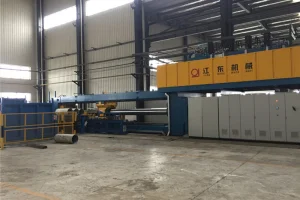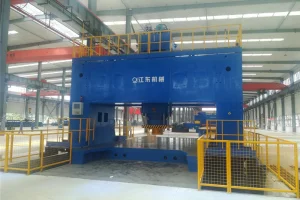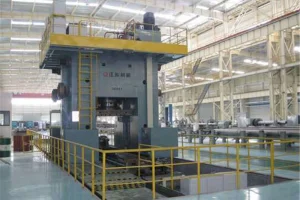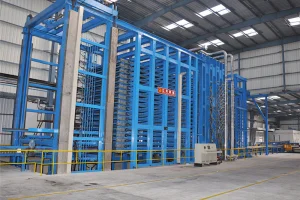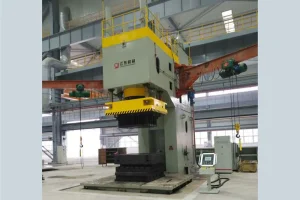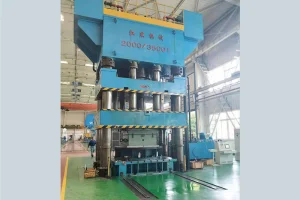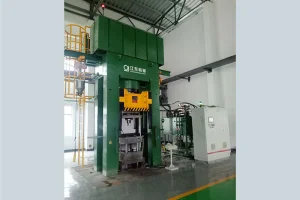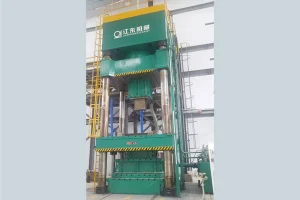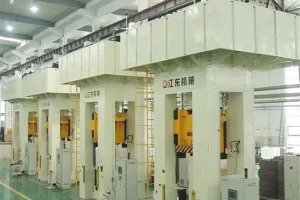
Explore our core selection of heavy-duty hydraulic press configurations engineered for deep drawing, straightening, and continuous sheet metal processing. These systems represent the foundation of local manufacturing scale-ups in West Africa.
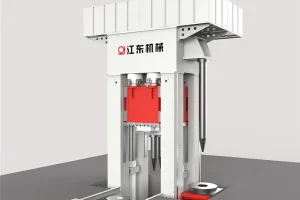
Ghana is currently undergoing a structural economic shift, driven by government policies like the "One District, One Factory" (1D1F) initiative and the development of the Ghana Automotive Development Policy (GADP). Key urban centers like Accra, Tema, and Takoradi have transformed into crucial industrial zones. However, the domestic production of complex, precision-engineered special industry parts remains constrained by technical capacity and access to automated heavy machinery.
Historically reliant on imported machinery and sub-assemblies, Ghanaian manufacturers in the mining, oil and gas, infrastructure, and agricultural sectors face prolonged lead times and volatile capital expenditures. High-end special parts forming, which includes deep drawing for storage tanks, gantry straightening for structural plates, and localized forging, is experiencing a sharp rise in demand. Introducing reliable, highly automated hydraulic press technologies enables local industries to shift from importing components to direct, on-shore fabrication, minimizing supply chain dependencies.
The applications for special parts forming in Ghana are directly linked to the nation's core economic pillars:
On a global scale, the industrial parts forming sector is pivoting toward smart manufacturing, energy efficiency, and lightweight materials. Aerospace, high-speed rail, and advanced automotive sectors are driving the demand for specialized processing methods, including Superplastic Forming (SPF), Isothermal Forging, and Composite Compression Molding (SMC/BMC/GMT/PCM).
Modern factories are phasing out inefficient mechanical presses in favor of smart, servo-hydraulic lines. These intelligent systems offer precise variable pressure profiling, real-time diagnostic feedback, and integrated automation interfaces. Global procurement managers prioritize turnkey systems that minimize post-processing steps and reduce scrap rates. Companies that invest in high-efficiency, multi-station configurations and isothermal processes are realizing significant structural cost advantages, enabling them to meet strict environmental regulations while maintaining strong bottom-line margins.
When procurement teams from Ghana and other developing industrial hubs look to optimize their capital expenditures, Chinese hydraulic manufacturing firms offer distinct technical and commercial advantages. Leading enterprises, such as Chongqing Jiangdong Machinery Co., Ltd. (Jiangdong Machinery), have cultivated advanced manufacturing capabilities over decades. Founded in 1937, Jiangdong Machinery integrates research and development, fabrication, and field engineering, delivering custom heavy press systems that compete directly with European and North American alternatives at a highly competitive cost-performance ratio.
Chinese industrial efficiency is built on integrated supply chains, advanced local component ecosystems, and automated structural fabrication. This enables shorter engineering design cycles, rapid shipping turnarounds, and flexible engineering customization. Jiangdong Machinery’s dedicated research and development teams consistently secure over 30 utility and innovation patents annually. This continuous investment ensures that advanced technologies, such as LFT-D thermoplastic molding, high-pressure hydroforming, and hot stamping systems, are accessible to developing manufacturing hubs looking to establish modern factories quickly.
Our engineering portfolio spans five primary technical areas, each optimized to address specific modern manufacturing demands, from structural metalwork to advanced lightweight composites:
Utilizes internal high-pressure fluid media to expand tube profiles into complex structural shapes. Ideal for automotive exhaust components, plumbing manifolds, and lightweight frame members.
Automated thermal processing lines designed to form ultra-high-strength steel components. Ensures high dimensional accuracy and minimal springback for critical structural parts.
Designed for SMC, BMC, GMT, and PCM composite materials. Engineered with high-precision temperature profiling to serve transportation, electrical insulation, and building material sectors.
Enables ultra-deep, complex drawing profiles using high-temperature-induced plasticity. Essential for producing structural parts in aerospace and advanced mass transit sectors.
Integrates multiple forming, punching, and trimming steps into a single automated line. Optimizes continuous manufacturing speeds for automotive components and agricultural tools.
Maintains uniform die and workpiece temperatures throughout the deformation process, allowing precise forming of superalloys and high-temperature structural components.
To help regional managers, procurement professionals, and local project leads navigate the purchase of heavy industrial machinery, we have answered the most common questions regarding shipping, customs, setup, and support:
Explore our broader range of specialized equipment, which includes composite molding presses, heavy-duty forging systems, insulation board units, and powder compression machinery. These systems are designed to expand the technical capabilities of growing industrial zones:
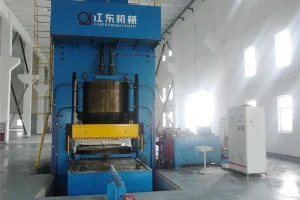
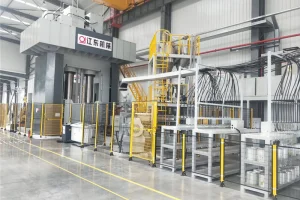
In addition to standard metalworking configurations, modern factories require integrated production cells to maintain continuous operation. Our engineering scope includes solutions for SMC/BMC/GMT/PCM Composite Molding Hydraulic Presses, which are essential for producing lightweight electrical enclosures and structural panels. We also provide high-precision blanking machinery, such as the Ultra High Strength Steel Automatic Cold Cutting/Blanking Production Line, to optimize raw material preparation and minimize waste.
For high-volume automotive and structural fabrication, our automated hot stamping systems—including the High-Speed Hot Stamping Production Line for Ultra High Strength Steel and Fully Automated Sheet Metal Stamping Hydraulic Press Production Lines—allow operators to program entire forming cycles from a single interface. This level of automation significantly reduces manual handling and labor requirements while maintaining consistent output quality.