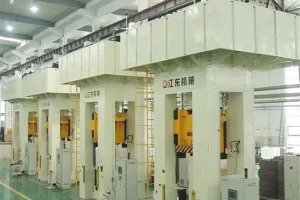
1. The Evolution of Decarbonized Servo-Hydraulic Drive Architectures
Traditional hydraulic systems consume substantial idle energy due to continuously operating fixed-displacement pumps. The technical transition toward closed-loop servo-pump direct drive systems represents a leap in carbon reduction and accuracy. By replacing throttle control valves with high-response servo motors, hydraulic pressure and fluid displacement are modulated dynamically in real time. This lowers overall thermal footprint, reduces fluid volume degradation, and yields energy savings of up to 50% during structural holding sequences. Future configurations will feature hybrid regeneration systems that capture elastic strain energy from the press decompression phase to charge accumulator blocks, decreasing grid demand surges.
2. Embedded Sensor Arrays & Edge AI Diagnostic Integration
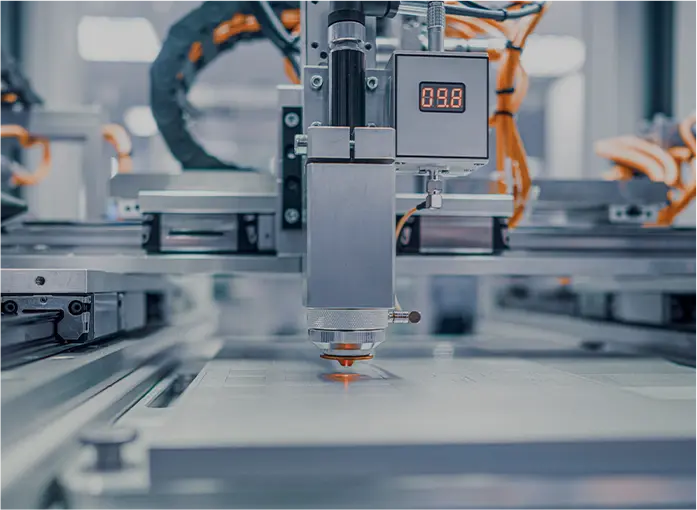
The digitization of industrial presses relies on structural health monitoring systems. The incorporation of high-frequency accelerometer arrays, optical fiber Bragg grating displacement sensors, and continuous acoustic emissions analysis within the cylinder head enables precise predictive maintenance. Edge-computing micro-controllers process raw load signatures, tool-wear deviations, and hydraulic cavitation signs in real-time. By comparing this data with simulation-trained digital twins, the machine dynamically corrects slide tilting parameters and slide-to-bolster parallelism, preventing micro-crack propagation in heavy tooling matrices.
3. Specialized High-Temperature Metallurgical Forming Trends
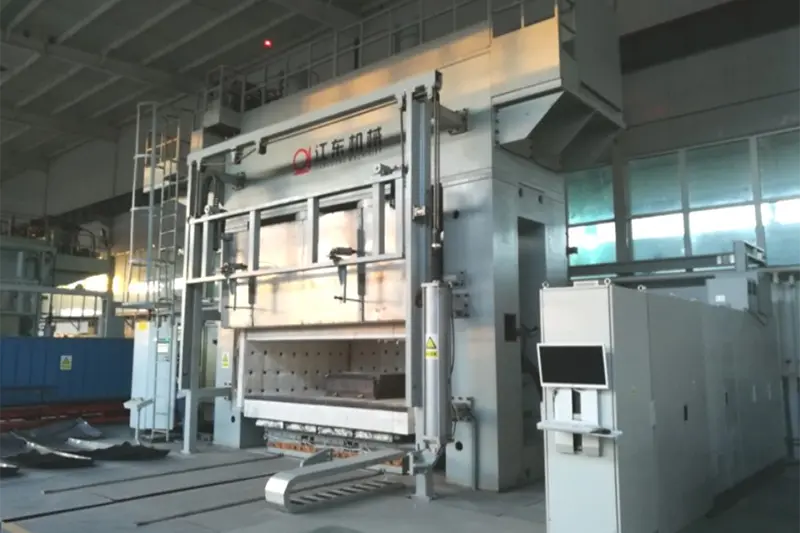
As aerospace and high-velocity transit networks demand optimized power-to-weight ratios, the manufacturing of structural titanium (Ti-6Al-4V) and advanced nickel-based superalloys relies on precise thermal control. The manufacturing roadmap points to integrated isothermal forging presses featuring induction-heated dies operating in protective vacuum chambers. By matching internal die temperatures to the workpiece temperature (exceeding 900°C), thermal gradients are minimized, removing localized cooling stresses and allowing uniform grain structures. These systems enable structural components to be pressed near-net-shape, drastically reducing subsequent machining waste.