Explore our industrial-grade, E-E-A-T compliant manufacturing solutions designed for automotive, aerospace, and composite industries worldwide.
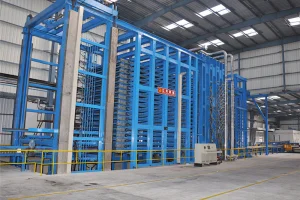
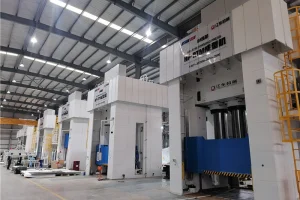
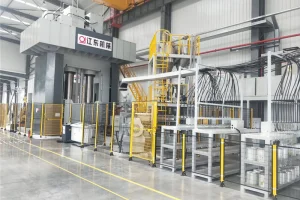
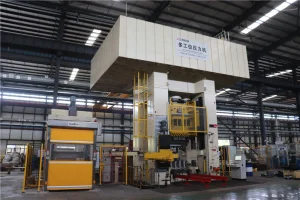
In high-precision manufacturing, the optimization of stamping dies and metal-forming tooling dictates the quality, speed, and safety of downstream volume production. Historically, die-tryout and die-spotting operations relied on rudimentary manual mechanical adjustments. Toolmakers applied Prussian blue to the die faces, clamped them under a standard utility press, and manually identified high spots to grind. This trial-and-error cycle was time-consuming, hazardous, and lacked quantifiable mechanical control.
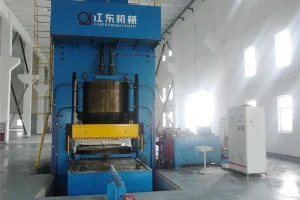
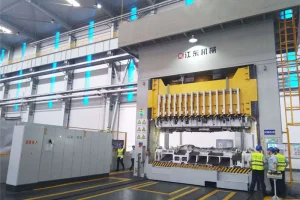
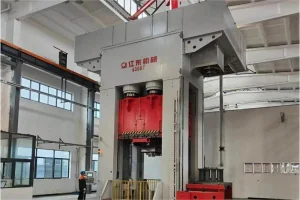
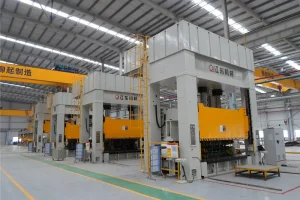
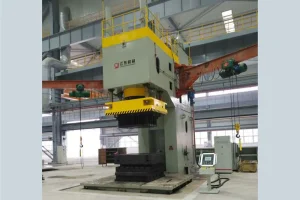
The emergence of modern Die Tryout Hydraulic Presses marked a significant shift in tooling workshops. Modern industrial tooling requires sub-millimeter positioning precision, dynamic slide parallelism, and multi-axis tilting capabilities. The mechanical design of contemporary die spotting presses focuses on rigidity, slide guidance, and precise micro-creeping speeds. Rigid 8-point octagonal guide structures with high lateral load resistances are used to maintain slide alignment under off-center loading conditions.
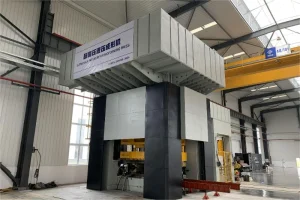
Furthermore, structural finite element analysis (FEA) has enabled press frames (both gantry and pre-tensioned tie-rod configurations) to minimize deflection under full tonnages. In high-tensile sheet metal stamping, even micrometric deviations in platen parallelism can lead to uneven die wear, local stress concentrations, and subsequent component structural failures.
Modern procurement teams balancing strict budget limitations with operational KPI requirements face complex decisions when sourcing die spotting machinery. Navigating the global procurement landscape requires an understanding of how manufacturers optimize capital expenditure (CAPEX) without compromising quality and safety.
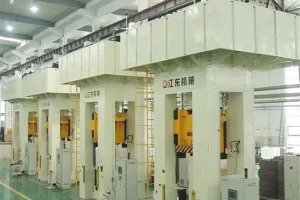
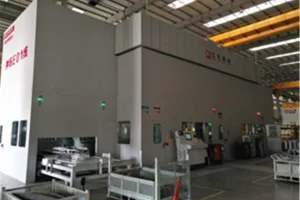
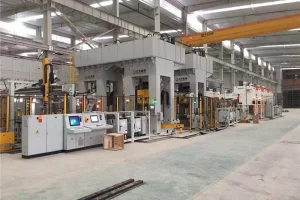
A major variable in the Total Cost of Ownership (TCO) is the integration of advanced automation. Buyers in developed markets increasingly select systems integrated with fully automated stamping lines to minimize cycle times and eliminate operator risks. Key parameters driving sourcing specifications include:
Global lightweighting initiatives—driven by automotive emissions mandates and aerospace efficiency requirements—have spurred the development of advanced material-forming technologies. Hydraulic presses are no longer limited to standard steel processing; they must also process high-strength aluminum, boron-treated hot stamping steel, and continuous-fiber composite matrixes.
In these workflows, material behavior is highly sensitive to thermo-mechanical parameters. For example, in Carbon Fiber High-Pressure Resin Transfer Molding (HP-RTM) and Long-Fiber Thermoplastic compression (LFT-D), curing cycles require precise platen temperature consistency. Any variation across the mold surface will result in residual internal stress, void formations, and part rejection.
This requires closed-loop control of variables like temperature, pressure ramp profiles, and mechanical stroke depth. Our technical solutions address these requirements by integrating proportional valve configurations, servo-motor drive groups, and sensor suites that monitor forming cycles in real time.
A comprehensive overview of Jiangdong Machinery’s engineering capability across metal, composite, and special forming equipment.
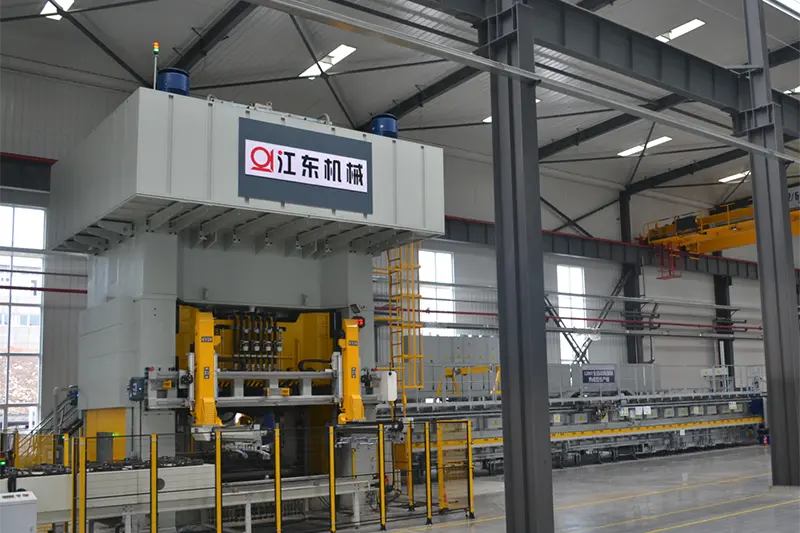
Designed for ultra-high-strength steel processing, enabling high structural integrity for critical safety components.
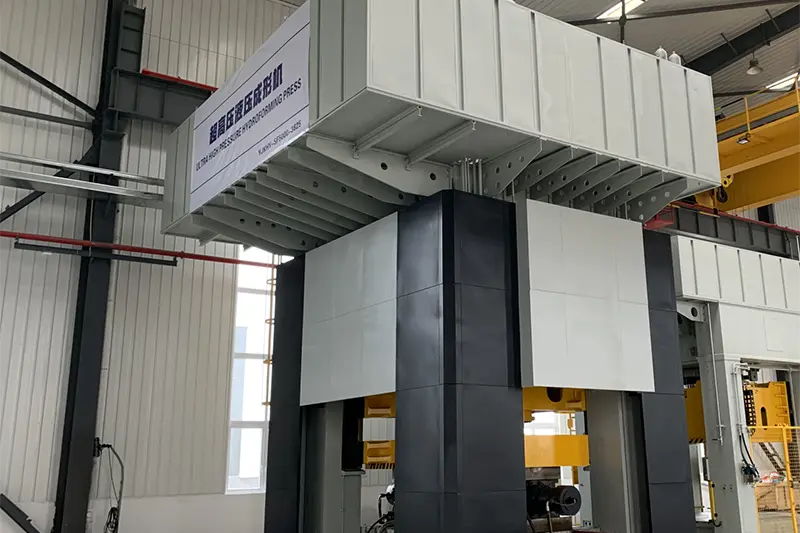
Advanced liquid-forming production systems for complex, light-alloy structural hollow tubes and subframes.
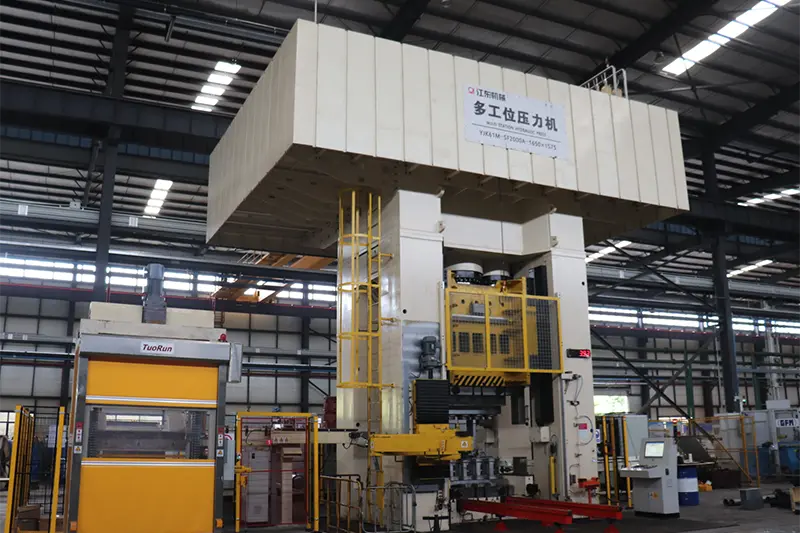
Highly automated, sequential-station extrusion and forging lines for high-volume automotive powertrain parts.
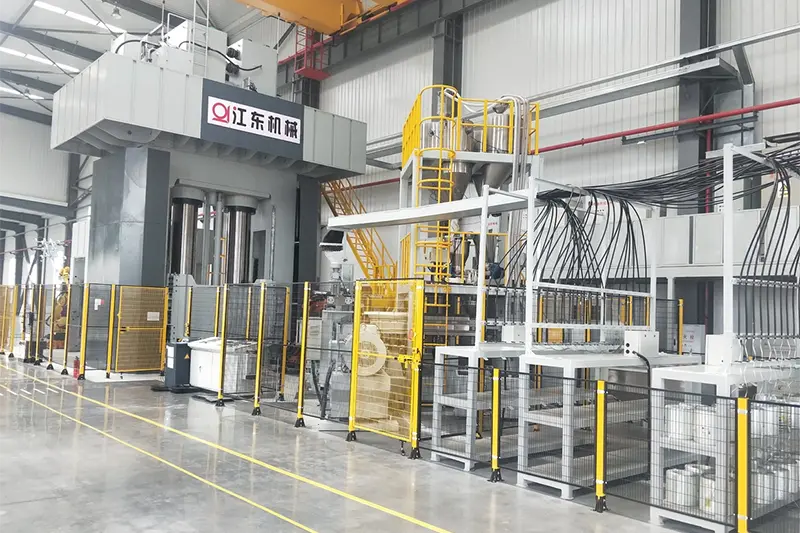
Direct inline compounding and compression molding lines for long-fiber reinforced thermoplastics.
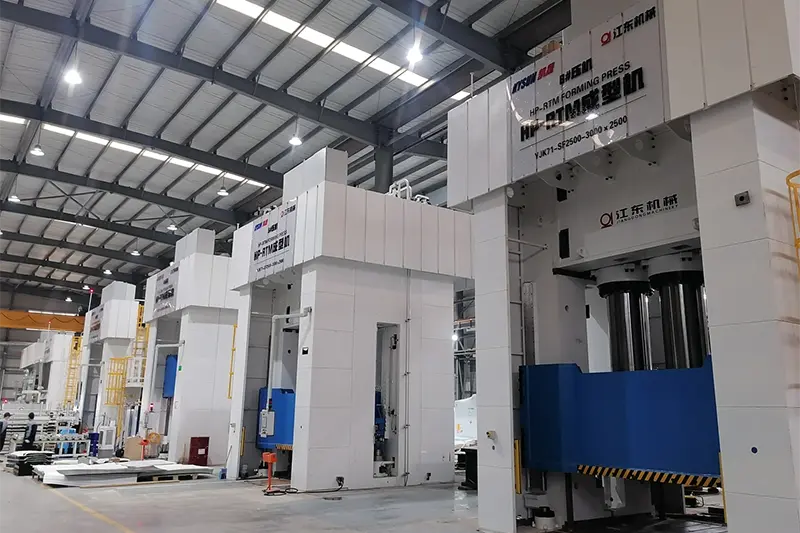
High-pressure resin transfer molding systems engineered for high-performance composite structural components.
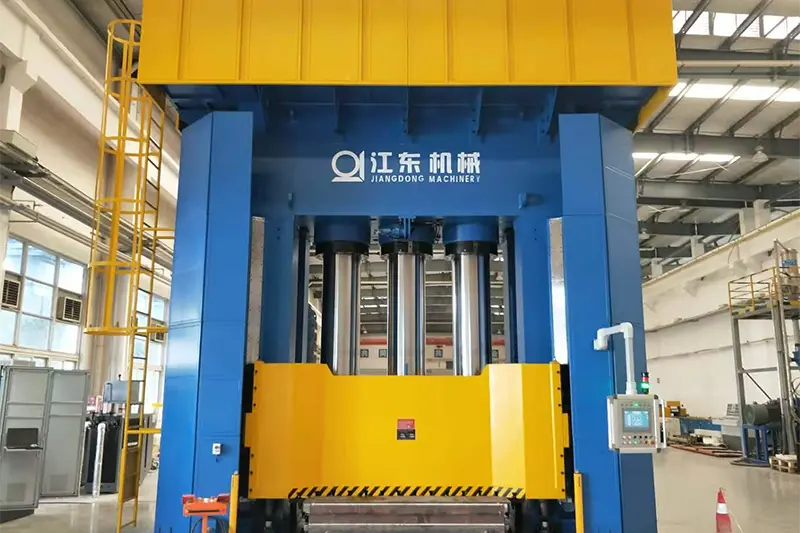
Versatile composite molding systems for processing SMC, BMC, GMT, and prepreg compression materials (PCM).
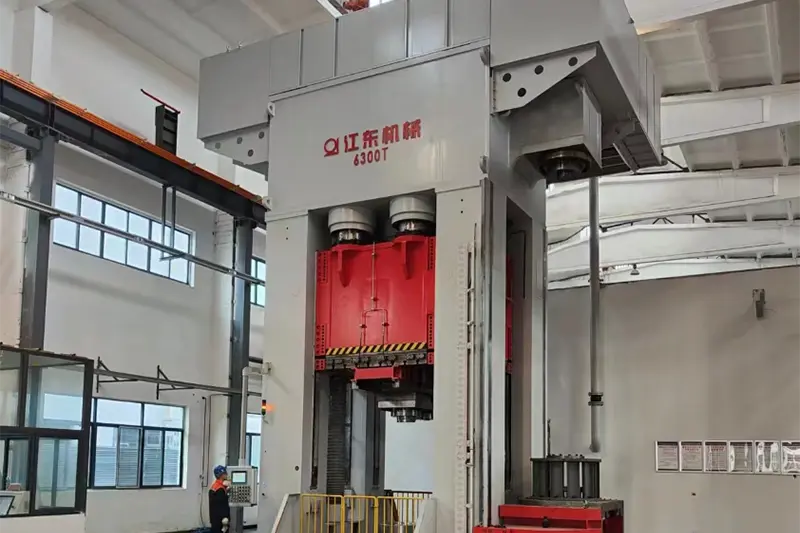
Maintains uniform die temperatures, preventing chilling during the forming of specialized superalloys.
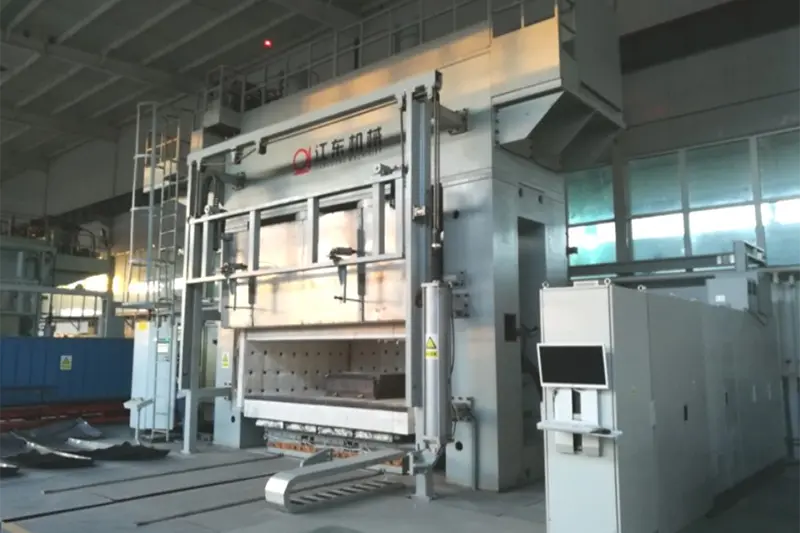
High-temperature gas expansion forming systems for complex titanium and aluminum structures.
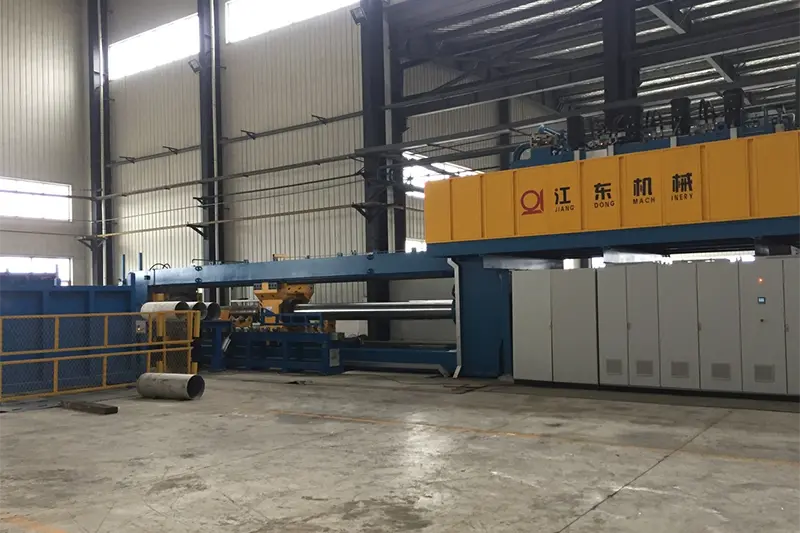
Deep-drawing production systems for high-pressure storage vessels, cylinders, and industrial casings.
Our capabilities bridge fundamental research with production engineering to deliver tailored turn-key solutions.
Advanced high-pressure fluid forming solutions, including internal high-pressure lines and high-temperature gas expansion technologies.
Complete lines integrating material heating, high-speed transfer, press stamping, and tool quenching for boron steel parts.
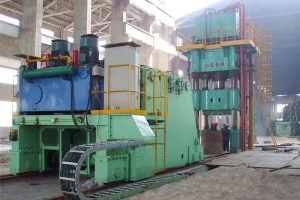
Automated transfer presses featuring independent multi-die stations for multi-stage forging, cold extrusion, and fine blanking.
Thermal forming systems optimized for isothermal forging and titanium alloy superplastic gas forming (SPF).
Forming lines engineered for high-performance structural applications using composite systems like LFT-D and HP-RTM.
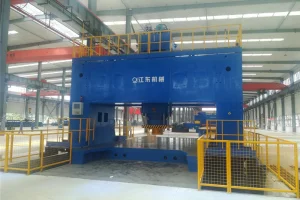
Established in 1937, Chongqing Jiangdong Machinery Co., Ltd. has developed into a comprehensive manufacturer integrating R&D, manufacturing, distribution, and service of hydraulic presses, lightweight forming technologies, hot and cold stamping tooling, and precision castings.
Jiangdong Machinery specializes in lightweighting solutions for the automotive industry. With a focus on process automation, smart control, and flexible configurations, the company delivers tailored forming systems to a global customer base.
Our commitment extends beyond delivery, offering technical support, preventative maintenance, and rapid parts supply to keep your systems operational.
We deliver comprehensive technical support, customized configuration engineering, and spare parts supply across all system installations.

Customized Solutions

Remote Service

Maintenance

Technical Support

Spare Parts
As industrial manufacturing adopts Industry 4.0 paradigms, the hydraulic die spotting press is evolving from an isolated piece of workshop tooling machinery into a highly integrated component of cyber-physical production networks. Jiangdong Machinery’s engineering team is actively focusing on the following fields:
By developing these technologies, Jiangdong Machinery aims to provide our customers with high precision, long-term reliability, and energy-efficient forming systems.
Technical answers to common questions about selecting, configuring, and operating hydraulic die spotting and tryout presses.
Stay informed about global partnerships, technical installations, and international exhibitions featuring Jiangdong Machinery.
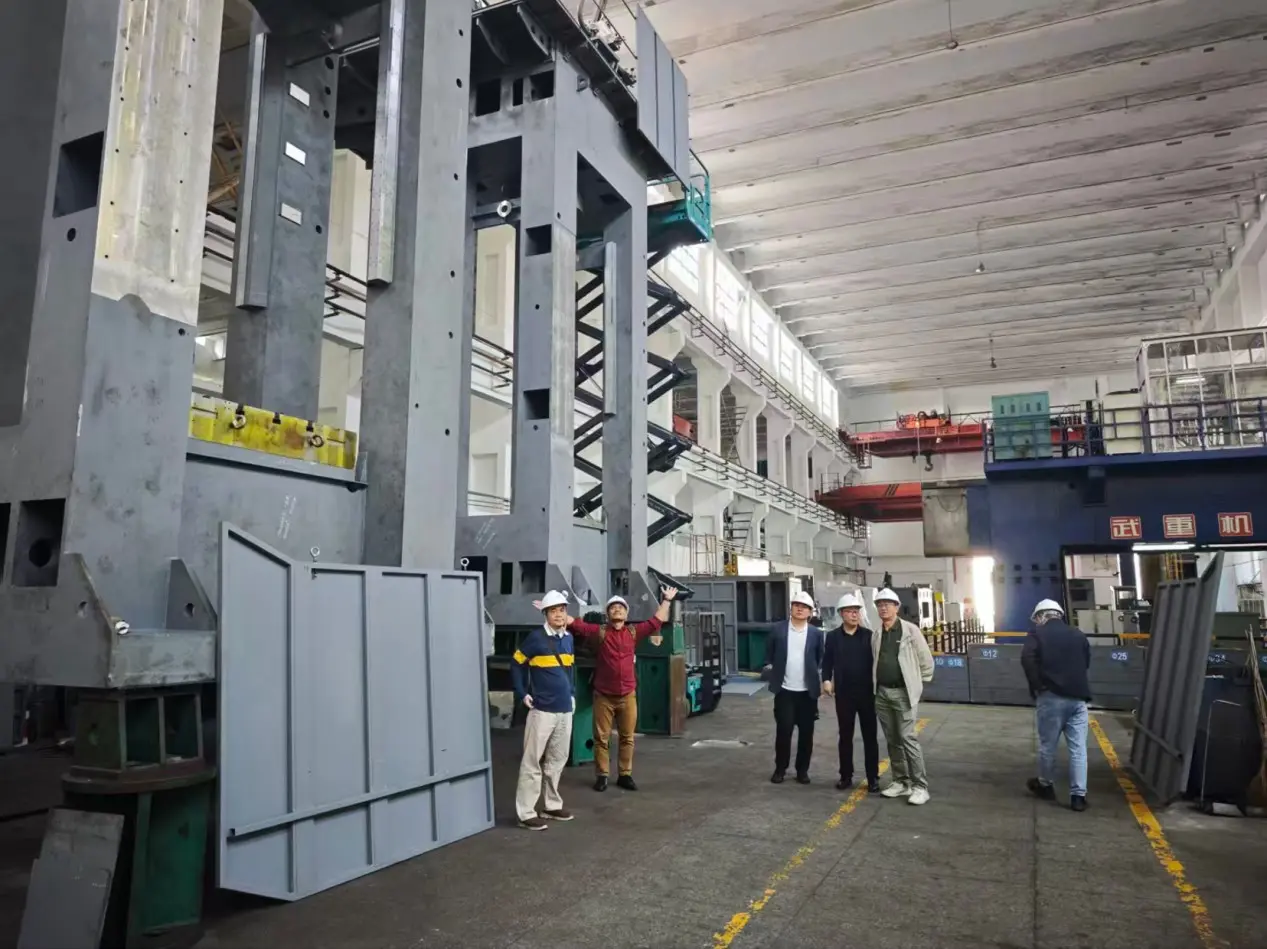
A delegation of Indonesian manufacturing customers recently visited Chongqing Jiangdong Machinery to inspect production capabilities, quality assurance protocols, and engineering designs. The visit established foundations for project collaborations in automated automotive sheet metal stamping lines.
During the first quarter of the year, partners from Thailand, Indonesia, and Malaysia visited to audit production schedules and finalize parameters for customized lightweight composite forming systems.
Jiangdong Machinery announced its participation in upcoming international machine tool and metal forming exhibitions, presenting its latest developments in superplastic forming, hot stamping, and smart remote support systems.
Explore our wider range of high-performance metal forming, structural extrusion, and surface treatment machinery.