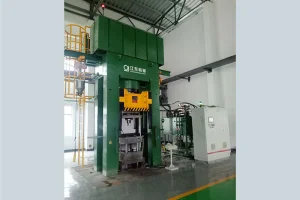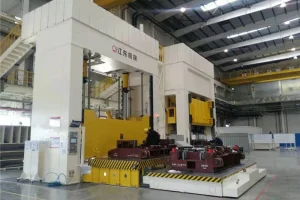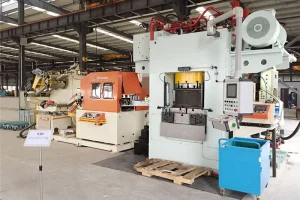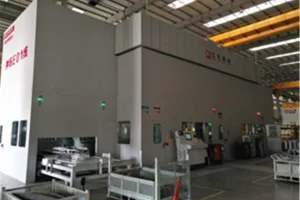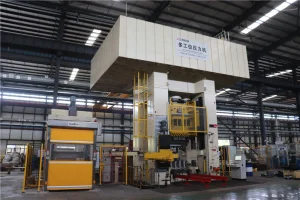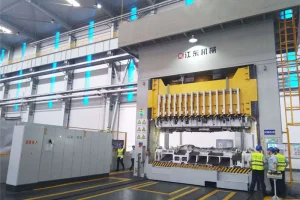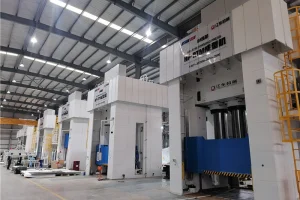
High-precision heavy-duty manufacturing configurations engineered for lightweight structural components
The global heavy machinery landscape is experiencing a paradigm shift towards decarbonization and structural optimization. In modern aerospace, rolling stock, and electric vehicle (EV) ecosystems, light alloys have transitioned from "alternative options" to "mandatory requirements". As structural design demands complex geometries, thin-walled designs, and integrated casting architectures, the machinery responsible for forging these components must evolve rapidly.
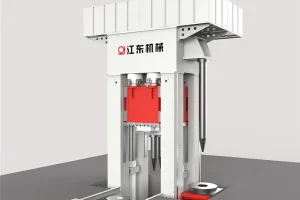
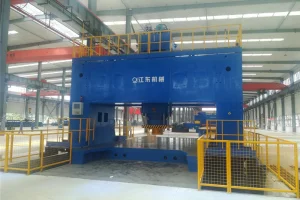
Traditional systems often fail to manage the rigorous thermal and mechanical stability demanded by next-generation structural alloys like Al-Li (Aluminum-Lithium) or high-silicon casting variations. Today's Aluminium Extrusion Press Machines incorporate multiaxial direct-drive hydraulic engines, closed-loop servo control systems, and automated temperature gradients. This reduces structural deformation, increases material utilization rates, and cuts cycles significantly.
What EPC project managers and heavy-industry buyers prioritize when selecting long-term manufacturing solutions
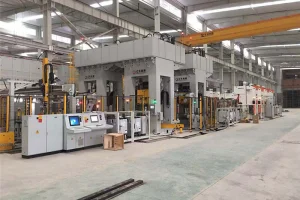
Modern procurement strategies look beyond initial capital expenditure (CAPEX). Precision-engineered machinery like the Multistation Extrusion Forging Production Line is assessed on operational uptime, tooling lifetimes, maintenance frequencies, and electrical footprints over a 15-year lifecycle.
Global manufacturers seek "one-stop" system providers who supply not only the press itself, but also integrated extrusion dies, billets feed handling systems, runout tables, and advanced cooling beds. They require certified compliance protocols such as CE and UL.
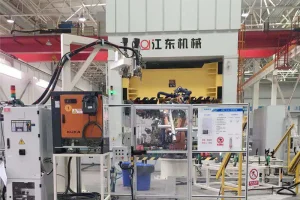
Connecting heavy equipment to centralized MES platforms is critical. Live status metrics of the hydraulic cylinders, pressure fluctuations, oil temperature parameters, and structural stress loads ensure proactive maintenance scheduling to prevent unexpected downtime.
Chongqing Jiangdong Machinery Co., Ltd. represents the peak of Chinese Smart Factory 4.0 initiatives. Established in 1937, the company has integrated heavy metallurgical forging expertise with digital controls, building high-speed automatic press systems that compete directly with European manufacturers.
China's heavy industrial hubs feature dense vertical supply chains. From structural steel foundry units to specialized hydraulic valves, high-pressure pump components, and CNC controllers, the close geographic proximity guarantees quick delivery times and resilience against global logistics disruptions. This localized ecosystem allows Jiangdong Machinery to offer tailored press solutions with shorter lead times than Western alternatives.
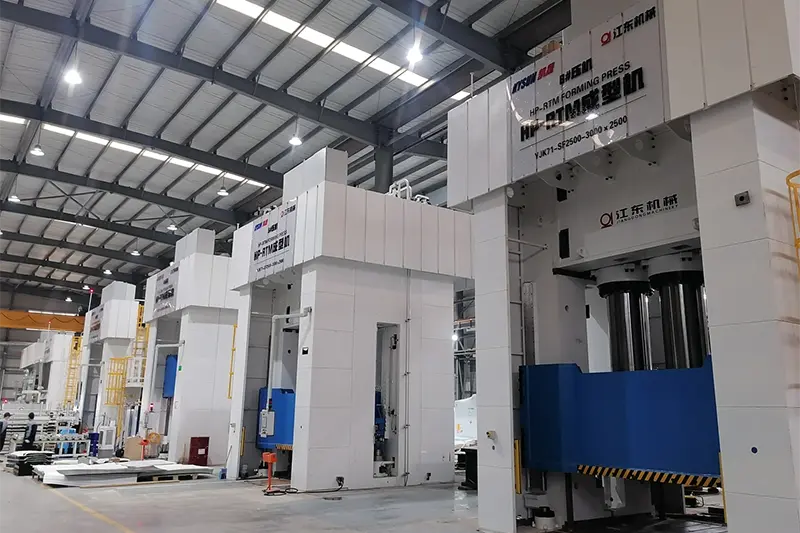
Pioneering the development of multi-station cold/warm/hot extrusion systems and HP-RTM (High-Pressure Resin Transfer Molding) machinery specifically designed for the next wave of lightweight electric vehicles.
Generating over 30 patents and technological achievements annually, ensuring their press configurations incorporate the latest innovations in metallurgy, sensor technology, and green energy management.
Providing a comprehensive range of forging machinery and material shaping configurations
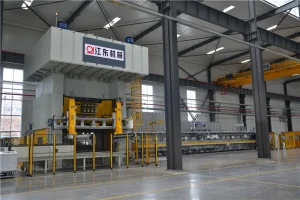
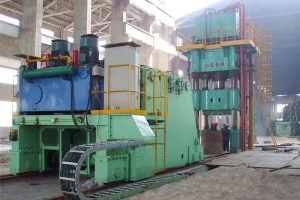
Hot Stamping Hydraulic Press Production Line: Engineered for ultra-high-strength steel and structural lightweight aluminum alloys.
Hydroforming-Internal High Pressure Forming: Best suited for complex pipe and profile designs in automotive subframes.
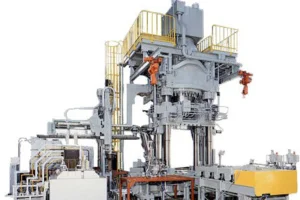
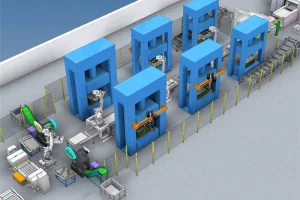
Multistation Extrusion Forging Production Line: Integrated processing for high-volume automotive shafts and components.
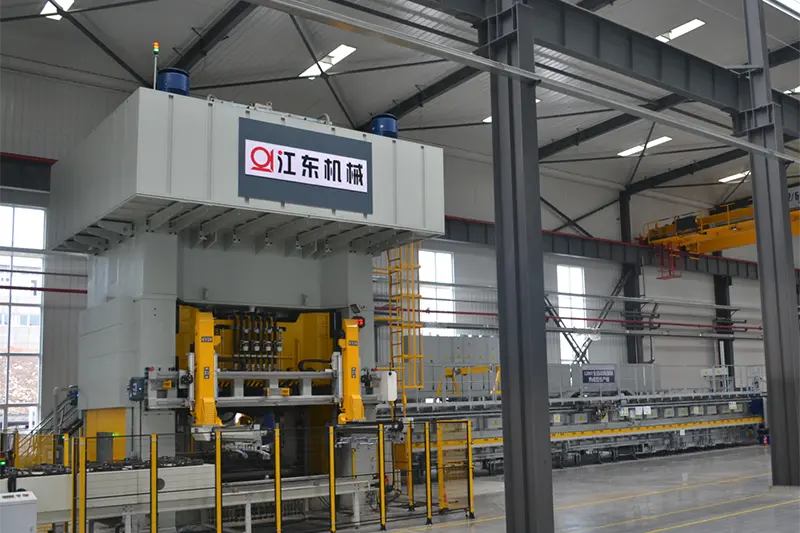
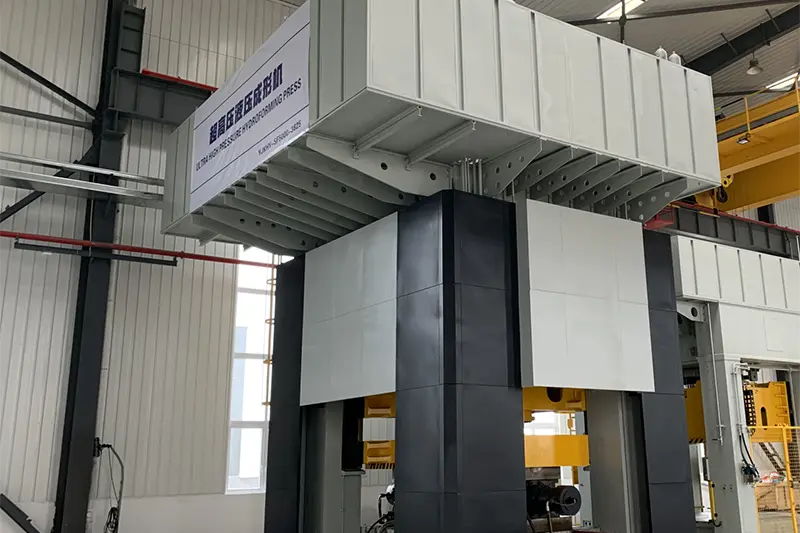
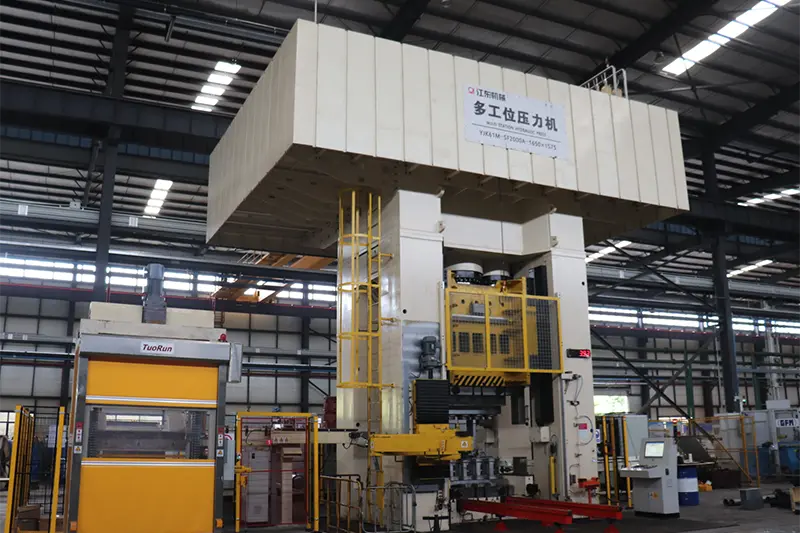
LFT-D (Long-Fiber Reinforced Thermoplastic): Direct inline compound forming system for lower assembly mass.
HP-RTM (High Pressure Resin Transfer Molding): High-pressure matrix injection designed for carbon fiber reinforced plastics (CFRP).
SMC/BMC/GMT/PCM forming: Heavy compression molding presses with active multi-point leveling control systems.
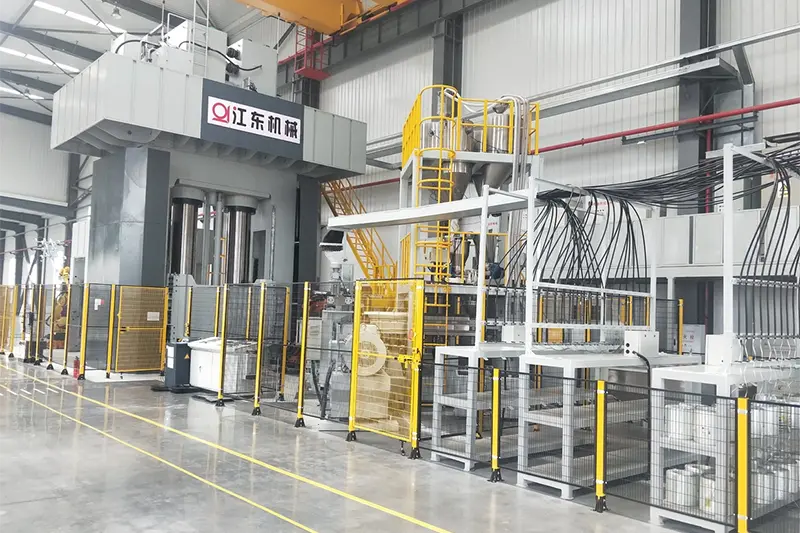
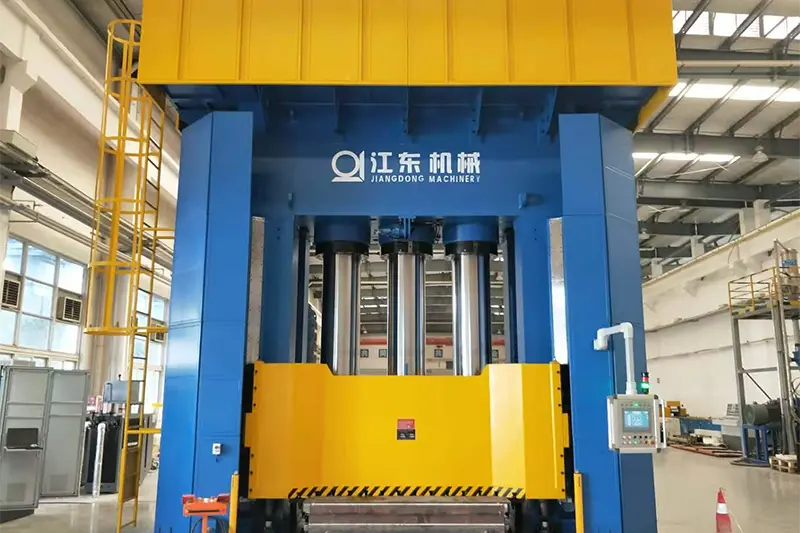
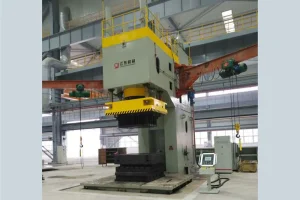
Iso Thermal Forging: High-precision, slow-velocity forging under regulated temperature conditions for titanium alloys.
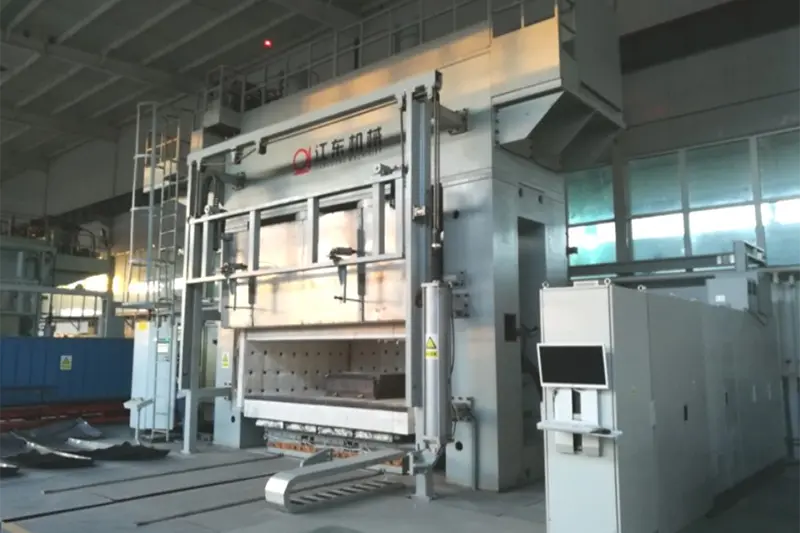
Superplastic Forming (SPF): Advanced structural parts forming with high ductility and low springback rates.
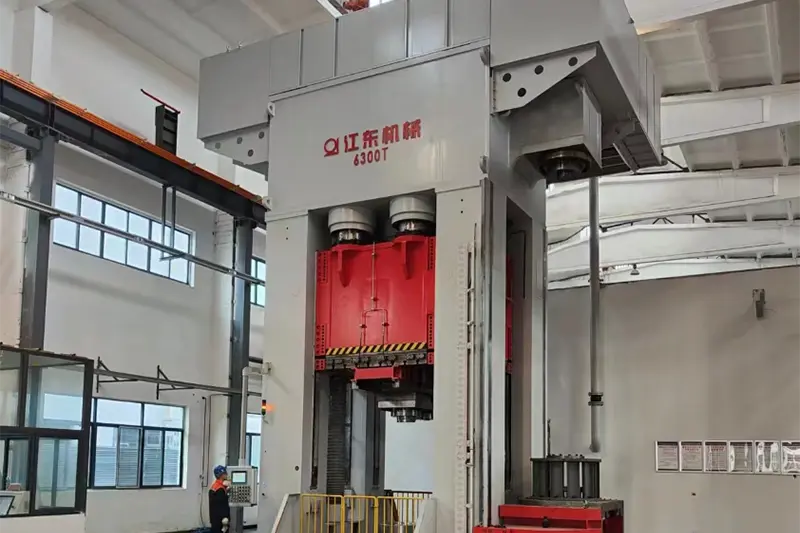
Gas Cylinder Bullet Housing Stretching: Deep-drawing configurations designed for high-pressure storage vessels.
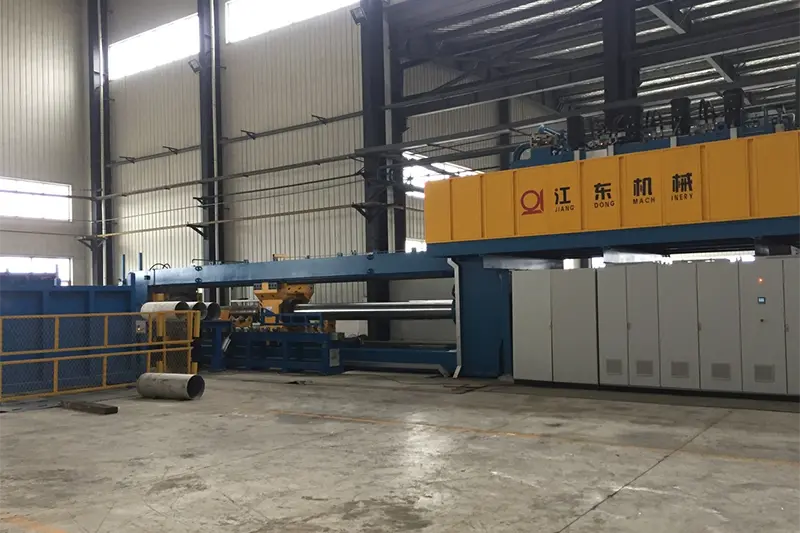
Delivering turnkey, tailored solutions from material testing to automated line commissioning
Jiangdong Machinery is committed to understanding customer requirements and providing tailored "one-stop" systems. We work with clients through design, casting, assembly, PLC integration, and on-site testing. This eliminates vendor management issues and ensures quick installation times.
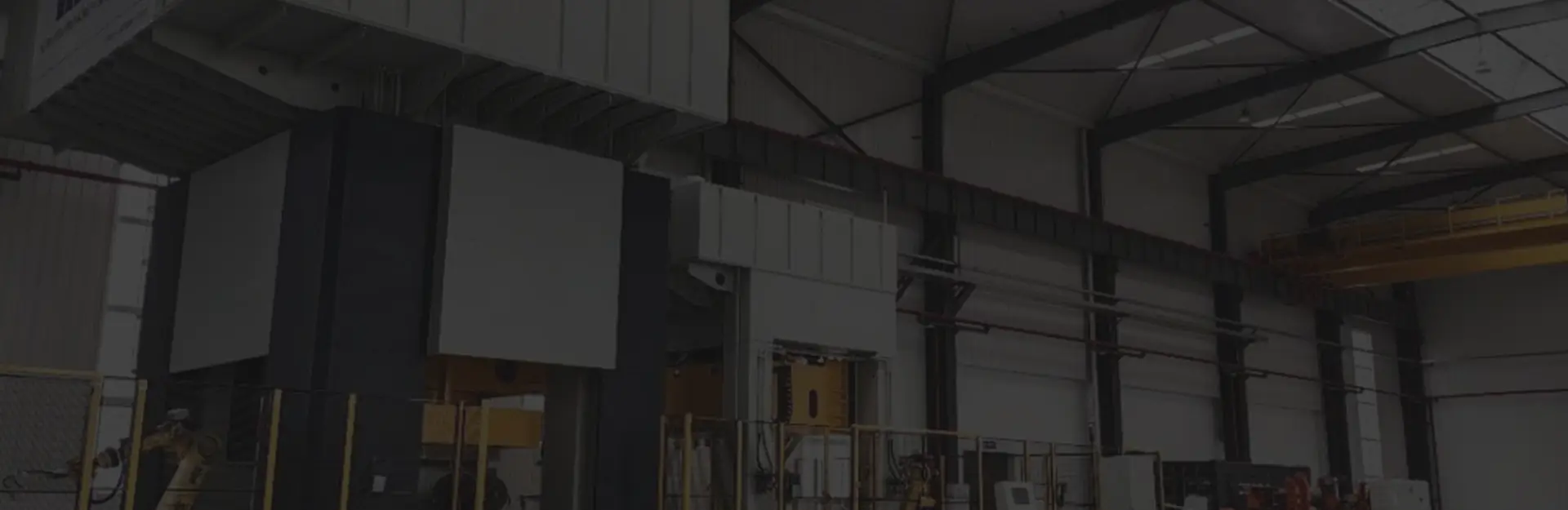
Includes high-pressure hydroforming and hot gas expansion technologies. These are designed to expand hollow metal sections into complex geometries, saving weight and increasing stiffness.
Configured for high-strength steel and lightweight aluminum, using active tool cooling technologies. This ensures rapid quenching and high yield strengths for structural components.
Combines multi-axis forming, cold extrusion, and fine blanking on a single press structure. This configuration increases yield rates for high-volume automotive parts.
Delivering high-reliability forming machinery to manufacturing facilities worldwide
For processing outer panels, internal doors, and structural reinforcements. Our Automobile Door Hemming Hydraulic Press provides clean hem seals with low material stress, helping automotive manufacturers meet strict quality standards.
Processing advanced titanium and Al-Li alloys using Superplastic Forming (SPF) and isothermal forging machinery. This ensures high structural strength and low components weight for critical aerospace parts.
Our vertical deep-drawing lines for gas cylinders process steel, aluminum, and composite-wrapped cylinders. These systems deliver consistent wall thicknesses, which is crucial for high-pressure hydrogen tank applications.
We work closely with global manufacturers across Asia, Europe, and the Americas. Through on-site audits and technical discussions, we customize press profiles to integrate with existing material feeds, factory structures, and safety standards.
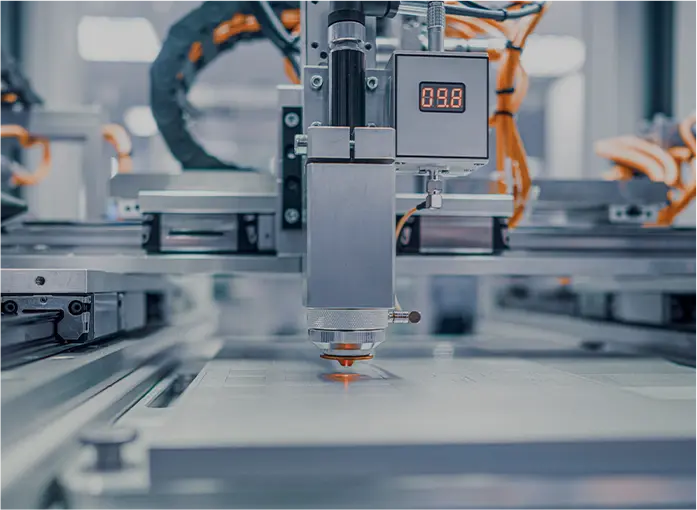
Providing technical support, scheduled maintenance, and custom engineering design services

Engineering press components, hydraulic systems, and control logic to match your specific production requirements.

Real-time PLC monitoring and remote diagnostics help minimize downtime by resolving issues quickly online.

Scheduled onsite inspections, calibration checks, and hydraulic fluid testing to ensure long-term precision.

Comprehensive training programs for operators and maintenance staff on safety, diagnostics, and operation.
Stay tuned to industry trends at all times
 May 06, 2026
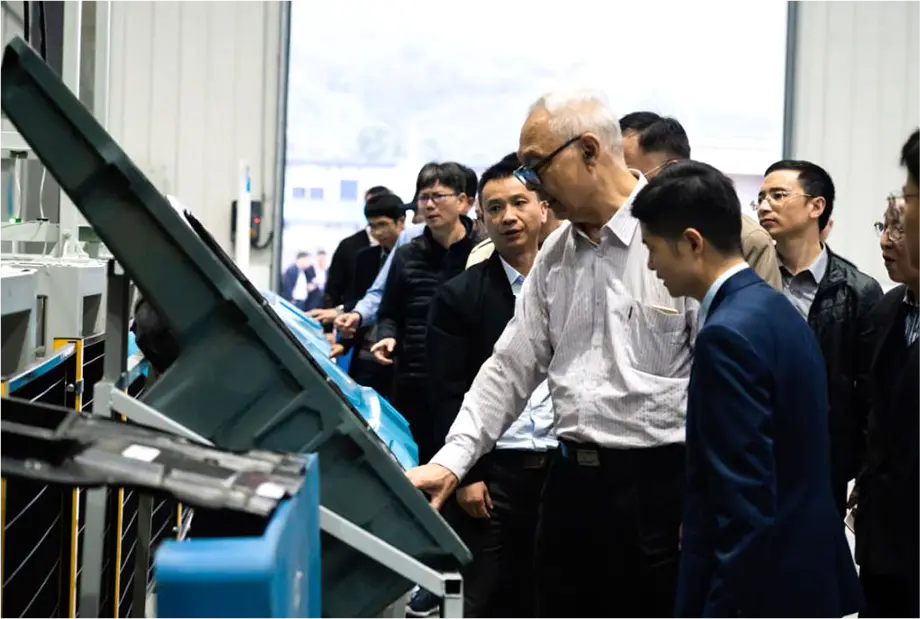
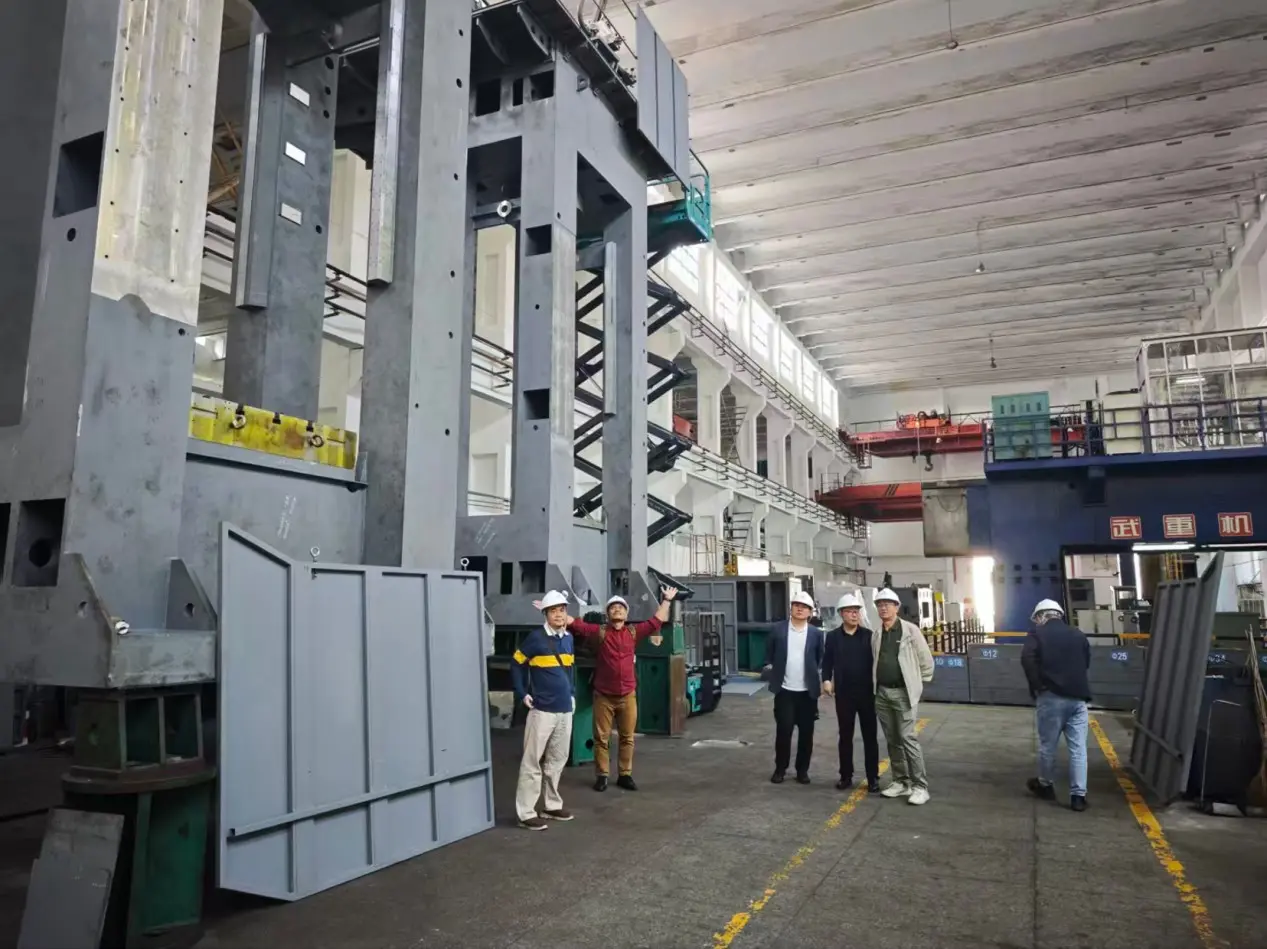
A delegation of Indonesian customers visited Jiangdong Machinery to inspect its capabilities, product quality, and technical strengths, laying a solid foundation for future projects.
Partners from Thailand, Indonesia, and Malaysia visited Chongqing to discuss upcoming lightweight hot-stamping and composite forming line deployments.
Chongqing Jiangdong Machinery showcased its latest lightweight composite molding equipment at international trade fairs, demonstrating its capabilities to global buyers.
Answering common technical questions about extrusion press systems, capacity requirements, and process optimization
Tonnage requirements are determined by the maximum circumscribing circle diameter of the profile, the deformation resistance of the target aluminum alloy (e.g., harder 7xxx series vs. soft 6xxx series), the extrusion ratio, and billet temperature. Higher extrusion speeds and thinner walls require higher extrusion pressures.
Servo-hydraulic systems adjust the motor speed to match flow requirements in real-time, reducing energy consumption during idle periods. They also reduce oil temperature fluctuations, which improves component reliability and maintains consistent extrusion speeds.
We use real-time closed-loop leveling control systems with high-resolution displacement sensors. These systems monitor and adjust the alignment of the press bed in real-time, preventing uneven pressure distribution during the curing process for SMC and HP-RTM composites.
Our production lines are designed and built to comply with international safety standards, including CE certification for European markets and UL-compliant electrical systems for North America. Safety features include light curtains, mechanical locking pins, and monitored dump valves.
High-performance production lines engineered to meet diverse structural manufacturing demands
Speak with our engineering team to evaluate your component designs, cycle time targets, and equipment layout requirements.