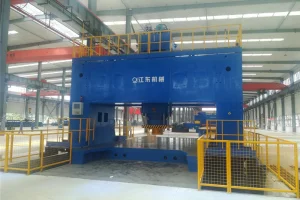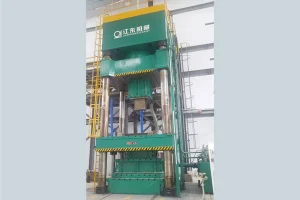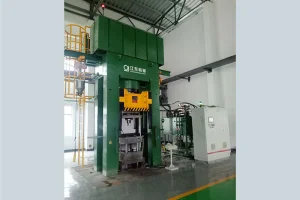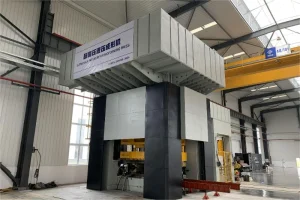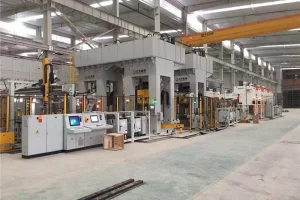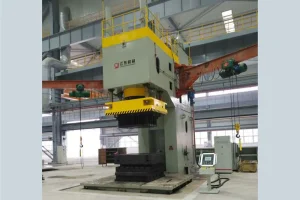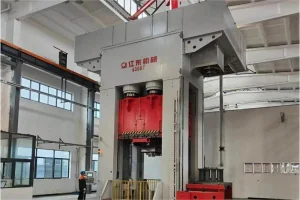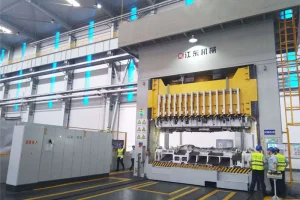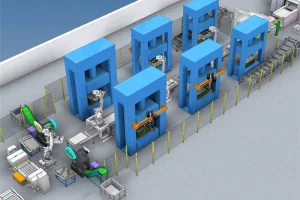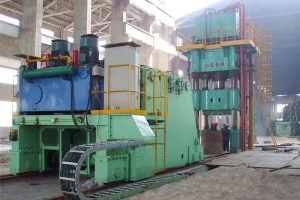
Explore our CE-certified hydraulic presses and automated forming production lines configured for diverse global engineering applications.
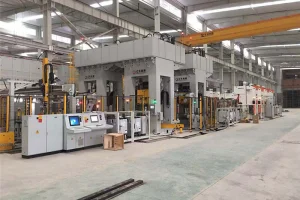
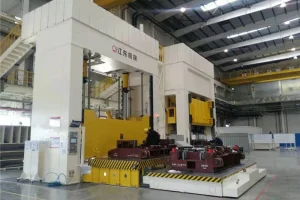
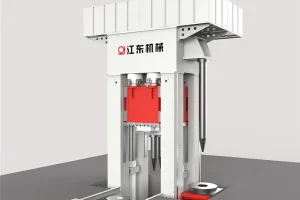
Understanding the transformation of lightweight alloys under high-temperature pneumatics.
Hot Metal Gas Forming (HMGF) is an advanced thermal metal fabrication process that deforms high-strength tubes or sheets using high-pressure gas at elevated temperatures. Unlike traditional cold hydroforming, which relies on liquid media and is limited by material ductility at room temperature, HMGF targets lightweight materials like aluminum alloys (5xxx, 6xxx, 7xxx series), magnesium, titanium (Ti-6Al-4V), and ultra-high-strength steels (UHSS). By elevating the material temperature above its recrystallization point—typically between 450°C and 900°C depending on the alloy—yield strength is significantly reduced while elongation limits surge. This opens up options for component design that were previously considered impossible.
The core mechanism utilizes an inert gas, such as nitrogen or argon, compressed to pressures ranging from 20 MPa to over 100 MPa. The hot gas behaves as a virtual frictionless punch, pressing the softened metal against the internal contours of a heated die. This dynamic pressure distribution prevents localized stress concentration, drastically reducing the risk of tearing, wrinkling, and springback.
Mitigating mechanical and thermal risks to meet strict European Union Directives.
Exporting high-pressure thermal forming machinery to the European Economic Area (EEA) requires strict adherence to safety and performance directives. CE Certification is not merely a regulatory stamp; it is a comprehensive validation of engineering integrity, safety systems, and risk mitigation. For Hot Metal Gas Forming systems, compliance spans several essential directives:
This directive dictates safety requirements for moving parts, structural calculations, and mechanical integrity. For hydraulic presses and clamping units, compliance ensures the structure can withstand clamping loads under high temperatures without structural fatigue.
Because HMGF systems operate with gas pressures exceeding 0.5 bar, all booster systems, pipework, and dynamic seal assemblies are classified under PED. This mandates hydro-testing, non-destructive testing (NDT), and traceability of all pressurized components.
LVD (2014/35/EU) and EMC (2014/30/EU) ensure electrical cabinets, automated handling systems, and induction heaters do not pose shock hazards or generate electromagnetic interference that could disrupt nearby factory equipment.
At Chongqing Jiangdong Machinery, our CE compliance framework incorporates redundancy safety valves, gas concentration sensors, explosion-proof acoustic shield walls, and automated purge lines. These systems are managed via fail-safe PLCs certified to Performance Level d (PL d) or PL e under EN ISO 13849-1. This configuration protects both operators and auxiliary production hardware.
Decoupling equipment costs: Clamping units, gas booster systems, tooling, and automation.
Acquiring a Hot Metal Gas Forming production line represents a significant capital investment. Understanding the primary cost drivers in an exporter’s pricelist helps procurement teams accurately evaluate proposals and balance upfront CAPEX with long-term OPEX:
When comparing prices, buyers must look beyond the initial cost. Standard systems often lead to high operation costs due to low gas recovery, heat loss, and slow cycle times. Investing in advanced features like automated gas recycling, insulated molds, and smart pre-heating furnaces can dramatically reduce per-part production costs, offering a faster return on investment (ROI).
How regional clusters and localized expertise deliver Tier-1 forming machinery.
For global manufacturers, procuring HMGF equipment from China provides distinct supply chain and cost advantages. Chongqing, where Chongqing Jiangdong Machinery is located, serves as one of China’s major automotive and heavy industrial manufacturing clusters. This dense industrial concentration offers several key benefits:
In addition, Chongqing Jiangdong Machinery has integrated its engineering process from R&D to final assembly under one roof. We handle finite element analysis (FEA), hydraulic manifold block machining, high-pressure piping fabrication, and PLC programming in-house. This centralized control prevents typical supply chain bottlenecks, allowing us to deliver complex, customized systems up to 30% faster than the industry average.
Bridging the geographical gap: Onsite commissioning, remote diagnostics, and preventative maintenance.
International procurement teams require more than just machine delivery; they need a reliable, long-term partner who can guarantee uptime and production efficiency. Chongqing Jiangdong Machinery meets these expectations through a structured service model:
We work closely with clients to analyze component geometry, run Finite Element forming simulations, and determine the optimal temperature and pressure curves for their specific parts.
Our engineers manage the physical installation, calibrate structural systems, program the high-pressure gas control loops, and train your staff on safety and operating procedures.
Secure cloud connections allow our engineering team to diagnose software errors, optimize forming parameters, and updates programs remotely, minimizing downtime.
Furthermore, our global supply network for critical spare parts (such as high-pressure seals, heating elements, and hydraulic cartridges) ensures fast replacements when needed. This helps prevent extended, costly production shutdowns.
Where high-temperature gas forming processes deliver the highest value.
Modern automakers face strict weight reduction and crash safety standards. HMGF is the ideal process for manufacturing high-integrity chassis subframes, engine cradles, instrument panel beams, and body-in-white (BIW) pillars (A, B, and C pillars).
By using 6xxx or 7xxx series aluminum, manufacturers can replace complex, multi-piece steel stampings with a single hollow-form part. This reduces weight by 30% to 50% while maintaining the necessary torsional rigidity and energy absorption for crash safety.
In aerospace manufacturing, titanium alloys (such as Ti-6Al-4V) are valued for their strength-to-weight ratio and corrosion resistance, but they are difficult to form at room temperature. At temperatures above 800°C, titanium exhibits superplastic properties, allowing it to stretch and conform to highly complex shapes without cracking.
CE-certified HMGF systems from Chongqing Jiangdong Machinery provide the precise temperature and gas pressure control required to form aerospace environmental control systems (ECS) ducting, engine exhaust paths, and structural brackets with minimal waste.
Beyond automotive and aerospace, HMGF technology is applied in specialized sectors such as vertical gas cylinder drawing, bullet housing stretching production lines, and high-pressure resin transfer molding (HP-RTM) systems. These applications benefit from the uniform wall thickness and reduced material fatigue achieved through gas-based expansion.
The intersection of machine learning, real-time diagnostics, and thermal forming.
Modern HMGF systems use real-time pressure feedback. Sensor arrays measure material expansion inside the die and adjust gas pressure dynamically to prevent wall thinning and necking.
Emerging systems combine mechanical pre-forming and gas expansion in a single cycle. This hybrid approach cuts overall cycle times for high-volume automotive production.
New tooling designs focus on localized heating. By heating only the die cavities rather than the entire die block, energy consumption is reduced by up to 35%.
Clear answers to common questions about buying and operating Hot Metal Gas Forming systems.
Explore our heavy-duty stamping, forging, and composite molding systems built for global export.
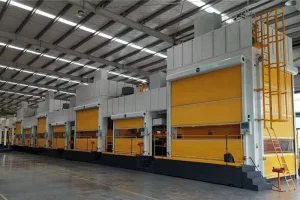
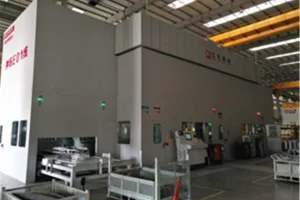
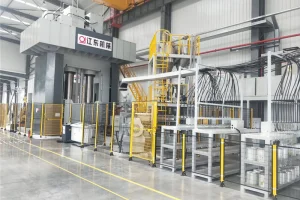
Looking for a detailed quote, structural simulation analysis, or CE compliance documentation for your next forming project? Contact Chongqing Jiangdong Machinery today.
Schedule a Technical Consultation