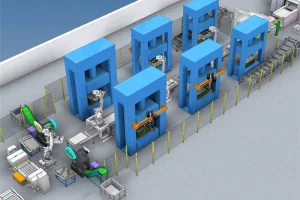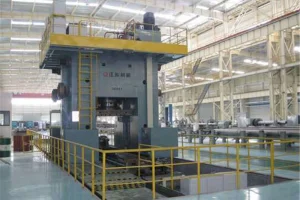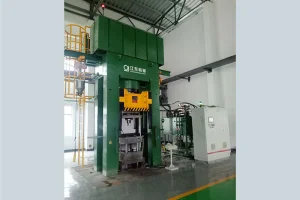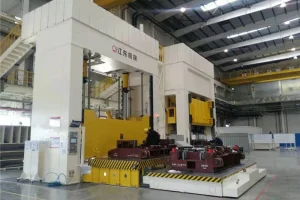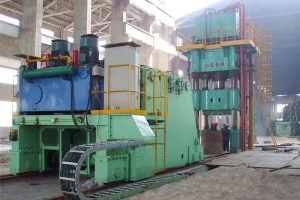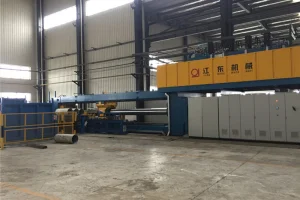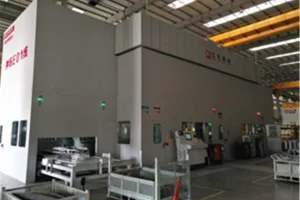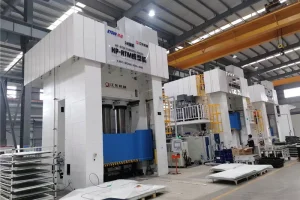
High-Quality Automatic Hydraulic Press Factories & Company

Pioneering Intelligent Forming Solutions, Heavy-Duty Engineering, and Lightweight Materials Processing Globally

Industrial Whitepaper: The Evolution of Intelligent Hydraulic Press Systems

An authoritative analysis of advanced metal forming, composite molding, and smart automation.

1. Executive Summary & Market Dynamics

In modern manufacturing, precision, repeatability, and efficiency are paramount. The industrial landscape is witnessing a structural shift toward lightweight components, high-strength structural parts, and sustainable composite matrices. At the heart of this transition is the modern automatic hydraulic press. Standard configurations are no longer sufficient to meet the tight tolerances required in aerospace, defense, and electric vehicle (EV) manufacturing.

To maintain competitive margins and adhere to strict ecological directives, global production facilities demand highly integrated, flexible, and automated production units. By combining massive tonnage with real-time sensor feedback, contemporary hydraulic press lines allow engineers to manipulate advanced materials such as ultra-high-strength steel (UHSS), high-performance thermoplastic composites (such as LFT-D and HP-RTM), and titanium alloys under extremely controlled thermomechanical conditions.

2. Deep Dive: Chongqing Jiangdong Machinery Co., Ltd.

Established in 1937, Chongqing Jiangdong Machinery Co., Ltd. (Jiangdong Machinery) is a comprehensive forging enterprise at the forefront of China's heavy equipment manufacturing. The company integrates the R&D, production, sales, and service of complex hydraulic presses, lightweight forming technologies, lightweight structural parts, hot and cold stamping dies, and premium metal castings.

Equipped with decades of engineering heritage and academic collaboration, Jiangdong Machinery has pioneered high-precision machinery tailored for the global market. The company specializes in offering "one-stop" overall solutions that bridge the gap between initial mold design, structural simulation, equipment sizing, automated line integration, and final manufacturing execution.

3. Macro-Industry Solutions & Lightweighting

The global push for carbon neutrality has forced key industrial sectors to reconsider material design paradigms:

  • Automotive Lightweighting: High-strength steel hot stamping and aluminum alloy hydroforming minimize vehicle curb weight, directly extending the range of Electric Vehicles (EVs) while enhancing crash safety performance.
  • Aerospace & Defense: Isothermal forging and superplastic forming of titanium and nickel-based superalloys allow the creation of near-net-shape components for turbine blades, structural ribs, and fuselage frames, significantly reducing raw material waste.
  • Composite Materials Transition: Replacing traditional metallic housings with Carbon Fiber Reinforced Polymers (CFRP) and GMT/SMC composites in battery boxes, underbody panels, and outer shells delivers substantial weight savings and corrosion resistance.

Product & Technology Spectrum

Three core pillars of engineering expertise supporting advanced global manufacturing.

⚙️ Sheet Metal Stamping & Forging

Delivering high tonnage and precise control for demanding structural metal processing.

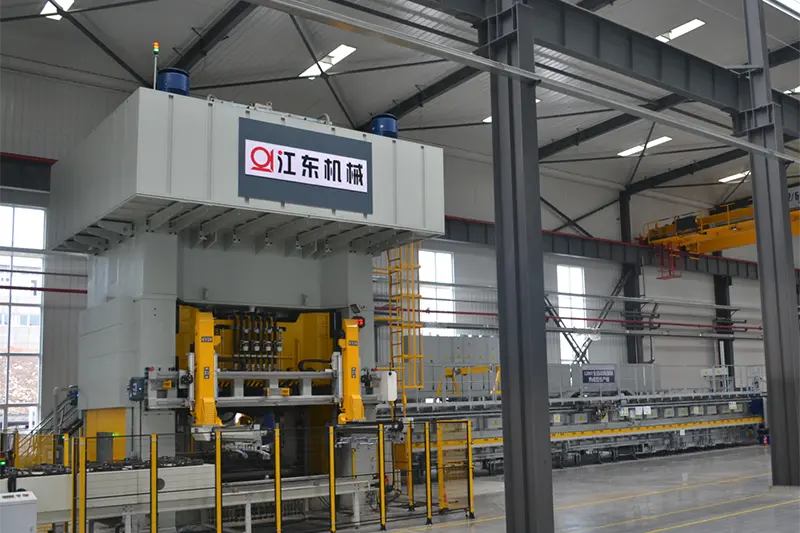
  • Hot Stamping Hydraulic Press Production Line
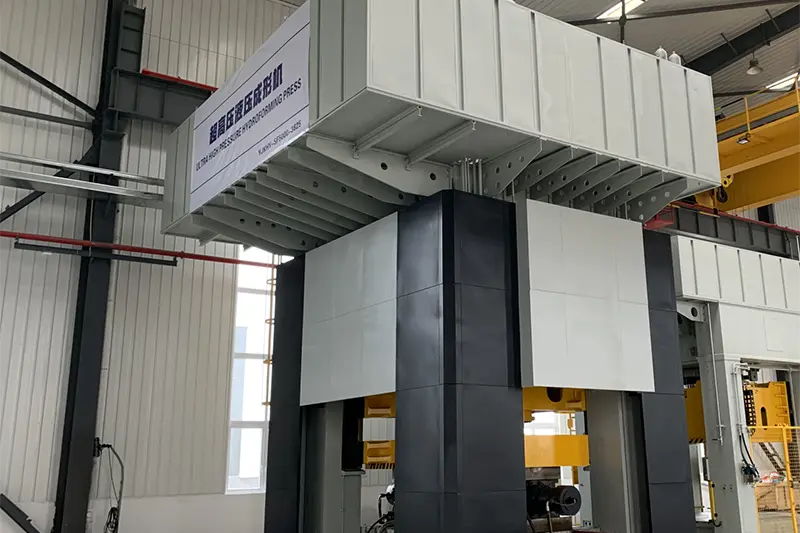
  • Hydroforming-Internal High Pressure Forming Production Line
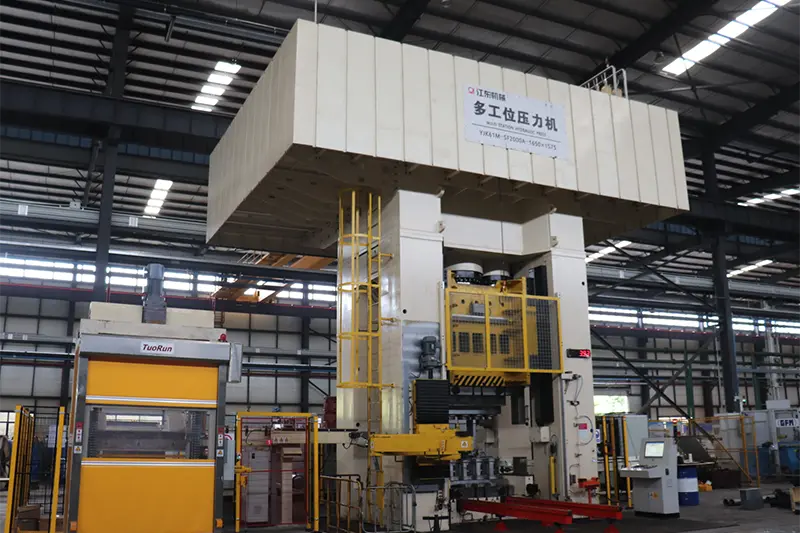
  • Multistation Extrusion Forging Production Line

🧬 Composite Forming

Processing advanced fiber reinforcements and resin matrices under dynamic parameters.

  • LFT-D Long-Fiber Reinforced Thermoplastic Lines
  • HP-RTM High Pressure Resin Transfer Molding
  • SMC/BMC/GMT/PCM Compression Molding Systems

🚀 Special Industrial Forming

Niche high-tech systems designed for critical aerospace, defense, and gas handling parts.
  • Isothermal Forging Technology
  • Superplastic Forming (SPF) Technology
  • Gas Cylinder & Bullet Housing Stretching
Hot Stamping Hydraulic Press Production Line
Hydroforming-Internal High Pressure Forming
Multistation Extrusion Forging Production Line
Multistation Extrusion Forging Line
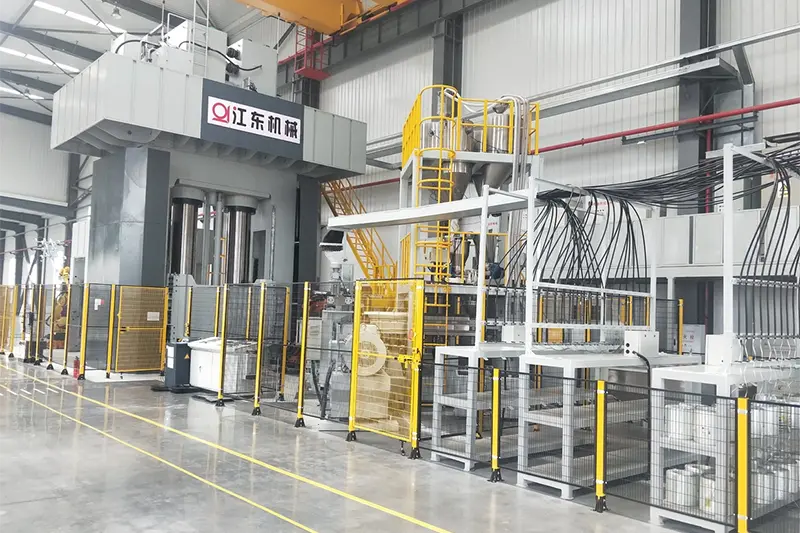
LFT-D Forming Line
LFT-D (Long-Fiber Thermoplastic)
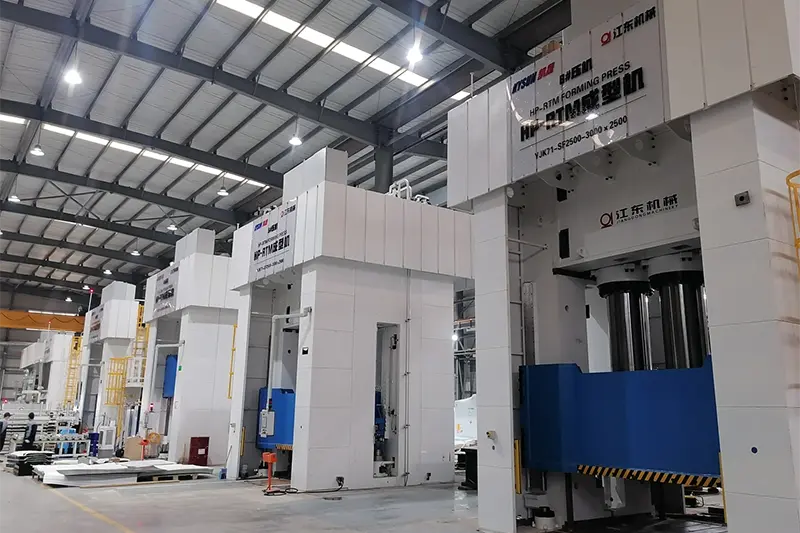
HP-RTM Equipment
HP-RTM (High Pressure Resin Transfer Molding)
SMC/BMC/GMT/PCM Composite Press
SMC / BMC / GMT / PCM Composite Molding
Isothermal Forging Press
Iso Thermal Forging Equipment
Superplastic Forming Press
Superplastic Forming (SPF) Press
Gas Cylinder Bullet Housing Stretching
Gas Cylinder & Bullet Housing Stretching
1937
Established Year
30+
Patents / Year
30+
Scientific Innovations / Year
100%
One-Stop Solution Coverage

4. Detailed Technical Analysis: Material Processing Methods

To select the right industrial equipment, manufacturing leaders must understand the thermodynamics and mechanical demands of each process. Jiangdong Machinery customizes its press systems to provide ideal force curves, thermal profiles, and auxiliary handling configurations for various techniques:

Hydroforming Technology

Utilizes ultra-high-pressure fluids to expand tubes or sheets into complex die geometries. Essential for hollow automotive structural components, reducing weld seams and improving structural integrity.

Hot Stamping (Press Hardening)

Boron steel blanks are heated to austenitization temperatures (approx. 900°C), then simultaneously formed and rapidly quenched inside water-cooled dies. The result is tensile strengths exceeding 1500 MPa.

Multistation Cold/Warm Forging

Combines multi-stage progression dies to produce complex shaft, gear, and cup-like components. Features automatic transfer bars to optimize yield and cycle times.

Superplastic Forming (SPF)

Deforms high-strength titanium or aluminum alloys under slow, controlled strain rates and elevated temperatures. Enables the production of complex, single-piece aerodynamic components.

HP-RTM (High Pressure Resin Transfer Molding)

A closed-mold process that injects mixed epoxy/polyurethane systems under high pressure into dry carbon fiber preforms. Minimizes void content and delivers structural components with Class-A surface quality.

LFT-D Direct Compression Molding

Integrates compounding extruders directly with the molding press. Long-fiber reinforced thermoplastic pellets are extruded into a molten charge and immediately pressed into the shape of the component, minimizing fiber degradation.

5. China Factory 4.0: Supply Chain Resilience & Efficiency Advantages

Procuring heavy capital equipment requires confidence in the manufacturer's supply chain and production capacity. Operating out of Chongqing, the industrial heartland of Southwest China, Jiangdong Machinery utilizes a mature local supply chain. This strategic location offers unique advantages:

  • Integrated Metallurgy & Machining: Immediate access to premium structural castings and heavy forging materials reduces raw lead times for massive press frames.
  • Industrial Cluster Synergy: Local ecosystems for hydraulic valves, high-pressure pumps, and electrical controls minimize dependency on fragile international component channels.
  • Cost Efficiency & Optimization: Modernized production processes, combined with skilled engineering talent in Southwest China, yield cost advantages that are passed on to global buyers.
  • Tested Quality Management: Adherence to global ISO, CE, and national heavy industrial standards ensures every press frame passes finite element analysis (FEA) testing before leaving the floor.

6. Global Procurement Requirements, Localization & Support

Industrial machinery must integrate seamlessly into local factory environments. Jiangdong Machinery provides comprehensive international compliance and field-engineering services to ensure smooth deployment:

  • Regulatory Compliance: Equipment meets global standards, including CE Marking for the European Union, UL/CSA standards for North America, and local occupational safety guidelines.
  • Dynamic Controls Integration: HMI interfaces are available in multiple languages and support standard fieldbus protocols (Profinet, EtherCAT, Modbus) to integrate with local SCADA networks.
  • Local Agent Support Networks: Partner offices and regional field engineers assist with customs clearance, local rigging, mechanical installation, and on-site training.

7. Technological Roadmap & Future Outlook

As industrial IoT (IIoT) evolves, hydraulic machinery is shifting toward digital integration. The technological roadmap for our next-generation automated presses focuses on three pillars:
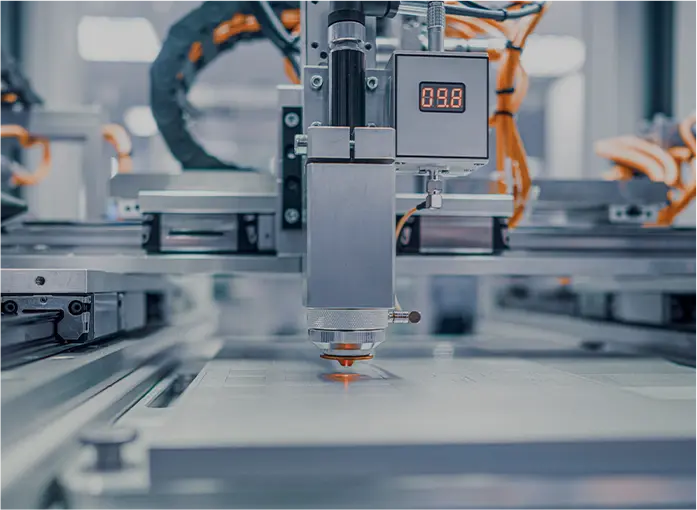
  • Closed-Loop Servo Systems: Replacing classic hydraulic control valves with high-speed servo-pump configurations, reducing energy consumption by up to 50% and improving positioning tolerances to the micrometer scale.
  • Predictive Maintenance (AI-Powered): Implementing vibration, temperature, and pressure sensors linked to cloud-based diagnostic algorithms to predict seal failures and oil degradation before they cause downtime.
  • Digital Twin Simulations: Simulating mold interfaces and metal forming mechanics prior to tool installation, minimizing commissioning timelines and risk.
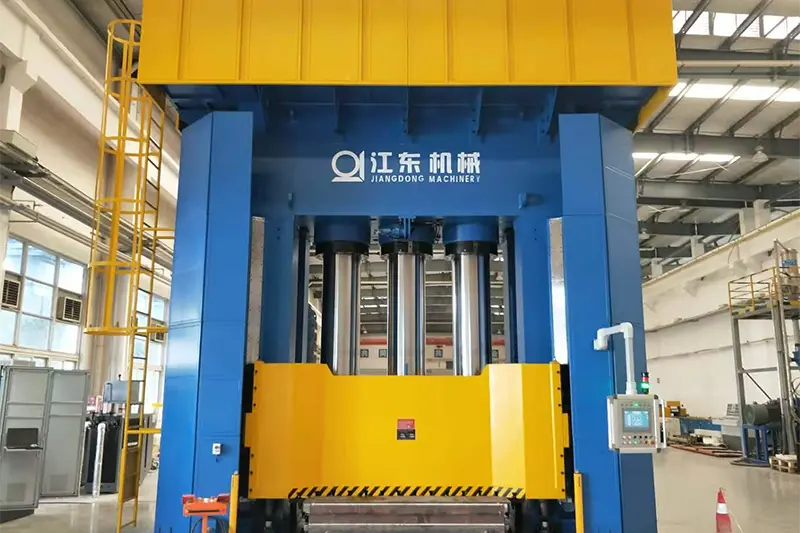
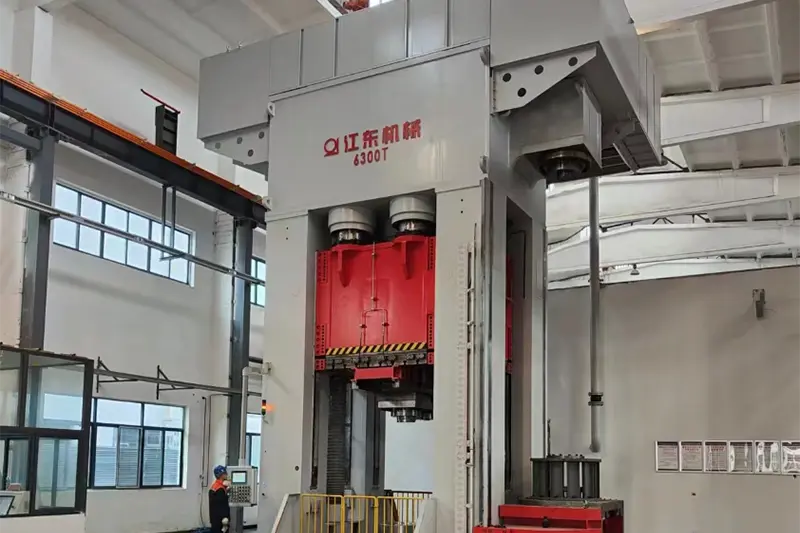
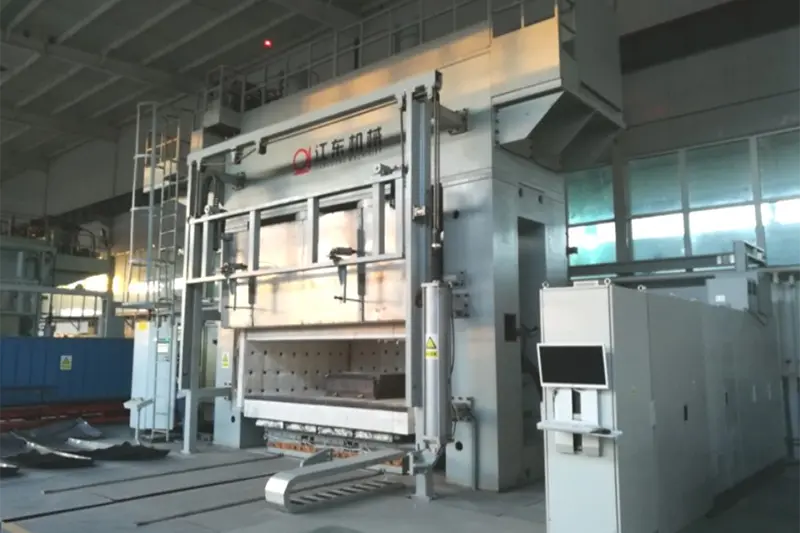
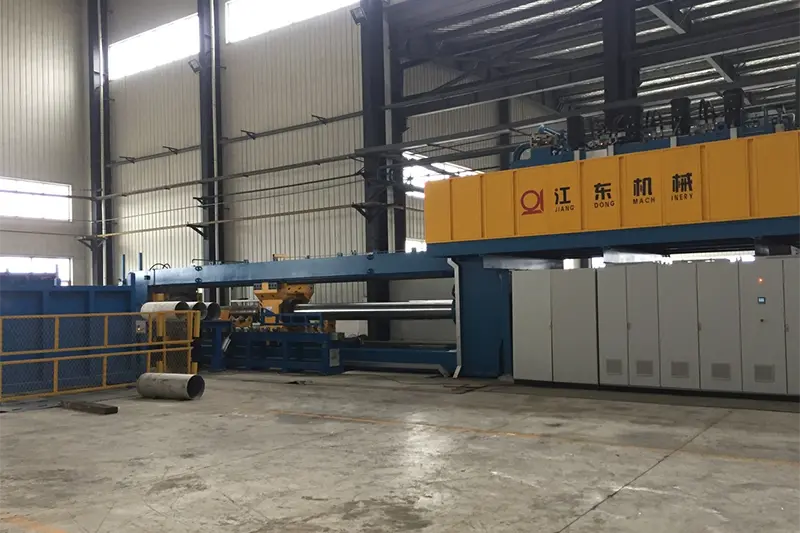
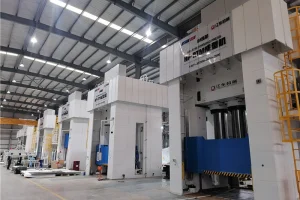
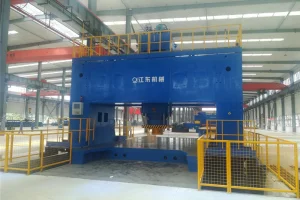
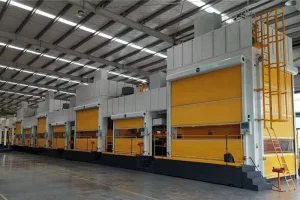
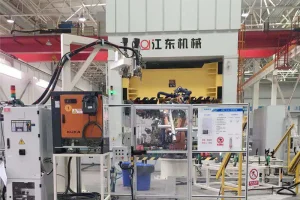
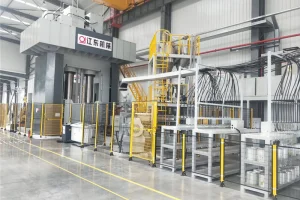
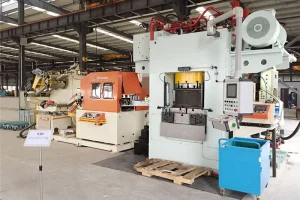
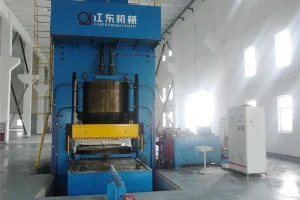
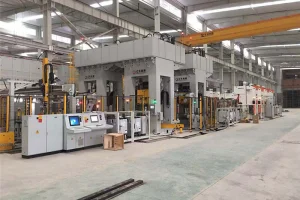
Chongqing Jiangdong Machinery Co., Ltd. Manufacturing Facility

Chongqing Jiangdong Machinery Co., Ltd.

As a pioneer in advanced forming technology, Chongqing Jiangdong Machinery Co., Ltd. delivers innovative solutions tailored to customer requirements. Our hydraulic press configurations feature high automation, intelligence, and flexibility, providing comprehensive metal and non-metal forming equipment. We focus on lightweight solutions for automotive, aerospace, and general industrial sectors.
Jiangdong Machinery Plant Floor
Jiangdong Machinery Testing Center

Global Service & Support Lifecycle

Comprehensive technical support from layout planning through decommissioning.

Customized Solutions

Customized Solutions

Remote Service

Remote Service

Maintenance

Preventive Maintenance

Technical Support

Technical Support

Spare Parts

Spare Parts Inventory

Latest Industry Blog & International Visits

Insights into our global projects, partner meetings, and manufacturing events.
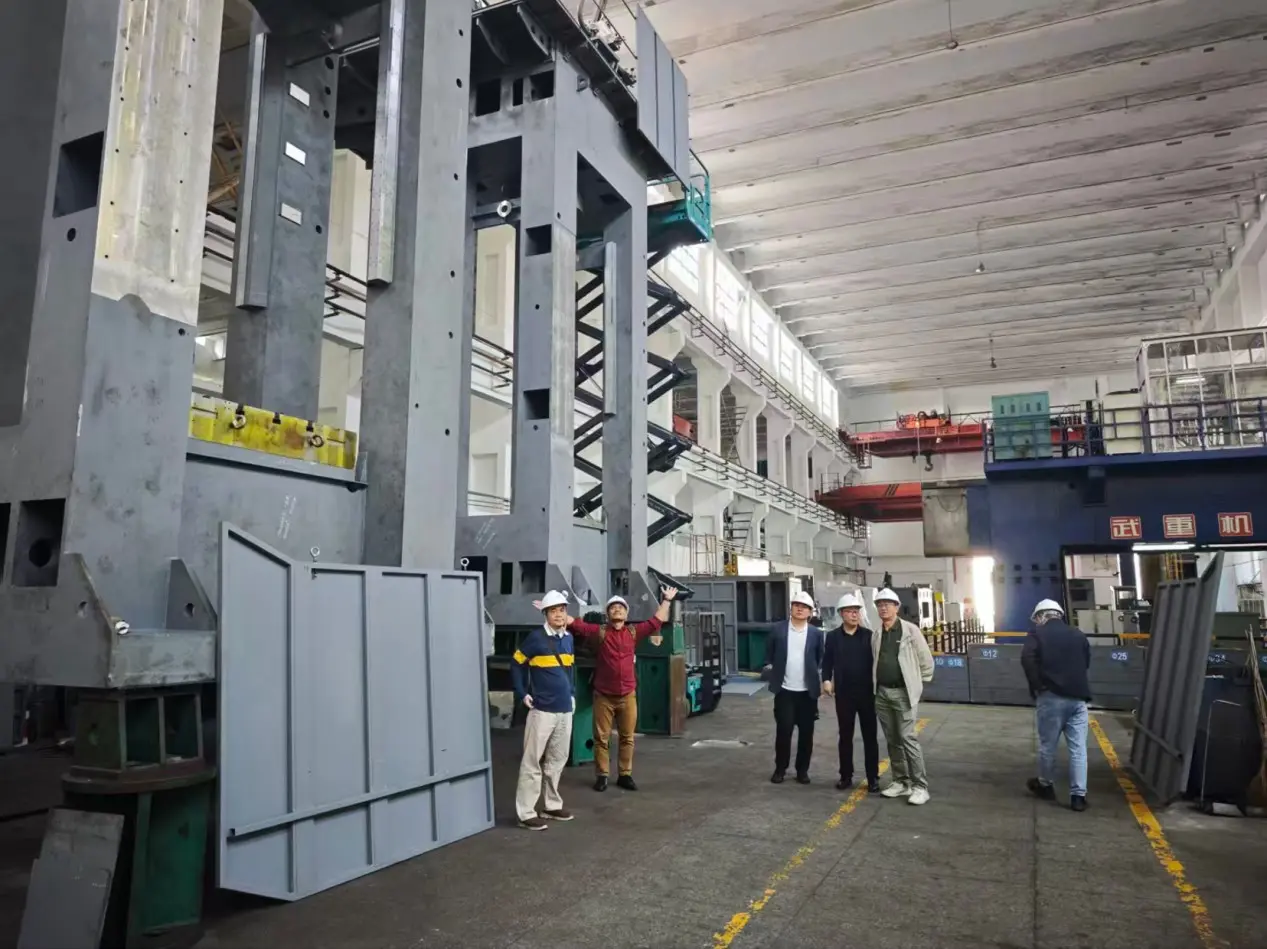
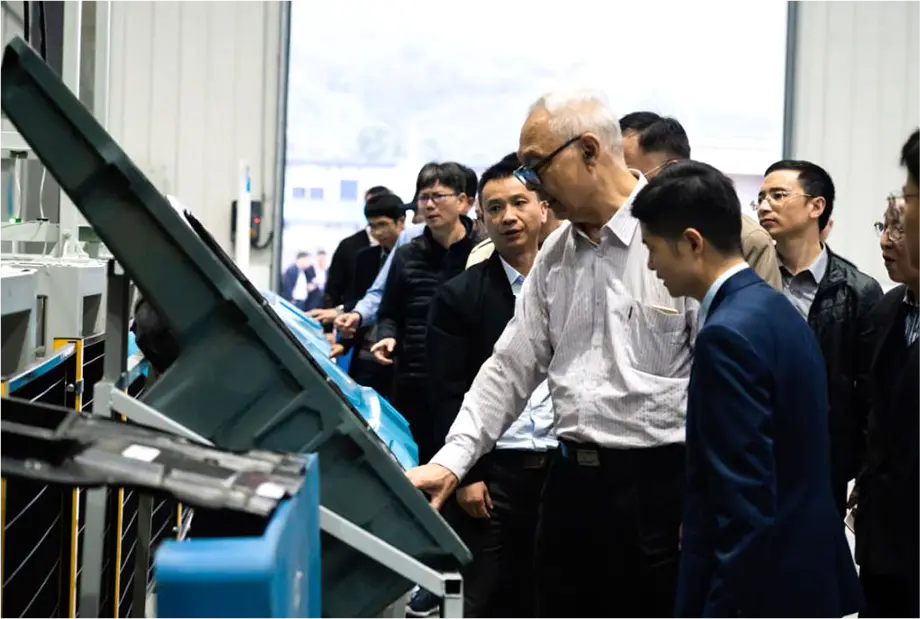
Indonesian Customers Visit Jiangdong Machinery
2026/May 06

Indonesian Customers Visit Jiangdong Machinery, Launch New Cooperation in Sheet Metal Forming

Recently, a delegation of Indonesian customers visited Jiangdong Machinery to inspect its capabilities, product quality, and technical strengths, laying a solid foundation for future projects in sheet metal forming...

Mar 16 2026

Overseas Customers and Partners Visit in Success...

With the arrival of the new year, partners from Thailand, Indonesia, and Malaysia visited to finalize contracts for automated production line equipment.

Nov 14 2025

Chongqing Jiangdong Machinery Co., Ltd. to Make Presence...

Jiangdong Machinery demonstrated its lightweight composites processing technologies and servo-hydraulic solutions at a major trade show.

Industrial Hydraulic Press Procurement FAQ

Expert answers addressing the technical, financial, and operational concerns of enterprise buyers.

❓ What factors determine the tonnage required for a hydraulic press?
Tonnage requirements depend on the material type, tensile strength, thickness, part surface area, and forming method (e.g., stamping, deep drawing, or forging). Our engineers run finite element analysis (FEA) simulations of your part profile to calculate the optimal force curve, ensuring you buy the correct capacity without over-specifying.
❓ What are the cycle-time differences between HP-RTM and traditional composite molding?
HP-RTM operates under high-pressure conditions (usually 10 to 100 bar injection pressure) using low-viscosity fast-cure resins, allowing curing within 2-5 minutes. Traditional wet-layup or autoclave methods can take several hours. HP-RTM is suited for high-volume automotive composite lines.
❓ How does servo-drive technology affect energy efficiency?
Standard hydraulic presses rely on fixed-speed motors that run continuously, using throttling valves to adjust pressure. Servo-driven pump systems control motor speed in real time, delivering only the flow and torque required for the active stroke segment. This reduces electrical energy consumption by up to 50% and lowers cooling water requirements.
❓ How is structural deflection controlled on large-bed hydraulic presses?
Structural deflection is managed by designing high-rigidity welded steel frames, which are stress-relieved via annealing. We design frames to meet strict deflection limits (typically within L/8000 to L/10000) under full eccentric load conditions to protect precision tooling from uneven wear.
❓ What parameters are monitored on a smart production line?
We monitor stroke position (using high-resolution linear scales), system and cavity pressures, die temperature distribution, oil cleanlines, pump vibration frequencies, and cycle speeds. This data feeds into a centralized PLC for process control and diagnostic reporting.
❓ Does Jiangdong Machinery support mold integration?
Yes. We provide "one-stop" packages, meaning we design and build the hydraulic press, production line automation, and the tooling/dies simultaneously. This ensures full compatibility and simplifies installation at your plant.
❓ How is on-site installation managed for international buyers?
We send mechanical, electrical, and automation engineers to guide your rigging, leveling, connection, and testing phases. We offer remote commissioning and telemetry setup so our headquarters can troubleshoot programming adjustments in real time.
❓ What compliance options are available for European and American markets?
We offer certified packages complying with CE standards (Machinery Directive 2006/42/EC, EN 693 or ISO 16092 safety standards), UL/CSA certifications for electrical panels, and alignment with OSHA/ANSI safety requirements for the North American market.

Work with Our Engineering Team

Get in touch to receive technical consultations, FEA evaluations, and custom quotes.