
Top 10 Sheet Metal Punch Press Machine Manufacturers?

Time:2026-09-19 Author:Ethan
0%

Choosing among the Top 10 Sheet Metal Punch Press Machine manufacturers requires more than comparing catalog photographs or advertised speeds. A reliable review must examine real production needs, including material thickness, punching force, stroke rate, tooling flexibility, automation, control software, and after-sales support. Factory visits, operator feedback, maintenance records, and sample parts often reveal details that brochures leave out.

Shigeo Shingo, a respected manufacturing engineer, wrote, “The most dangerous kind of waste is the waste we do not recognize.” This principle fits punch press selection closely. Unplanned setup time, slow tool changes, excessive scrap, and difficult programming can quietly reduce profitability. The strongest manufacturers usually combine rigid machine frames with accurate positioning, intelligent diagnostics, energy efficiency, and practical service networks. Some also provide automatic loading systems, integrated nesting software, and remote technical assistance.

No ranking is perfect. A high-speed machine may not suit a small workshop with changing job sizes. A lower-cost model may become expensive when spare parts arrive slowly. Regional support can matter more than a famous brand name. This guide compares leading manufacturers through a balanced, experience-based lens, rather than relying on marketing claims alone. Readers should still verify local certifications, installation conditions, operator training, warranty terms, and total ownership costs before purchasing. Our shortlist may miss an excellent regional specialist, and that limitation deserves acknowledgment. Performance depends on the machine, the material, the tooling, and the people operating it.
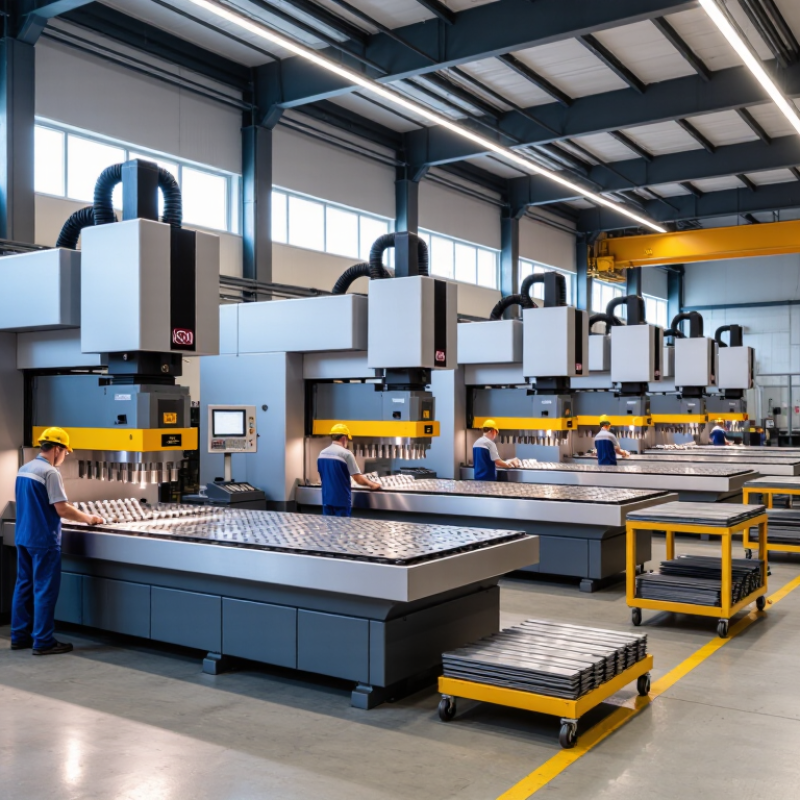
Top 10 Sheet Metal Punch Press Machine Manufacturers?

What Is a Sheet Metal Punch Press Machine?

A sheet metal punch press machine is a powered tool that creates holes, slots, and formed shapes in metal sheets. It uses a punch, die, and controlled force to cut or shape the material. The punch moves through the sheet, while the die supports the opening below. This action is quick and repeatable.

In practical workshops, operators use punch presses for electrical cabinets, brackets, panels, and automotive components. Machines may be mechanical, hydraulic, or servo-driven. Mechanical models work rapidly, while hydraulic systems provide strong, steady pressure. Servo-driven equipment often offers precise movement and lower energy use during some operations. Sheet thickness, metal type, hole size, and production volume affect machine selection.

Accurate setup matters. Very small errors can damage the die or leave rough edges. The punch and die must match the material and clearance requirements. Operators also check clamping, lubrication, guarding, and emergency controls before production. Safety training is essential, even when the machine appears simple. It is not a perfect process. Heat, tool wear, and incorrect alignment can change results over time. Regular inspection helps reveal problems before they become expensive. In my view, measurement records are often overlooked, yet they provide valuable evidence for improving repeatability and reducing material waste.

How Sheet Metal Punch Press Machines Work

A sheet metal punch press converts rotary or hydraulic power into a controlled vertical stroke. In a mechanical press, a motor accelerates a flywheel. A clutch then transfers energy to the crankshaft, moving the ram downward. The punch enters the die and removes a slug from the sheet. CNC axes position the sheet between strokes, creating holes, slots, or formed features with repeatable spacing. It is fast, but not forgiving.

Clearance matters. Excessive clearance creates a rough fracture zone, while insufficient clearance increases force and tool wear. Operators also check material thickness, tensile strength, lubrication, and punch alignment. A useful estimate is F = perimeter × thickness × shear strength. According to the World Steel Association’s 2024 World Steel in Figures, global crude steel production reached about 1.89 billion tonnes in 2023. That scale explains why small efficiency gains matter across fabrication plants.

Energy use deserves attention. The U.S. Department of Energy reports that industrial motor systems represent a major share of manufacturing electricity demand. A poorly adjusted press wastes energy through friction, idle running, and repeated test strokes. The machine may appear accurate, yet burrs can reveal hidden problems. I would not trust speed alone. A slower stroke, correct die clearance, and measured scrap rate often provide better evidence of real performance.

Key Criteria for Evaluating Leading Manufacturers

Top 10 Sheet Metal Punch Press Machine Manufacturers: Key Criteria for Evaluating Leading Manufacturers

A credible manufacturer should prove performance beyond brochure claims. MarketsandMarkets reported that the global metal stamping market could grow from about USD 274 billion in 2023 to USD 342 billion by 2028. This growth increases pressure to deliver faster, cleaner, and more reliable punching systems. Buyers should compare maximum force, stroke length, turret capacity, positioning accuracy, and tested cycle speed. Ask for test results using similar steel thicknesses.

Accuracy must remain stable after thousands of cycles. Look for documented tolerances, calibration procedures, and ISO 9001-based quality controls. Energy use also deserves attention. The U.S. Department of Energy identifies motor systems as major industrial electricity users, so regenerative drives and standby controls can reduce operating costs. Small savings matter.

Service quality often separates the top ten from the merely visible ten. Examine spare-parts availability, remote diagnostics, operator training, and response times. Request references from factories with comparable workloads. A machine punching 3-millimeter steel in a demonstration may perform differently during an eight-hour shift. That is easy to overlook. Total cost should include tooling, software, maintenance, downtime, and installation. Published speed figures can mislead. I would rank suppliers only after reviewing production samples, safety documentation, and lifecycle evidence.

Top 10 Sheet Metal Punch Press Machine Manufacturers? - Key Criteria for Evaluating Leading Manufacturers

No. Evaluation Criterion What to Verify Strong Manufacturer Benchmark Recommended Evidence Suggested Weight
1 Machine Performance Rated punching force, maximum sheet thickness, working envelope, stroke length, and maximum hit rate. Configuration matched to the application, with published ratings for mild steel, stainless steel, and aluminum rather than a single generic capacity. Detailed technical datasheet, sample-production results, and load calculations. 15%
2 Positioning Accuracy Repeatability, positioning accuracy, backlash control, and consistency across the entire work area. Published accuracy and repeatability figures supported by a defined measurement standard and test conditions. Factory acceptance test, calibration report, and test parts measured with traceable equipment. 12%
3 Productivity and Automation Turret speed, tool-change time, sheet handling, automatic repositioning, and compatibility with loading or unloading systems. Short setup times, automatic tool management options, and documented cycle-time results for representative parts. Time studies, production samples, automation layout, and controls demonstration. 12%
4 Tooling Flexibility Turret configuration, tool compatibility, forming capability, nibbling performance, and access to standard tooling. Widely available standard tooling, clear limits for forming operations, and practical options for special shapes. Tool list, compatibility chart, forming trials, and spare-tool availability statement. 10%
5 Control System and Software Programming interface, CAD/CAM integration, nesting, diagnostics, data backup, and remote support capability. Intuitive offline and shop-floor programming with clear alarms, secure data transfer, and documented software updates. Live software demonstration, supported file formats, operator training plan, and cybersecurity documentation. 10%
6 Build Quality and Reliability Frame rigidity, drive-system design, component quality, vibration control, duty-cycle capability, and maintenance access. Welded or engineered frame with documented stress control, industrial-grade components, and a clear preventive-maintenance schedule. Factory audit, component list, reference installations, service records, and reliability test results. 12%
7 Energy Efficiency Drive technology, standby consumption, regenerative functions, compressed-air demand, and energy use per production cycle. Energy-saving drive options and measured consumption data based on a defined material, thickness, and production pattern. Power-consumption test, utility requirements, and comparison using the buyer’s expected annual workload. 8%
8 Safety and Compliance Guarding, interlocks, emergency stops, light curtains, risk assessment, electrical safety, and applicable market certifications. Complete safety documentation, conformity evidence for the destination market, and validated protective systems. Declaration of conformity, risk assessment, safety-circuit drawings, and acceptance checklist. 10%
9 Service and Spare Parts Local technicians, response time, spare-parts inventory, remote diagnostics, installation, and operator training. Defined service-level commitments, regional support coverage, critical spare-parts planning, and documented training. Service agreement, escalation process, parts lead times, technician credentials, and customer references. 7%
10 Total Cost of Ownership Purchase price, tooling, installation, training, energy, maintenance, software, downtime, and expected resale value. Transparent five- to ten-year cost model with realistic consumables, labor, maintenance, and production assumptions. Itemized quotation, lifecycle-cost calculation, warranty terms, and financing or service options. 4%
Total Evaluation Weight 100%

Note: The benchmarks are practical purchasing criteria and should be validated against the buyer’s material types, production volume, part geometry, destination-market regulations, and required return on investment.

Top 10 Sheet Metal Punch Press Machine Manufacturers

Top 10 Sheet Metal Punch Press Machine Manufacturers

The top ten sheet metal punch press machine manufacturers should be assessed through measurable production results, not advertising claims. Grand View Research estimates that the global metal stamping market reached approximately USD 241 billion in 2023. It also expects steady growth through 2030. This wider market includes punching, forming, and related processes. Therefore, a serious ranking must separate punch press capability from general stamping capacity.

Strong manufacturers usually provide machines from 20 to more than 1,000 tons. They also offer servo drives, automatic tool changers, and integrated material handling. According to MarketsandMarkets, automation and connected manufacturing remain major trends in metal forming equipment. A reliable supplier should document positioning accuracy, cycle speed, energy use, and maintenance intervals. Small details matter. A poorly supported control system can stop a production line for hours.

The best top-ten candidates should also show verifiable installations, operator training, and long-term parts availability. ISO 9001 certification supports process consistency, but it does not prove machine quality alone. Buyers should request sample parts using their own steel thickness and tolerances. I would not rank a manufacturer highly based only on maximum tonnage. That approach sounds impressive, yet it may ignore tool life, noise, programming quality, and service response. Published data can guide comparison, but factory trials remain more convincing.

How to Choose the Right Manufacturer for Your Needs

Choosing among the top ten sheet metal punch press manufacturers requires more than comparing machine prices. Start with your actual work: material type, thickness, part size, production volume, and tolerance. A reliable manufacturer should explain tonnage calculations clearly. Ask for a sample trial using your drawings and material. Watch the setup time, noise, burr formation, and repeatability. A polished demonstration can hide weak production control. Request measured results, not optimistic claims.

Examine the manufacturer’s engineering experience and quality process. Ask how frames are stress-relieved, how guides are aligned, and how critical components are inspected. Review factory test records, operator training, spare-part availability, and response times. Independent customer references are useful, especially from workshops with similar materials and workloads. Check whether the control system supports your operators without excessive complexity. More features are not always better.

Not everything is perfect. I would treat vague answers as a warning, even when the quotation looks attractive. A low purchase price may become expensive through downtime, difficult maintenance, or unavailable parts. Compare the full ownership cost over five years, including tooling, installation, training, energy use, and service visits. Clarify delivery milestones and acceptance tests in writing. The right manufacturer should discuss limitations openly and recommend a machine that fits your process, not simply the largest model.

FAQS

What does a sheet metal punch press machine do?

It creates holes, slots, and shaped features in metal sheets. A punch pushes through the sheet, while a die supports it below. The process is fast and repeatable.

Which industries use punch press machines?

Workshops use them for cabinets, brackets, panels, and vehicle components. They suit both simple parts and repeated production work. Results still depend on setup quality.

What machine type should I choose?

Mechanical machines offer fast cycles. Hydraulic models provide steady force for demanding work. Servo-driven machines can improve movement control and energy efficiency. The best choice depends on thickness, material, part size, and volume.

How can I compare different manufacturers?

Compare measured accuracy, cycle speed, energy use, tool life, and service response. Ask for sample parts made from your material. A polished demonstration proves little by itself.

What should I check during a sample trial?

Watch setup time, noise, burrs, positioning, and repeatability. Record results from several parts, not only one perfect sample. Small differences may reveal weak process control.

Does maximum tonnage prove machine quality?

No. High tonnage can sound impressive. It does not prove good programming, low noise, long tool life, or reliable service. Match force capacity to your actual work.

What safety checks are important before production?

Check guarding, clamping, lubrication, emergency controls, and tool alignment. Operators need practical safety training. The machine may look simple, but its force is substantial.

What hidden costs should buyers consider?

Include tooling, installation, training, energy, maintenance, spare parts, and service visits. A low purchase price may become expensive after repeated downtime. Five-year ownership costs give a clearer picture.

How can I improve punching accuracy over time?

Match the punch, die, material, and clearance carefully. Inspect tools for wear and record measurements during production. Heat and alignment changes can affect results. Records are often ignored, unfortunately.

Conclusion

A Sheet Metal Punch Press Machine is a precision manufacturing system designed to create holes, forms, cutouts, and other shapes in metal sheets through controlled punching force. The machine typically uses a punch and die, supported by a programmable control system that manages positioning, pressure, speed, and production sequences. Modern equipment may include automated tooling, material handling, and monitoring features to improve accuracy, repeatability, and efficiency.

This overview explains how these machines operate and identifies the key factors used to evaluate leading manufacturers, including build quality, punching capacity, precision, automation, energy efficiency, service support, safety features, and long-term operating costs. It also presents a structured approach to comparing the top manufacturers without focusing on brand names. Finally, it offers practical guidance for selecting a suitable supplier based on material type, production volume, part complexity, available workspace, budget, maintenance requirements, and future expansion plans. The goal is to help businesses make a well-informed investment that supports reliable performance and consistent manufacturing results.

Ethan

Ethan

Ethan is a seasoned marketing professional with a deep expertise in our company's innovative product line. With a passion for sharing knowledge and insights, he takes the lead in regularly updating our corporate blog, where he explores industry trends, product features, and effective marketing......