
Choosing among China’s top hydraulic press manufacturers requires more than comparing product photographs or advertised tonnage. A Fully Automatic Hydraulic Press must deliver stable pressure, repeatable cycle times, safe operation, and practical maintenance support. This article introduces ten Chinese manufacturers associated with industrial forming, stamping, molding, and customized press systems. It considers their manufacturing experience, technical capabilities, product range, and service performance.
The evaluation focuses on details that matter inside a real workshop. These include frame construction, hydraulic system design, control interfaces, automation compatibility, energy efficiency, and after-sales response. A reliable supplier should explain pressure accuracy, working speed, mold dimensions, safety protection, and installation requirements clearly. Factory experience matters.
Where possible, the discussion considers certifications, engineering teams, export experience, customer applications, and evidence of quality control. However, rankings can change. Public information may be incomplete, and a manufacturer’s strongest model may not suit every production line. That limitation deserves attention. Buyers should request current specifications, factory videos, reference projects, and formal quotations before making a decision.
Some companies excel in standard four-column presses. Others are stronger in customized production lines, servo systems, or heavy-duty forming equipment. The best choice depends on material type, required force, stroke length, production volume, budget, and local service expectations. A careful comparison can reduce installation delays and unexpected operating costs. It can also reveal weaknesses hidden by attractive brochures. This guide aims to support a practical, evidence-based shortlist for manufacturers seeking dependable hydraulic automation from China.
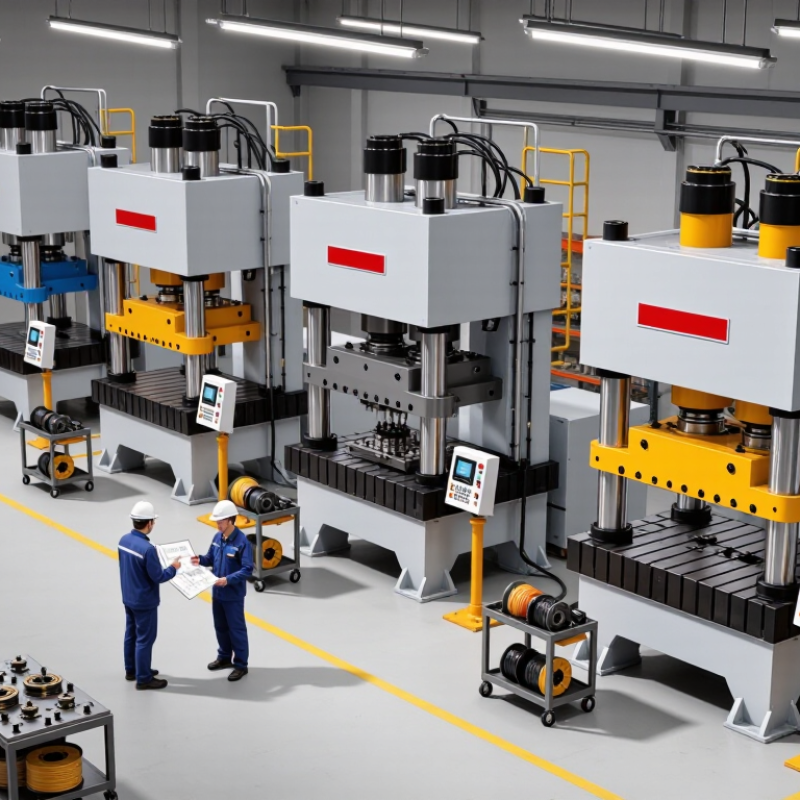
A fully automatic hydraulic press is an industrial machine that forms, compresses, or shapes materials through controlled hydraulic force. Unlike a manual press, it manages feeding, pressing, holding, releasing, and return movements automatically. Its main parts include a hydraulic pump, oil reservoir, valves, cylinder, mold, sensors, and a programmable control system. Force comes from pressurized oil, not direct mechanical impact.
During operation, a pump sends oil into the cylinder. The oil pressure pushes the piston downward, moving the upper tool toward the workpiece. Sensors confirm the material position and mold closure. The controller then adjusts pressure, speed, and holding time according to the production recipe. After forming, valves redirect the oil, and the piston returns. A pressure gauge, emergency stop, and guarding system support safer operation. Real production is rarely perfect. Oil temperature, material thickness, and tool wear can change the final result.
Tips: Check rated force, working speed, table size, and control accuracy before selecting equipment. Ask for documented test results under materials similar to yours. Inspect leakage protection and maintenance access. Keep oil clean and replace filters on schedule. A short trial run may reveal problems that specifications hide. Also, confirm whether the machine records pressure curves and cycle data. These details help technicians identify uneven forming, unstable pressure, or gradual component failure.
Ranking China’s fully automatic hydraulic press manufacturers requires more than comparing advertised tonnage. A credible assessment examines engineering capability, production consistency, and after-sales support. We look for evidence such as documented pressure accuracy, repeatability tests, and inspection records—not just polished product photographs.
Technical performance matters on the factory floor. Does the press maintain stable pressure across repeated cycles? Are safety guards, control systems, and emergency stops clearly specified? We also consider frame construction, hydraulic component quality, customization experience, and the availability of installation guidance. Service response time matters. A machine can be impressive on paper, but a delayed replacement seal can disrupt a production line.
The ranking weighs these factors together, giving practical reliability and verifiable information more importance than sales claims. Public certifications, case studies, and product documentation help, though they may not tell the whole story. Site visits and independent testing offer stronger evidence, but are not always possible. That limitation deserves attention. Scores can also vary by application: a press suited to forming sheet metal may not fit a precision assembly task. Buyers should compare the stated criteria with their own materials, cycle requirements, and maintenance capacity before treating any ranking as a final answer.
Profiles of China’s leading hydraulic press manufacturers should be judged by engineering evidence, not catalog claims alone. Compare tonnage, daylight, stroke, bed size, and cycle time against the parts you actually produce. A press for deep-drawing sheet metal needs different control and tooling capability from one used for powder compaction. Ask for load curves, repeatability records, and a sample run using your material. Small details matter: an uneven test part can reveal more than a polished brochure.
Automation is also shaping factory investment. The International Federation of Robotics’ World Robotics 2024 report recorded 276,288 industrial robot installations in China in 2023, about 51% of global installations. This figure covers robots, not hydraulic presses, but it signals a strong manufacturing base for integrated production lines. When profiling suppliers, check whether they can coordinate press controls with feeding, guarding, and downstream handling. Service response and spare-part access deserve equal attention. They are easy to overlook.
A shortlist of ten manufacturers should distinguish specialists in heavy forming from producers focused on compact or customized machines. Verify claimed capacity under working conditions, including oil temperature and sustained production cycles. Independent inspection helps. So does a factory visit, though one visit cannot prove long-term reliability. Ask for references from applications similar to yours, and review acceptance criteria before ordering. Some profiles may look incomplete; that is a reason to request evidence, not to assume poor quality.
Illustrative capacity reference points, converted using 1 metric ton-force = 9.80665 kN. Values are conversions, not manufacturer or market data.
Press capacity is the nominal force a press can exert. Actual machine specifications and operating capabilities vary by model and application.
Hydraulic presses convert pump flow into controlled force, but “fully automatic” can describe very different systems. A production press may use a PLC, position sensors, and a touchscreen to manage loading, pressing, and return. Servo-hydraulic controls can adjust speed and pressure during a cycle, helping reduce wasted energy. Still, automation does not guarantee precision. Poorly placed sensors or inconsistent material thickness can shift results.
Applications shape the machine. Sheet-metal forming often needs a large, even work area and repeatable stroke control. Powder compaction calls for steady pressure and careful dwell-time settings. Rubber molding may need accurate temperature control alongside hydraulic force. These differences affect frame design, cylinder capacity, tooling, and safety interlocks. A 500-ton press is not automatically better than a smaller model. The right choice depends on the material, part dimensions, cycle rate, and available floor space.
Compare machines by more than rated tonnage. Check pressure stability, stroke repeatability, guarding, maintenance access, and how easily operators can change recipes. Ask for test results using similar workpieces, not only an empty-cycle demonstration. That detail matters. Some product specifications look impressive, yet omit cycle-time conditions or measurement tolerances. Buyers should also consider local service support and spare-part availability. A useful comparison is rarely perfect; operating costs and downtime are difficult to predict before installation.
Choosing a manufacturer starts with your process, not a sales brochure. Define the material, workpiece dimensions, required force, cycle time, and production volume. Ask how the press handles feeding, positioning, and unloading. A machine that runs smoothly in a demonstration may behave differently with your material. Request a sample run using comparable parts, and review cycle records, pressure stability, and finished-piece consistency. Small details matter.
Tips: Ask for a clear equipment specification and a factory acceptance test plan. Check guarding, emergency stops, and control-system documentation. Confirm which spare parts are stocked and how quickly technical support responds. Request references from users with similar production needs. Then compare total operating costs, not just the purchase price.
A reliable supplier should explain design limits plainly and show how maintenance is performed. Look closely at hydraulic hoses, seals, and access points during inspection; awkward servicing can cause avoidable downtime. Discuss installation, operator training, warranty terms, and future upgrades before ordering. If answers stay vague, pause. I would still verify every promise against written specifications; trusting a polished presentation alone is a mistake.
It forms or compresses materials using controlled oil pressure. Feeding, pressing, holding, and return movements can run automatically.
A pump sends pressurized oil into a cylinder. The oil pushes a piston and upper tool toward the workpiece. No direct impact.
The pump, reservoir, valves, cylinder, mold, sensors, and programmable controller work together. Sensors check material position and mold closure.
Oil temperature, material thickness, and tool wear can change forming results. Real production varies. That deserves attention.
Compare rated force, working speed, table size, and control accuracy. Request test results using similar materials, not just general specifications.
It may reveal unstable pressure or uneven forming. Check whether the machine records pressure curves and cycle data.
Review repeatability tests, inspection records, safety details, and service support. Product photos alone prove little.
No. Site visits and independent tests may be unavailable, and public documents can be incomplete. A ranking may not match your application.
Keep hydraulic oil clean and replace filters on schedule. Inspect for leaks and maintain access to service areas. Small checks matter.
This article introduces the definition and working principles of a Fully Automatic Hydraulic Press, explaining how hydraulic force, automated controls, and integrated feeding or handling systems work together to support consistent production. It also outlines the criteria used to assess and rank leading Chinese manufacturers, including engineering capability, product range, manufacturing quality, customization options, technical support, and overall reliability.
The article then presents profiles of ten manufacturers without focusing on brand promotion, and compares the technologies, applications, and product differences that buyers may encounter. Finally, it offers practical guidance for selecting a suitable supplier by considering production requirements, material and part specifications, press capacity, automation level, safety features, service availability, and long-term operating costs. Together, these sections help readers evaluate available options and make a more informed purchasing decision.
