
Top Composite Material Forming Press Manufacturers?

Time:2026-10-25 Author:Isabella
0%

Selecting the Top Composite Material Forming Press Manufacturers requires more than comparing tonnage, price, or polished brochures. A serious evaluation examines forming accuracy, temperature stability, cycle control, service response, and proven experience with carbon fiber, glass fiber, SMC, BMC, and thermoplastic composites. The best manufacturers understand how resin flow, fiber orientation, mold pressure, and cooling time interact inside a real production cell.

Dr. Vlastimil Kunc, a recognized composite manufacturing specialist, has stated, “Manufacturing consistency is the foundation of composite performance.” That principle matters when a press must produce identical aircraft panels, automotive components, or wind-energy parts across thousands of cycles. A strong Composite Material Forming Press should maintain even pressure across the mold surface. It should also record temperature and pressure data during every cycle. Small deviations can create voids, uneven consolidation, or expensive rejected parts.

This guide compares leading manufacturers through practical criteria, including machine structure, hydraulic precision, automation, energy use, mold compatibility, and after-sales support. Factory testing offers useful evidence. However, it does not reveal everything. A supplier may show an impressive demonstration part, yet struggle with technical support after installation. That weakness deserves attention.

Real performance is often less dramatic. It appears in stable cycle times, clean mold release, accessible replacement parts, and operators who receive proper training. Readers should verify certifications, customer references, maintenance records, and application-specific results before choosing a press manufacturer. No single supplier fits every factory. Careful comparison remains necessary.
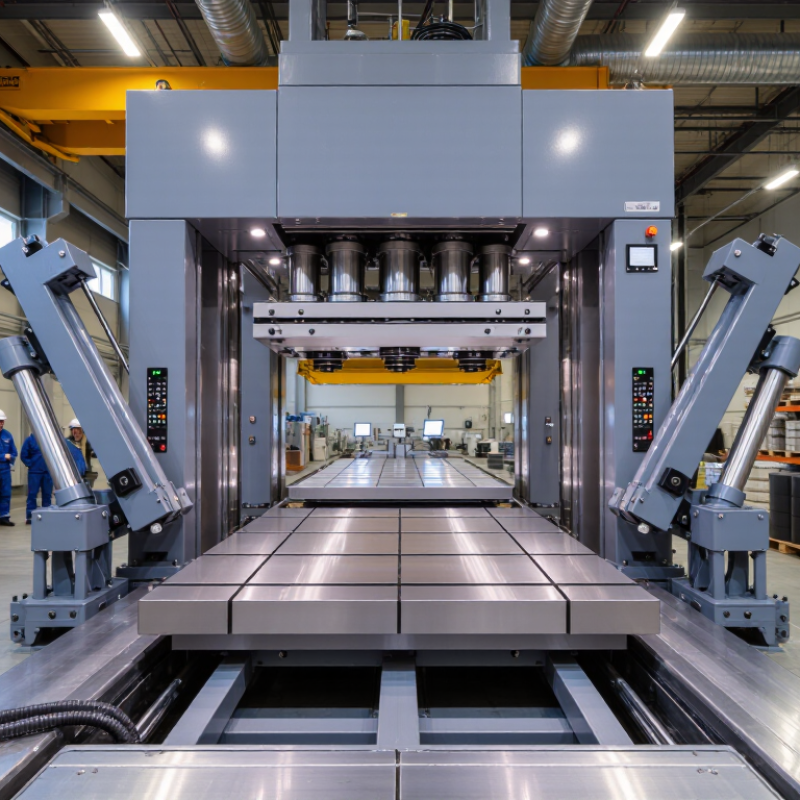
Top Composite Material Forming Press Manufacturers?

What Are Composite Material Forming Presses?

Composite material forming presses are industrial machines that shape fiber-reinforced materials under controlled heat and pressure. They commonly process carbon fiber, glass fiber, and resin-based compounds. A typical press uses two rigid platens, a matched mold, hydraulic force, and an electronic temperature-control system.

During forming, prepared material is placed inside the mold cavity. The platens close slowly, then apply steady pressure while heat softens the resin. This allows the fibers to follow the mold’s contours. Pressure must remain stable. Small changes can create voids, uneven thickness, or weak edges. Cooling is also important because removing a part too early may cause warping.

These presses serve automotive, aerospace, electrical, and sporting-goods production. Their specifications differ widely. A small laboratory press may support material trials, while a production machine can deliver hundreds of tons of force. Mold alignment, platen flatness, cycle timing, and pressure accuracy deserve careful inspection. In practical factory work, operators often focus on tonnage first. That can be a mistake. Consistent heating and reliable process data may affect quality more than maximum force.

The process is not perfectly forgiving. Fiber placement may vary by hand. Resin flow can behave differently between batches. Engineers should record temperature curves, closing speed, pressure changes, and cooling time for every trial. Some defects remain hidden until cutting or mechanical testing. Visual inspection alone is not enough. Better results come from matching the press design to the material, mold geometry, production volume, and required tolerances.

Typical Operating Pressure of Composite Material Forming Processes

The chart shows representative midpoint pressures calculated from commonly reported operating ranges. Thermoplastic compression molding generally requires higher pressure than autoclave consolidation, while the actual setting depends on fiber architecture, resin system, laminate thickness, temperature, and tooling design.

How to Evaluate Composite Press Manufacturers

Evaluating composite press manufacturers requires more than comparing tonnage and purchase price. In production trials, I inspect how a supplier converts material requirements into press specifications. Ask for platen flatness data, temperature uniformity maps, pressure repeatability, and cycle-time records. A capable engineering team explains assumptions clearly. They should also discuss fiber architecture, resin behavior, mold dimensions, and expected production volume. Vague promises deserve careful questioning.

Visit a working installation if possible. Watch the loading process, mold alignment, control-panel response, and pressure recovery after opening. Request sample records from several recent cycles, not one perfect chart. I also review maintenance access, spare-part planning, operator training, and remote support hours. These details often decide whether a press performs reliably on a busy floor. Ask how defects are investigated, documented, and corrected.

I once treated a polished brochure as proof of capability. That was a mistake. A serious evaluation includes reference calls, factory acceptance tests, and clear warranty boundaries. Check calibration methods and service response targets. Confirm that safety design and electrical documentation match the installation site. Independent inspection can expose gaps before payment. The process may feel slow, but rushed selection creates expensive uncertainty. Even strong suppliers may underestimate unusual tooling or changing resin systems, so record every assumption and test it early.

Leading Manufacturers and Their Press Technologies

Composite forming press manufacturers are responding to stronger demand from aerospace, automotive, wind energy, and sporting goods. MarketsandMarkets estimates that the global composites market may grow from about USD 111 billion in 2024 to USD 164 billion by 2029. This expansion is pushing press builders to improve repeatability, energy use, and production speed.

Leading manufacturers now offer several press technologies. Hydraulic compression presses remain common for thermoset parts and high-volume molding. Their practical strengths include high closing force and adaptable tooling. Servo-electric systems provide cleaner motion control and may reduce idle energy consumption. For aerospace structures, manufacturers often integrate heated platens, vacuum systems, and precise pressure monitoring. Research from the International Energy Agency continues to highlight industrial efficiency as a major decarbonization priority, making energy data increasingly important during equipment selection.

Process details matter more than impressive tonnage. A reliable press should control platen parallelism, temperature uniformity, resin pressure, and cure time. Buyers should request measured results, not attractive brochures. Some suppliers report cycle improvements without explaining the original baseline. That deserves scrutiny. In real production, a small temperature gradient can create warpage, rejected parts, or extra trimming. The best equipment combines robust frames, responsive controls, digital production records, and maintainable heating systems. No technology is perfect. A faster cycle can sometimes increase defects if material preparation remains inconsistent.

Key Industries Using Composite Forming Presses

Composite forming presses serve industries where low weight, stiffness, and repeatable production matter. Aerospace manufacturers use compression molding and autoclave-compatible processes for interior panels, brackets, and structural parts. The International Air Transport Association reported global passenger demand reached 94% of 2019 levels in 2023. This recovery keeps pressure on suppliers to produce lighter components faster.

Automotive production is another major user. Electric vehicles need weight reduction to protect driving range, so manufacturers form battery covers, underbody panels, and reinforced body parts. The International Energy Agency reported nearly 14 million electric cars were sold worldwide in 2023. Wind energy also depends on composite processing. The Global Wind Energy Council recorded more than 117 gigawatts of new wind capacity in 2023. Large blades require controlled pressure, temperature, and curing time. Construction, marine equipment, rail transport, and sporting goods add further demand. MarketsandMarkets estimated the global composites market could grow from about 126 billion dollars in 2023 to 172 billion dollars by 2028.

Tips: Match press force to part area, not only material thickness. Check platen parallelism, heating uniformity, cycle records, and mold-change time. A lower purchase price may create higher scrap costs. That lesson is easy to miss. Press selection also needs honest testing with real fiber layouts, not ideal laboratory samples. A perfect machine choice is rarely perfect on the factory floor. Teams should review maintenance access and operator safety before approving any equipment.

How to Select the Right Composite Press Supplier

Choosing a composite material forming press supplier requires more than comparing tonnage and price. The right partner should understand fiber orientation, resin behavior, mold dimensions, and production rhythm. Ask how the press controls pressure, heat, and cooling across the platen. Uneven temperature can create voids, warping, or inconsistent curing. Small details matter.

Review the supplier’s engineering evidence, not only sales claims. Request load charts, temperature uniformity data, control tolerances, and maintenance records from similar installations. A factory visit can reveal practical habits: clean hydraulic lines, protected sensors, clear wiring, and accessible service points. Ask for sample parts or a controlled forming trial. This exposes problems early. Also check whether technicians support installation, operator training, troubleshooting, and spare-parts planning. Response time should be written into the agreement.

Safety and compliance deserve direct questions. Confirm guarding, emergency stops, electrical documentation, and applicable regional standards. Examine the total cost over ten years, including energy use, tooling changes, calibration, and downtime. A low purchase price may age badly. No supplier is perfect, and every specification hides assumptions. Recheck cycle time with your actual material, not a brochure sample. If the supplier avoids measurable answers, keep looking. A dependable supplier will discuss limitations openly and help adapt the press to future materials, even when the answer is inconvenient.

FAQS

What is a composite material forming press?

It shapes fiber-reinforced materials using controlled heat, pressure, and matched molds. Common materials include carbon fiber, glass fiber, and resin compounds. The press uses rigid platens and hydraulic or electric force. Simple in theory.

How does the forming process work?

Operators place prepared material inside a mold cavity. The platens close gradually and apply steady pressure. Heat softens the resin, allowing fibers to follow the mold’s contours. Cooling happens before safe removal. Timing matters.

Which industries use these presses?

Aerospace, automotive, wind energy, construction, marine equipment, rail transport, and sporting goods use them. Typical parts include battery covers, interior panels, brackets, underbody panels, and large blades. Uses vary by material and geometry.

How much press force is necessary?

Required force depends on part area, material behavior, and mold design. Material thickness alone is not enough. Large production presses may deliver hundreds of tons. Maximum tonnage can distract buyers from better process control.

What specifications deserve careful inspection?

Check platen parallelism, heating uniformity, pressure accuracy, closing speed, and cycle timing. Review cooling control and mold-change time too. Ask for measured production data. Brochures can look unusually confident.

Why are temperature and cooling important?

Uneven heating may cause warping, weak edges, or inconsistent thickness. Removing a part too early can permanently distort its shape. A small temperature gradient matters. Cooling is not an afterthought.

How can manufacturers reduce defects?

Record temperature curves, pressure changes, closing speed, and cooling time for every trial. Inspect fiber placement carefully. Visual checks alone may miss hidden voids. Cutting or mechanical testing can reveal deeper problems.

Should buyers choose hydraulic or servo-electric technology?

Hydraulic systems provide strong closing force and adaptable tooling. Servo-electric systems offer precise motion control and may reduce idle energy use. Neither option is automatically superior. Material preparation still controls many defects. That is easy to forget.

Conclusion

Composite Material Forming Press systems are specialized machines used to shape, consolidate, and cure fiber-reinforced materials under controlled heat and pressure. They support processes such as compression molding, laminating, and thermoplastic forming, helping manufacturers produce lightweight, strong, and consistent components. When evaluating a supplier, important factors include press capacity, temperature and pressure control, automation, energy efficiency, customization options, safety features, maintenance support, and overall production reliability.

Leading Composite Material Forming Press manufacturers may offer hydraulic, electric, or hybrid technologies designed for different material types, part sizes, and production volumes. These presses are widely used in aerospace, automotive, renewable energy, sporting goods, marine equipment, and industrial applications. To select the right supplier, businesses should clearly define their materials, mold dimensions, cycle times, quality requirements, and future expansion plans. Comparing technical performance, total operating cost, installation services, training, and after-sales support can help ensure the selected press delivers stable production and long-term value.

Isabella

Isabella

Isabella is a dedicated marketing professional with a sharp focus on driving brand growth and engagement through strategic content creation. With an extensive background in digital marketing, she combines her passion for storytelling with her keen understanding of industry trends to deliver......