
Choosing the right hydraulic machine can shape your business’s productivity, safety, and operating costs. The decision should begin with the work, not the product brochure. A machine lifting steel plates may require different pressure, flow, and cycle control than equipment shaping plastic components. Small details matter. Load weight, operating hours, available floor space, and temperature changes all influence performance.
Hydraulic And Hydraulic Machine systems can deliver strong, repeatable force when selected and maintained correctly. However, maximum pressure alone does not prove suitability. Buyers should examine flow rate, motor power, cylinder speed, control accuracy, noise levels, and emergency features. A reliable supplier should provide technical documentation, service records, warranty terms, and realistic maintenance guidance. Independent testing or advice from a qualified engineer can reduce expensive mistakes.
The cheapest option may become costly. Frequent seal replacement, unstable pressure, or difficult access can interrupt production. Ask how quickly parts arrive and who will repair the machine. Then compare the full ownership cost, including energy, labor, training, and downtime. A practical trial often reveals weaknesses that specifications hide. It may expose awkward controls or slow material handling.
There is no universal best choice. Business needs change. A growing workshop might outpace a small press within two years. Therefore, capacity planning deserves attention, even when current budgets feel restrictive. Review workplace requirements and applicable safety standards before purchase. Document the decision, including its limitations. That honesty supports better investment decisions and protects long-term reliability.
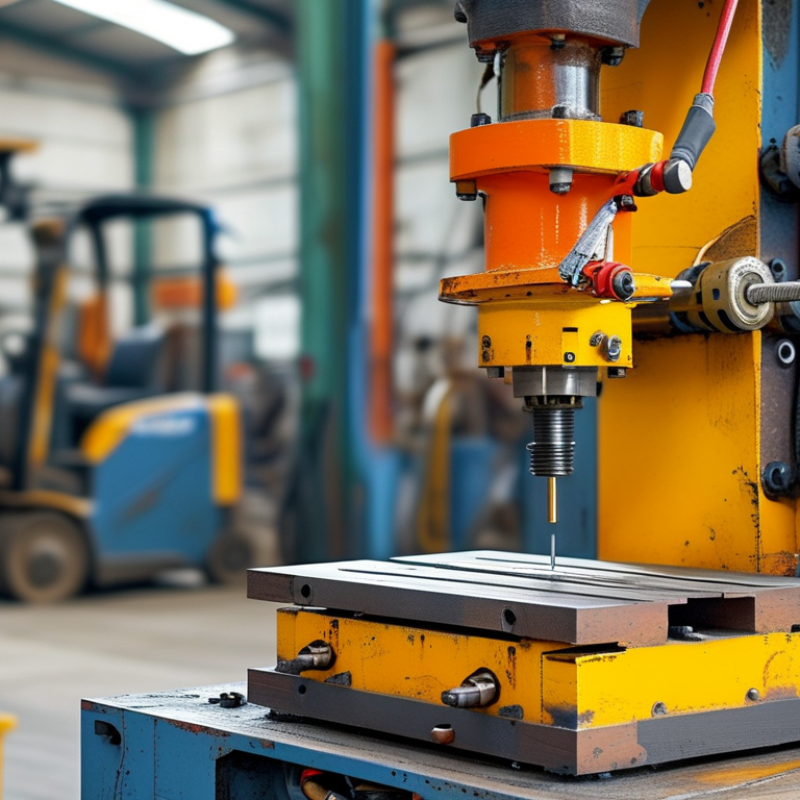
How to Choose the Right Hydraulic Machine for Your Business
Define the load before comparing machine specifications. Record required flow, working pressure, duty cycle, fluid viscosity, temperature, and contamination risks. A press running at 180 bar for eight hours needs different capacity from an intermittent lifting system. Include starting loads and pressure spikes. These details affect pump displacement, motor size, reservoir volume, cooling, and filtration. The first estimate is rarely perfect.
Operating conditions also determine long-term cost. The International Energy Agency’s Energy Efficiency 2023 report estimates that electric motor systems consume about 53% of global electricity. Hydraulic equipment often depends on these motors, so poor sizing can create continuous waste. The U.S. Department of Energy’s Improving Pumping System Performance sourcebook identifies energy-saving potential of 20–50% in many pumping systems. Do not select the highest-rated unit automatically. Oversizing may increase heat, noise, leakage, and purchase cost. A field review should compare measured demand with the machine’s performance curve. Keep records of pressure fluctuations, oil temperature, maintenance intervals, and rejected products. Missing data can mislead even experienced engineers.
Tips: Measure the real load for one production week. Test oil cleanliness and ambient temperature. Ask for efficiency data at your actual duty point, not only the rated point. Leave reasonable capacity for growth, but challenge every extra margin. A small trial may reveal weaknesses that a spreadsheet misses.
| Business Requirement | Typical Operating Conditions | Recommended Hydraulic Machine Type | Typical Working Pressure | Typical Flow Range | Key Selection Criteria | Best-Fit Applications | Important Operating Notes |
|---|---|---|---|---|---|---|---|
| High-force forming, compacting, or assembly with repeatable cycles | Indoor production, stable power supply, medium to high duty cycle | Hydraulic press | 100–250 bar | 10–150 L/min | Required pressing force, daylight, stroke length, cycle time, bed size, and control accuracy | Metal forming, compression molding, bearing installation, and component assembly | Check whether the press requires force control, position control, or both. Adequate guarding and emergency-stop systems are essential. |
| Material handling where lifting force and precise positioning are important | Intermittent or cyclic operation, variable loads, limited floor space | Hydraulic lift or lifting table | 80–200 bar | 5–80 L/min | Rated load, platform dimensions, lifting height, lowering speed, stability, and safety-lock requirements | Loading docks, warehouse handling, work-positioning, and maintenance operations | The rated capacity must account for load distribution and dynamic effects. Mechanical or hydraulic load-holding protection should be specified. |
| Continuous movement of bulk materials or products | Long operating hours, dusty environment, fixed installation | Hydraulic conveyor drive | 100–315 bar | 20–250 L/min | Required torque, belt speed, start-up load, duty cycle, ambient temperature, and maintenance access | Quarries, recycling facilities, aggregate handling, and heavy-material processing | Use suitable filtration and cooling when contamination or long duty cycles may increase fluid temperature and component wear. |
| Mobile digging, loading, or material-handling work | Outdoor use, shock loads, uneven terrain, changing ambient temperatures | Mobile hydraulic power system | 180–350 bar | 40–400 L/min | Available engine power, pump displacement, auxiliary flow, attachment requirements, hose routing, and serviceability | Excavation, loading, forestry, road maintenance, and agricultural equipment | Select hoses, seals, and hydraulic fluid for the expected temperature range. Account for pressure spikes caused by sudden load changes. |
| Fast, repetitive clamping or positioning in a production line | Indoor environment, high cycle frequency, controlled temperature | Hydraulic clamping unit | 50–210 bar | 2–40 L/min | Clamping force, response time, holding pressure, available installation space, and required repeatability | Machining fixtures, welding fixtures, assembly lines, and injection-molding tooling | Use accumulators only when correctly sized and protected. Confirm that the system can safely maintain clamping force during power loss. |
| Heavy-duty cutting, shearing, or crushing with high peak loads | Short high-load cycles, impact and vibration, potentially contaminated surroundings | Hydraulic shear or crusher drive | 200–350 bar | 30–300 L/min | Peak force, impact loading, motor torque, overload protection, cooling capacity, and structural durability | Metal recycling, demolition, scrap processing, and primary material reduction | Include pressure relief and overload protection. Hydraulic components should be selected for peak pressure, not only normal operating pressure. |
| Accurate movement of tooling or actuators with minimal variation | Clean indoor environment, controlled motion, moderate duty cycle | Electro-hydraulic motion system | 70–280 bar | 5–100 L/min | Position accuracy, velocity stability, control response, sensor compatibility, and integration with the machine controller | Test equipment, precision forming, simulation systems, and automated production machinery | Clean fluid, low air content, and correctly tuned valves are important for stable motion and repeatable positioning. |
| Portable emergency or maintenance operations | Temporary work sites, limited electrical access, manual setup | Portable hydraulic power unit | 100–700 bar | 0.5–30 L/min | Required force, portability, power source, reservoir size, hose length, noise level, and ease of field servicing | Equipment repair, bolt tensioning, rescue tools, lifting, and on-site maintenance | Very high-pressure systems require specially rated hoses, couplings, fittings, and protective procedures. Never exceed the lowest-rated component. |
| Low-noise operation in a facility with strict environmental requirements | Indoor operation near personnel, extended operating periods | Low-noise hydraulic power unit | 70–250 bar | 5–80 L/min | Sound level, motor and pump selection, vibration isolation, heat rejection, and enclosure ventilation | Food-processing support equipment, laboratory machinery, medical equipment, and indoor automation | Variable-speed drives and correctly sized pumps can reduce energy use and noise during partial-load operation. |
| Outdoor operation in wet, corrosive, or washdown conditions | High humidity, water spray, salt exposure, or frequent cleaning | Corrosion-resistant hydraulic system | 100–315 bar | 10–200 L/min | Material compatibility, enclosure protection, hose routing, drainage, fluid selection, and corrosion-resistant coatings | Marine equipment, food and beverage support systems, wastewater facilities, and coastal installations | Specify protection against water ingress and use compatible seals, coatings, and fluids. Regular inspection is necessary even when corrosion-resistant materials are used. |
Use actual flow, pressure, cycle time, and operating hours. Peak demand may last seconds. Continuous duty matters more. Avoid sizing from catalogue capacity alone. Oversizing can waste energy and create extra heat.
A machine may reach high flow briefly but struggle during continuous operation. Compare demand across the complete working range. Record pressure, temperature, and cycle time during representative work. Laboratory figures may not match a dusty, hot plant.
Request efficiency curves, pressure losses, noise levels, temperature limits, and maintenance intervals. Check standby power too. Small losses accumulate. Long pipe runs and frequent starts can reduce real-world efficiency.
Confirm fluid viscosity, seal materials, filtration needs, ambient temperature, mounting dimensions, and connection standards. Inspect the actual fluid condition. Dirty fluid can damage valves and shorten service life. A specification sheet may omit this detail.
Proportional valves, pressure feedback, load sensing, and fault diagnostics can improve precision. Simple controls may suit stable processes better. More features are not always better. Operators should understand every important setting.
Check floor space, ventilation, spill control, access, and pipe routing. A large reservoir needs room around it. Long, narrow pipes increase pressure loss and heat. The machine may fit the drawing but not the workshop.
Inspect filter access, hose visibility, oil sampling points, and contamination controls. Plan safe isolation before servicing. Train operators on stored hydraulic energy. A missed filter change can become a costly valve repair.
Include purchase, installation, commissioning, energy, fluids, filters, downtime, training, inspections, and disposal. Add inflation and worst-case downtime. Use measured flow and pressure where possible. My estimate could still be wrong. Challenge it with operators.
Choosing the right hydraulic machine begins with a clear understanding of your business requirements, production goals, working environment, and operating conditions. Identify the required force, speed, duty cycle, material compatibility, available space, and energy limitations before comparing machine types and their primary applications. Evaluate each option according to capacity, performance consistency, control features, precision, flexibility, and compatibility with existing equipment. Understanding the relationship between Hydraulic And Hydraulic Machine systems and your workflow can help ensure reliable operation and efficient production.
Beyond technical specifications, consider installation requirements, operator safety, maintenance accessibility, spare-part availability, energy consumption, and expected service life. A machine with a lower purchase price may create higher long-term expenses if it requires frequent repairs or complicated operation. Select a supplier that provides clear technical documentation, responsive support, training, and dependable after-sales service. By comparing total ownership costs and verifying long-term business value, you can choose equipment that supports productivity, reduces operational risks, and remains suitable as your business develops.
